Surface-mounted LED downlights solve the lack of a false ceiling. Compare ceiling lights, slim panels, finishes and...
.svg)

UGR in lighting: what it is, how it is measured and why it changes your visual experience
UGR lighting is one of the technical parameters that most conditions wellbeing in a workplace. Understanding what UGR is in lighting is the first step towards making better purchasing decisions. Choosing a luminaire with a low UGR directly affects the visual health of those who work under that light every day.
What UGR is and what it measures exactly
The UGR (Unified Glare Rating) is the unified glare index that quantifies the discomfort glare produced by a lighting installation on the human eye. It is calculated by the CIE based on the luminance of the light source, the position of the observer and the background luminance. The higher the value, the more glare the luminaire generates. The lower it is, the greater the visual comfort for the worker.
Direct and indirect glare are the two types covered by the index. Direct glare comes from the light source seen within the visual field. Indirect glare arrives via reflection on screens, lacquered desks or polished floors.
The UGR scale: from lower to higher glare
The scale runs from 10 to 30 in increments of 3 units. The most common values are UGR13, UGR16, UGR19, UGR22 and UGR25. A value of 10 represents virtually no glare. A value of 28 or 30 is uncomfortable for any visual task requiring concentration.
Difference between UGR13, UGR19 and UGR25
The differences between UGR19, UGR17 and UGR13 are not merely numerical. UGR13 is required in operating theatres and precision laboratories where visual errors have serious consequences.
UGR19 is the standard for offices and classrooms with continuous visual tasks. UGR25 is accepted in transit areas and warehouses. Choosing whether a high or low UGR is better depends on the actual use of the space.
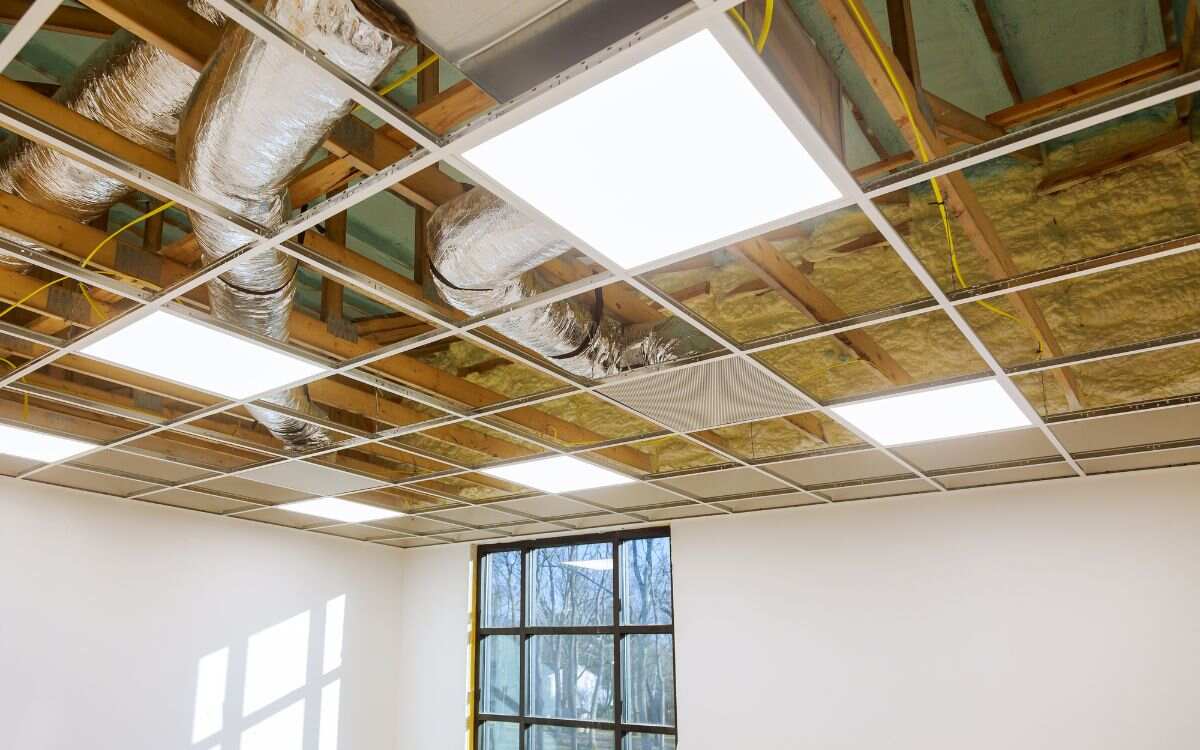
Why UGR matters in each type of space
Visual performance in the workplace drops when the UGR exceeds the maximum permitted value. Visual fatigue and loss of concentration are direct consequences of working under a light source with excessive glare. LED lighting has reduced consumption, but a poorly designed LED luminaire can have a higher UGR than the fluorescent it replaces.
Offices and screen-based workstations
An office with screens requires UGR19 as the maximum value. LED panels for offices certified with UGR19 or below are the standard solution. Lighting systems that do not include this figure should not be used at permanent workstations, especially when natural light is insufficient or absent.
Commercial spaces and display areas
A high UGR in commercial downlights distracts the customer and reduces the visual value of the merchandise. Track spotlights for shops with a controlled emission angle allow products to be lit with high luminous intensity without generating direct glare. See LED downlight spotlights and LED track lighting at Ibérica de Iluminación.
Hospitals, educational centres and sensitive spaces
In hospitals the standard requires UGR19 in clinical areas and UGR13 in operating theatres. In classrooms UGR19 is needed to protect vision during developmental age. A lighting solution without office luminaire certification does not meet the lighting requirements of current regulations.
What the regulations say about UGR
EN 12464 standard: maximum values by activity
The European standard EN 12464 sets illuminance levels and maximum UGR values by activity. It also defines minimum requirements for colour temperature and colour rendering. The UGR EN 12464 standard establishes that no continuous work installation may exceed the values of its category.
| Type of space | Maximum UGR | Minimum illuminance |
|---|---|---|
| Offices with screens | 19 | 500 lux |
| Classrooms and training rooms | 19 | 300-500 lux |
| Laboratories and clinics | 16-19 | 500 lux |
| Circulation areas | 25 | 100 lux |
| Warehouses | 25 | 200 lux |
| Operating theatres | 13 | 1,000 lux |
How UGR affects regulatory compliance
A lighting installation project that does not certify the UGR in the technical report may not pass inspection. The UGR calculation for luminaires is carried out by the manufacturer in accordance with European standard EN 12464 and is included in the data sheet. For spaces subject to office lighting regulations, requesting this figure is the first step before buying.
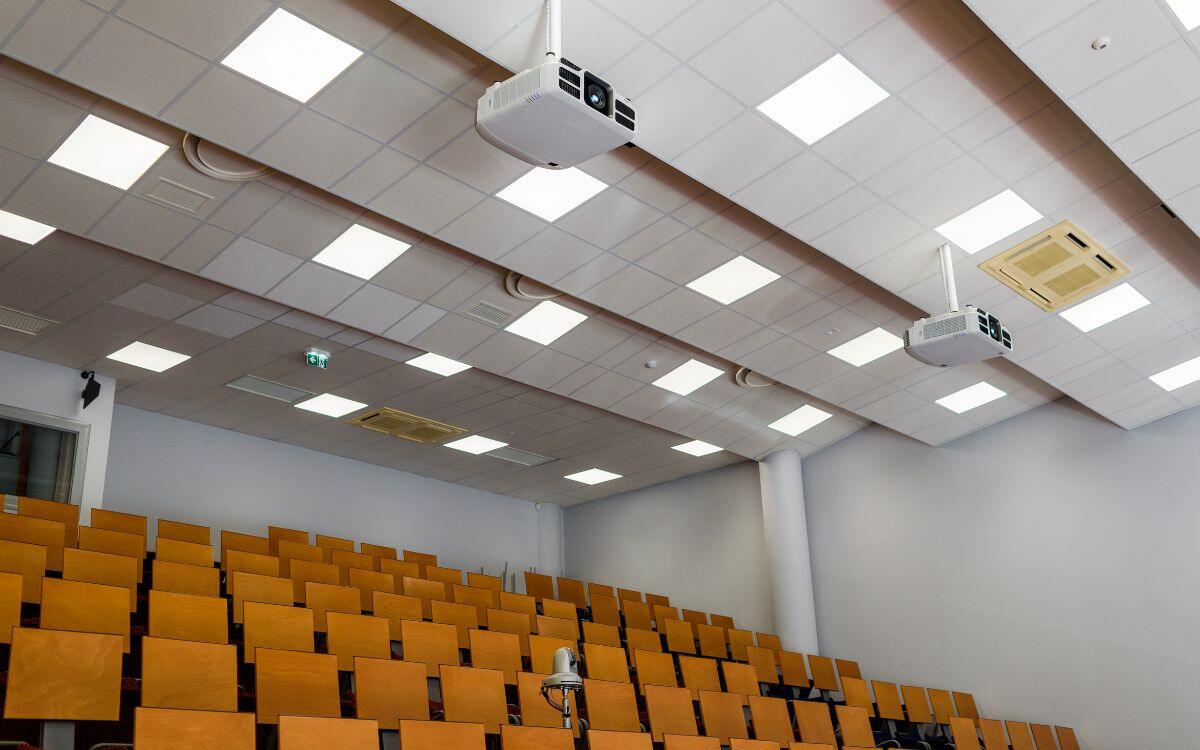
How low UGR is achieved in a luminaire
Microprismatic diffusers and opal screens
The microprismatic UGR diffuser works with microprisms that redirect light and reduce visible luminance from grazing angles. The opal screen UGR reduction disperses light uniformly and eliminates high luminous intensity points. Both reduce the diffuse light emission angle without significant loss of energy efficiency.
Emission angle and body geometry
The geometry of the body conditions the diffuse light emission angle and the resulting UGR. Models with controlled LED glare integrate a closed optic and deep reflector to prevent the light source from being visible from lateral positions. In track spotlight lighting systems, the tilt angle of the spotlight determines whether the observer perceives the source within their visual field.
Which products have low UGR in the catalogue
UGR19-certified LED panels are the standard option for office LED panel lighting. LED downlight spotlights with a microprismatic diffuser provide uniform lighting without discomfort glare. LED track lighting spotlights with a controlled angle are the reference for track spotlights in shops.
How to verify the UGR of a luminaire before buying
How UGR is measured starts from the manufacturer's photometric data. The value appears in the data sheet as "UGR ≤ 19" with the measurement conditions. A UGR19 luminaire without those conditions does not allow verification of whether the figure is accurate.
Determining which UGR is needed for a given space requires three pieces of data. The first is the maximum value set by European standard EN 12464. The second is the product data sheet. The third is the office luminaire certification, mandatory if the space is subject to inspection.
Frequently asked questions
What UGR value do I need for an office with screens?
For office lighting regulations the maximum value is UGR19. LED panels for offices with that value or below are suitable for permanent workstations.
What is the difference between UGR13 and UGR19?
The difference between UGR13 and UGR19 in LED is one of stringency. UGR13 applies where visual errors have serious consequences. UGR19 covers offices, classrooms and commercial spaces. Both are certified in accordance with European standard EN 12464.
Does UGR affect the visual health of workers?
Yes. A work environment with a high UGR generates visual fatigue and a loss of visual performance in the workplace. Visual health improves when lighting systems meet the lighting requirements of the standard.
Do all LED panels have a low UGR?
No. LED glare depends on the optical design. A luminaire without an adequate diffuser can exceed UGR25. Always check the data sheet before buying.
How do I know if a luminaire meets the UGR required by regulations?
By checking that the UGR calculation for luminaires appears in the data sheet as "UGR ≤ 19" or the required value. If it is not shown, the luminaire has not been evaluated.
Can track spotlights have a low UGR?
Yes. Track spotlights for shops with a controlled angle achieve low values even with high luminous intensity. The key is that the light source remains outside the observer's visual field.
Does a low UGR mean less light or less efficiency?
No. The microprismatic UGR diffuser and the opal screen UGR reduction reduce glare without significantly reducing luminous flux. Energy efficiency is not compromised in current quality models.
Posted in:
Sample Category
Related posts
60x60 LED panels: everything you need to know before buying
Discover how to choose the ideal 60x60 LED panel for your project. We compare drivers, wattages, installation types...
Read more
A practical guide to choosing the perfect LED lighting for your office
Find out how to choose the perfect LED lighting for your office: it complies with the EN 12464 standard, boosts your...
Read more
Slim recessed LED downlights: guide to models, wattages and prices
Discover the differences between circular and square models, available wattages from 6W to 26W, key features such as...
Read more
LED colour temperature: how to choose between 2700K, 4000K and 6500K for your space
Warm, neutral or cool light: each LED colour temperature has its ideal space. We explain the differences between...
Read more
LED track spotlights for shops: single-phase vs three-phase, models and installation keys
Single phase or three-phase? Choosing the right LED track system makes the difference between a well-lit shop and one...
Read more
Search in blog
Blog categories
Latest posts
Surface-mounted LED downlights: ceiling lights and slim panels for ceilings without building work
Read more
Linear LED lighting for hospitality: ideas and solutions for bars, restaurants and hotels
Read more
Linear LED lighting sets the mood in bars, restaurants and hotels. Discover the types of luminaires, key areas and...
Aluminium profiles for LED strips: types, diffusers and how to choose the right mounting
Read more
Discover the aluminium profiles available for LED strips, which diffuser to choose and what accessories you need for...
LED vs halogen: complete comparison of performance, savings and light quality
Read more
Is it worth switching your bulbs? This LED vs halogen comparison covers energy consumption, lifespan, heat and light...
E27 LED Bulbs: direct replacement guide by shape, wattage and colour temperature
Read more
Practical guide to replacing your old bulbs with E27 LED bulbs without complications. Learn how to choose shape,...
Popular posts
60x60 LED panels: everything you need to know before buying
Discover how to choose the ideal 60x60 LED panel for your project. We compare drivers, wattages, installation types...
Read more
A practical guide to choosing the perfect LED lighting for your office
Find out how to choose the perfect LED lighting for your office: it complies with the EN 12464 standard, boosts your...
Read more
LED colour temperature: how to choose between 2700K, 4000K and 6500K for your space
Warm, neutral or cool light: each LED colour temperature has its ideal space. We explain the differences between...
Read more
LED public lighting: current regulations, technical requirements and key points for compliance
Guide to Spain's LED public lighting regulations: technical requirements, road classes, parameters and mandatory...
Read more
Slim recessed LED downlights: guide to models, wattages and prices
Discover the differences between circular and square models, available wattages from 6W to 26W, key features such as...
Read more
Leave a comment