Surface-mounted LED downlights solve the lack of a false ceiling. Compare ceiling lights, slim panels, finishes and...
.svg)

Aluminium profiles for LED strips: types, diffusers and how to choose the right mounting
Installing an LED strip without a profile is possible, but the result is almost never what you are looking for. Aluminium profiles for LED strips cool the strip, protect it and give it a finish that an exposed installation never achieves. This article explains what types exist, which diffuser is suitable and what accessories you need. The aluminium extrusion and the aluminium channel of each profile are the foundation of a long-lasting linear lighting installation.
What aluminium profiles for LED strips are used for in an installation
A profile turns an LED strip into a high-quality product, ready for a professional lighting project. It performs two tasks: controlling the heat and offering a professional finish.
Heat dissipation and extended service life
Without heat dissipation, the chip temperature rises and the service life is reduced. Extruded aluminium spreads the heat across the surface, so heat dissipation is not concentrated at one point. The technical sheet uses the term extruded aluminium heat dissipation to summarise this function.
Thermal management explains why a long strip is never mounted in the open air. In the section where the LED strip sits inside the profile, heat concentrates more, and this is where the aluminium prevents the LED from losing brightness.
Professional finish and mechanical protection
The profile protects the strip from knocks, dust and moisture. The silver black white anodised finish is chosen according to the joinery. The corrosion resistance of anodised aluminium prevents the profile from degrading over the years. This professional finish sets an installation with well-finished surface profiles apart from a strip simply stuck on.
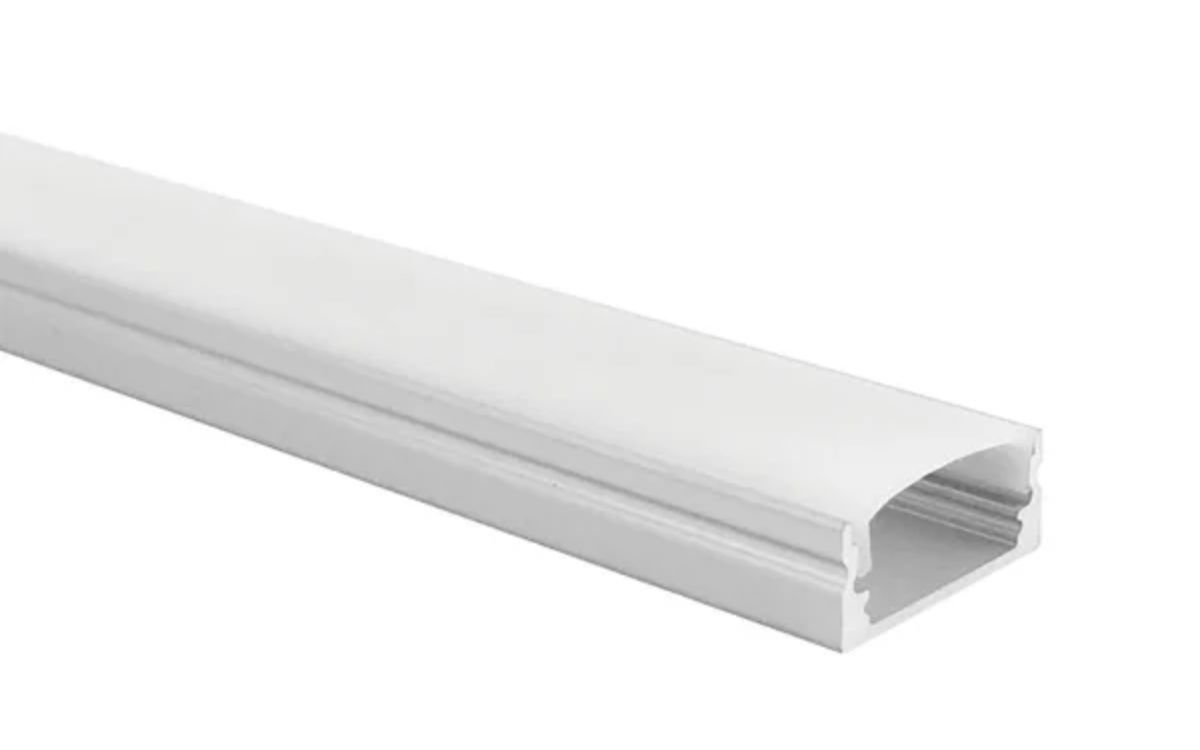
Types of aluminium profile according to the installation method
There are several types of LED aluminium profiles, and the right one depends on where you are going to install the strip. Recessed, surface and suspended installation are the three families in the catalogue.
Model U surface profile for ceiling and furniture
The surface aluminium profile LED strip model U is the most common. It is screwed onto a wall, ceiling or piece of furniture without building work, ideal for simple surface profiles.
Recessed profile to be integrated into the ceiling
When the profile needs to disappear visually, the recessed LED profile for ceilings is the solution, installed in a plasterboard channel and flush with the ceiling. The suspended LED profile exists hung with cables from a slab.
90 degree angled profile for corners and edges
The 90 degree angled LED profile finishes off a corner without the cut being visible. The profile installation angle marks the fold point, and for less pronounced edges there is the 45 degree corner LED profile.
Winged profile for under-cabinet installation
The winged profile is screwed in through the sides and remains hidden, ideal for the kitchen cabinet aluminium LED profile where drilling is not possible. Carpenters working with premium finishes and specific designs tend to prefer it.
Types of diffuser and lighting effect
The comparison between transparent and opal LED profile diffuser is the most common question. Both let light through, but the visual result is very different.
Opal diffuser diffused light with no visible dots
The opal diffuser LED profile spreads light evenly and hides each LED. Opal diffusers dominate in rest areas, because providing soft lighting without glare is their strong point.
Transparent diffuser maximum light transmission
The opal transparent polycarbonate diffuser covers two versions. The transparent one lets through up to 85 percent of the light, compared with 60 percent for the opal one. It is used for an intense lighting effect, such as in shop windows.
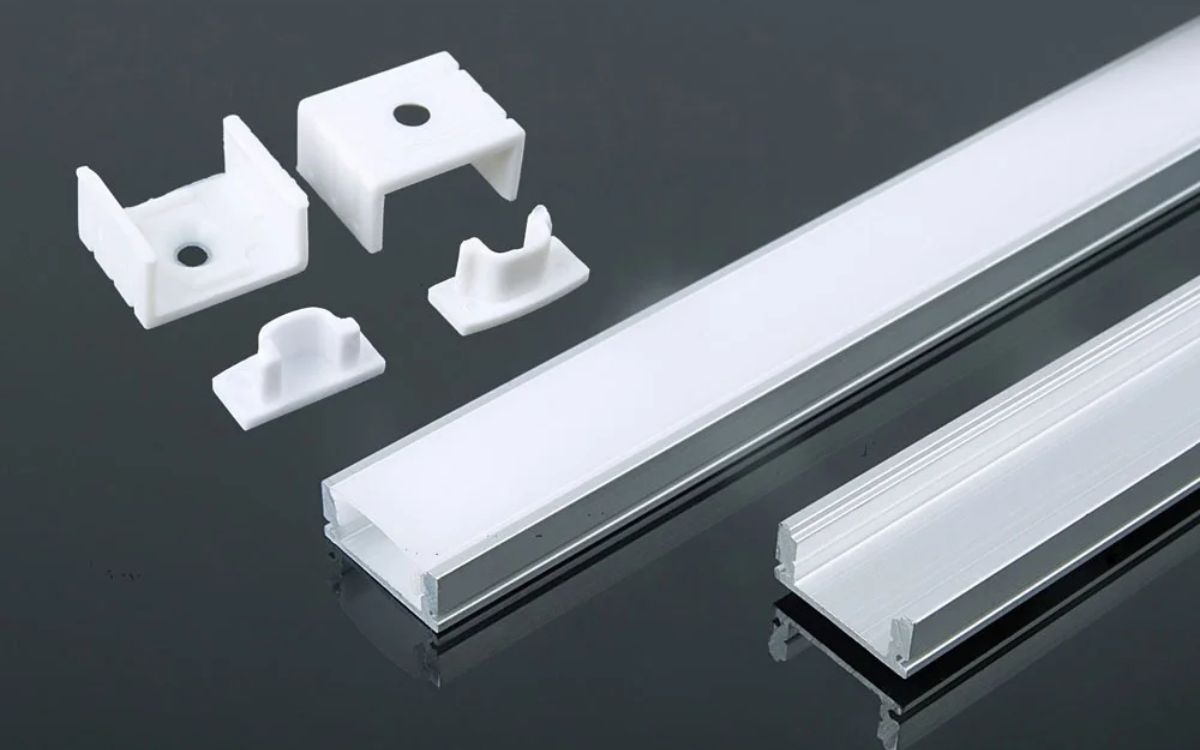
Accessories needed for a complete installation
No aluminium LED strip profile price includes all the accessories you need to get the installation truly working.
Start and end side caps
The end side cap for LED profile closes off the ends of the channel and prevents dust from getting in or the wiring from being visible, with versions featuring a cable hole.
Joints and reinforcements for long sections
On long sections, the aluminium profile joint reinforcement prevents the joining point from being noticeable and keeps the line straight.
Fixing clips and supports
Profile fixing clip accessories are placed every 30 or 50 centimetres. They ensure that the whole assembly works properly for years.
How to install an aluminium LED profile step by step
Measure the section and cut the profile with a fine-toothed saw. Fix the clips at the recommended distance and insert the strip centred in the channel, checking the polarity. Close it with the diffuser and finish off with the side caps. Switch on the circuit and confirm that the accent lighting is even.
Applications by space
The same profile changes function depending on the space.
Kitchens and bathrooms under cabinets
The kitchen cabinet aluminium LED profile is installed under wall units to light up the worktop. In bathrooms, check the IP protection rating before installing it near the shower.
Ceilings and cornices coving effect
The coving effect uses a side wall LED profile. It is installed at the join between wall and ceiling, facing upwards, and creates a wash of light that makes the room feel larger.
Stairs and skirting boards
The stair aluminium LED profile is placed on the edge of each step and marks out the route, a practical lighting solution for night-time hallways.
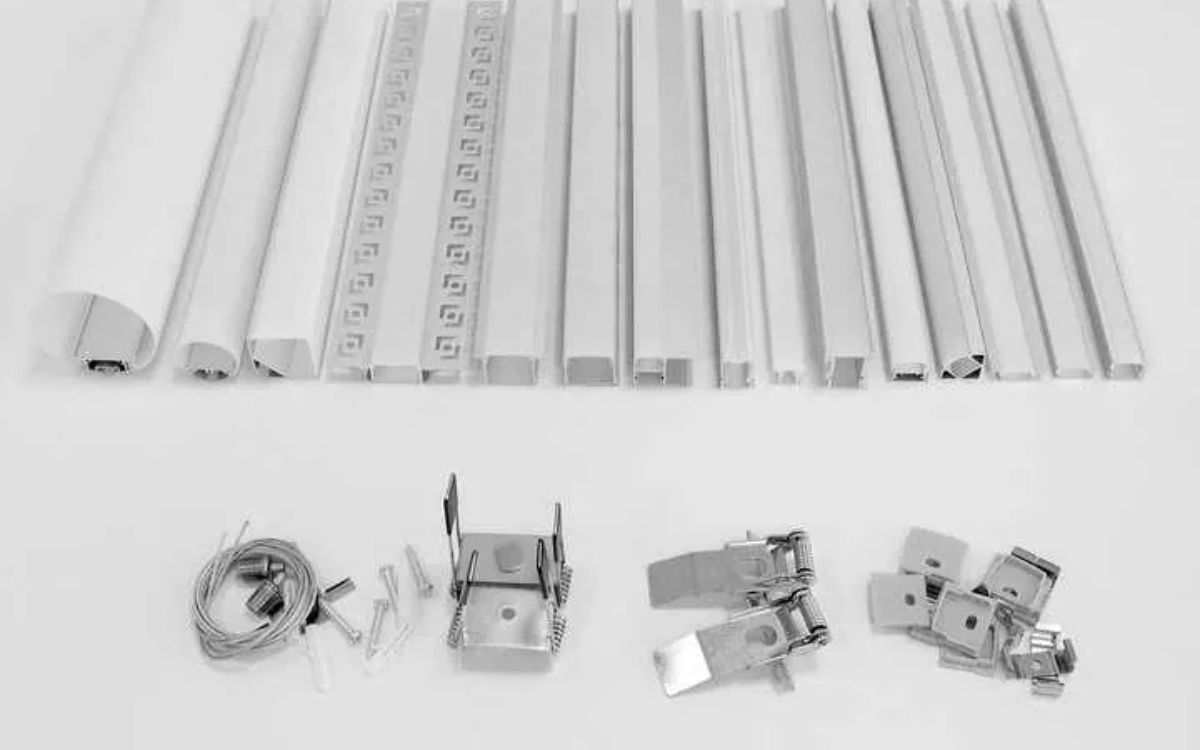
Catalogue models and prices
The 2 metre aluminium LED profile is the standard, cuttable 2 metre length from most manufacturers. The 2 metre pro linear LED profile features a reinforced finish, while the basic versions go to the domestic market. With a 24v aluminium LED strip profile, check that the channel width matches that of your strip.
| Model | Mounting type | Diffuser | Recommended use |
|---|---|---|---|
| U surface profile | Surface | Opal or transparent | Wall and ceiling |
| Recessed profile | Recessed | Opal | Continuous ceilings |
| 90º angled profile | Corner | Opal | Edges and mouldings |
| Winged profile | Under cabinet | Opal | Kitchen and furniture |
Frequently asked questions about Aluminium profiles for LED strips
What aluminium profile do I need to recess an LED strip into the ceiling?
A recessed profile with an opal diffuser and side caps with cable holes, installed in a plasterboard channel flush with the ceiling.
What is the difference between an opal and a transparent diffuser?
The opal one hides the LED dots and gives an even light. The transparent one lets through more light but the dots of each LED are visible.
Do aluminium profiles reduce the heat from LED strips?
Yes. The aluminium absorbs the heat from the strip and dissipates it across its whole surface, which extends the LED's service life.
Can I cut an aluminium LED profile to size?
Yes, with a fine-toothed saw. Most are sold in cuttable 2 metre sections to the length you need.
Which profile do I use to install LED strips in a 90 degree corner?
The 90 degree angled profile, designed so that the angle of the strip is protected and has no visible dots.
Are aluminium profiles compatible with all LED strips?
Not always. Check the channel width against that of your strip before buying.
Do I need additional accessories to install the profile?
Yes. As a minimum, side caps, fixing clips and, on long sections, a reinforcement joint between pieces.
Posted in:
Sample Category
Related posts
60x60 LED panels: everything you need to know before buying
Discover how to choose the ideal 60x60 LED panel for your project. We compare drivers, wattages, installation types...
Read more
A practical guide to choosing the perfect LED lighting for your office
Find out how to choose the perfect LED lighting for your office: it complies with the EN 12464 standard, boosts your...
Read more
Slim recessed LED downlights: guide to models, wattages and prices
Discover the differences between circular and square models, available wattages from 6W to 26W, key features such as...
Read more
LED colour temperature: how to choose between 2700K, 4000K and 6500K for your space
Warm, neutral or cool light: each LED colour temperature has its ideal space. We explain the differences between...
Read more
LED track spotlights for shops: single-phase vs three-phase, models and installation keys
Single phase or three-phase? Choosing the right LED track system makes the difference between a well-lit shop and one...
Read more
Search in blog
Blog categories
Latest posts
Surface-mounted LED downlights: ceiling lights and slim panels for ceilings without building work
Read more
Linear LED lighting for hospitality: ideas and solutions for bars, restaurants and hotels
Read more
Linear LED lighting sets the mood in bars, restaurants and hotels. Discover the types of luminaires, key areas and...
Aluminium profiles for LED strips: types, diffusers and how to choose the right mounting
Read more
Discover the aluminium profiles available for LED strips, which diffuser to choose and what accessories you need for...
LED vs halogen: complete comparison of performance, savings and light quality
Read more
Is it worth switching your bulbs? This LED vs halogen comparison covers energy consumption, lifespan, heat and light...
E27 LED Bulbs: direct replacement guide by shape, wattage and colour temperature
Read more
Practical guide to replacing your old bulbs with E27 LED bulbs without complications. Learn how to choose shape,...
Popular posts
60x60 LED panels: everything you need to know before buying
Discover how to choose the ideal 60x60 LED panel for your project. We compare drivers, wattages, installation types...
Read more
A practical guide to choosing the perfect LED lighting for your office
Find out how to choose the perfect LED lighting for your office: it complies with the EN 12464 standard, boosts your...
Read more
LED colour temperature: how to choose between 2700K, 4000K and 6500K for your space
Warm, neutral or cool light: each LED colour temperature has its ideal space. We explain the differences between...
Read more
LED public lighting: current regulations, technical requirements and key points for compliance
Guide to Spain's LED public lighting regulations: technical requirements, road classes, parameters and mandatory...
Read more
Slim recessed LED downlights: guide to models, wattages and prices
Discover the differences between circular and square models, available wattages from 6W to 26W, key features such as...
Read more
Leave a comment