Surface-mounted LED downlights solve the lack of a false ceiling. Compare ceiling lights, slim panels, finishes and...
.svg)

LED vs halogen: complete comparison of performance, savings and light quality
If you still have halogen bulbs at home or in the office, the question that matters is simple: is it worth switching to LED right now? The LED vs halogen comparison comes down to four figures that change the bill: energy consumption, lifespan, heat and light quality.
Why halogens are disappearing from the market
Traditional halogen-type bulbs are losing shelf space in lighting shops. The reason combines European regulation and household calculation.
The European directive phasing out halogen lamps
The European Union withdrew most halogen lamps from the market from 2018 onwards, under ecodesign regulations. Before that, incandescent bulbs existed, with a filament that lost energy as heat. The sector identifies this process with the RoHS certification halogen phase-out label, alongside the material requirements for new lamps.
How many halogens remain in Spanish homes
Millions of halogen lamps are still switched on in Spanish homes and premises. No one is obliged to remove them, and the switch depends on each user.
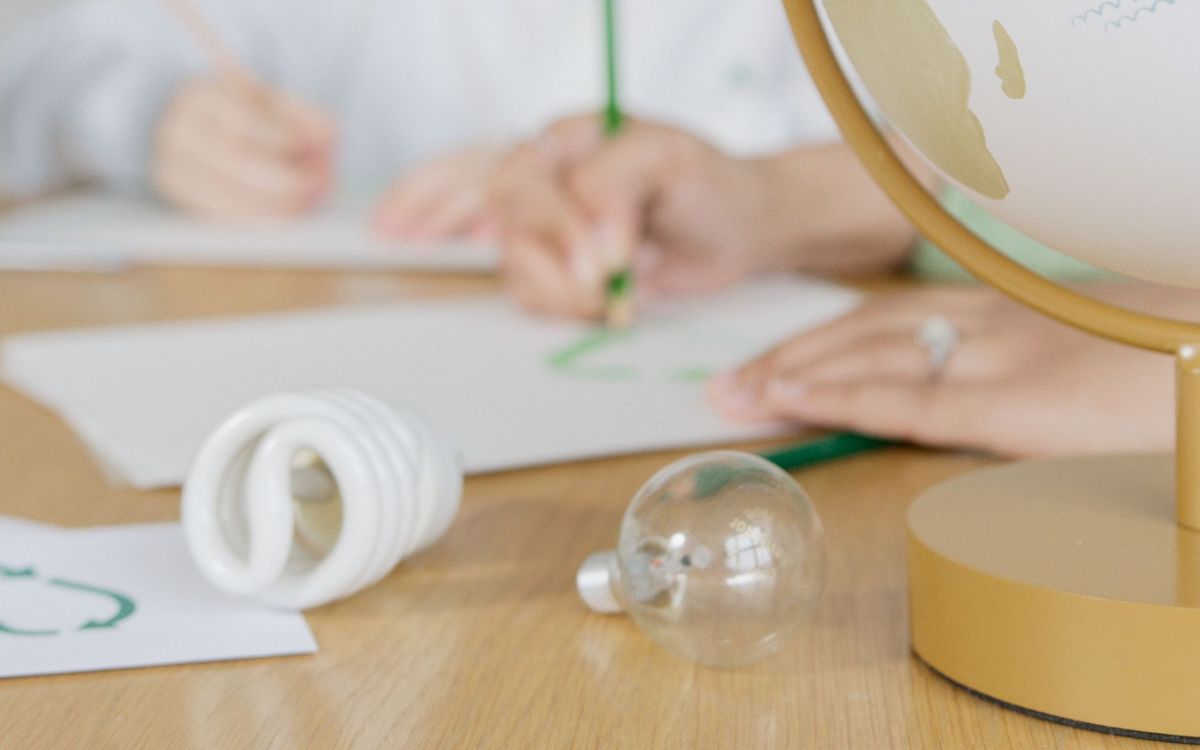
Technical comparison: LED vs halogen
Beyond the regulations, the LED vs halogen difference comes down to four technical parameters: energy consumption, lifespan, heat and light quality. The table sets out the typical values for each technology.
| Parameter | Halogen | LED |
|---|---|---|
| Power for the same brightness | 50 W | 5 to 7 W |
| Lifespan | 2,000 hours | 25,000 hours |
| CRI (colour rendering index) | 100 | 90 |
| Heat emitted | High | Low |
| Start-up | Instant | Instant |
| Dimmer compatibility | High | Depends on the driver |
Energy consumption lm/W compared
The luminous efficacy in lm/W compared between the two technologies explains the drop in the bill. LED vs halogen energy consumption data makes this clear. A 50W halogen and a 5W to 7W LED produce the same lumens, but the halogen consumes far more. This compared lux-per-watt equivalence is the basis for calculating real household savings.
Light-emitting diodes convert electrical current into visible light with little heat loss. This LED technology makes use of almost all the energy, with better energy efficiency and lower energy consumption.
Lifespan: 25,000h LED vs 2,000h halogen
When it comes to halogen vs LED lifespan, the difference is measured in years, not months. The 2,000h halogen vs 25,000h LED lifespan confirms the real difference. With five hours of daily use, a halogen bulb needs replacing just over once a year, while an LED lasts more than thirteen years.
Heat emitted and installation safety
Halogen vs LED heat emitted is another point where halogen loses ground. The halogen infrared heat risk affects recessed spotlights in plasterboard ceilings or near furniture, leaving visible marks. The heat-emitted materials factor explains the dark stains around every halogen spotlight.
Light quality: CRI and colour temperature
When discussing LED vs halogen CRI colour, halogen wins by a very small margin in laboratory conditions. The CRI 100 halogen vs CRI 90 LED comparison shows that both reproduce colours faithfully, although the difference is barely noticeable. In terms of LED vs halogen colour temperature, the choice is wider with LED, as you can find warm white, neutral or cool white, something halogen barely offers. Thanks to instant LED start-up temperature, the light reaches full brightness as soon as you flick the switch.
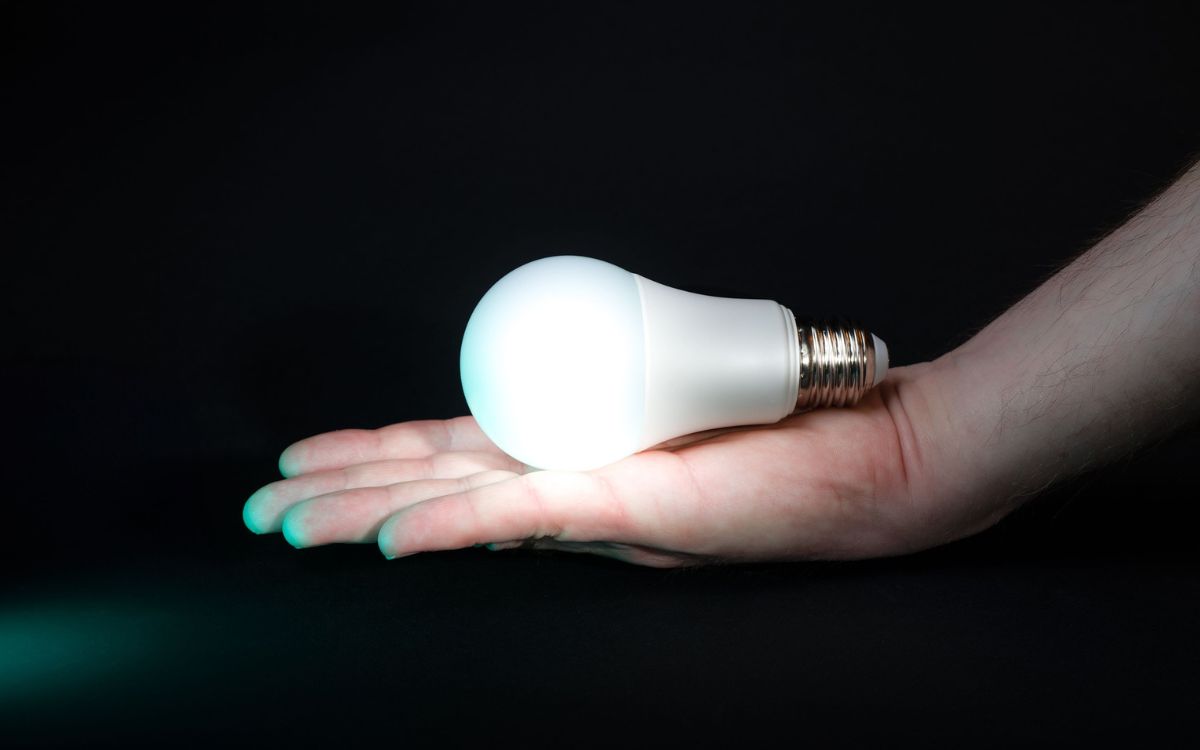
How much you save by switching halogens to LED
With concrete figures before you buy, working out the halogen-to-LED switch savings is entirely possible. The question of how much LED saves compared with halogen has a clear answer on the monthly bill.
Practical example with 10 GU10 spotlights
A 50W halogen typically has an LED equivalent of around 5W. With that ratio, ten halogen GU10 spotlights are replaced by ten LED GU10 bulbs of the same power. With an estimated use of five hours a day and 0.16 euros per kWh, the calculated saving comes to around 10 euros a month.
The LED GU10 spotlight vs halogen keeps the same base, as the standard GU10 base fits both. You can check out the range of LED GU10, MR16 and G4 spotlights or the E27 LED bulbs in the catalogue.
Investment payback time
Following this same calculation, an LED GU10 spotlight costs around 4 euros and saves roughly one euro a month. With ten units, the investment is recovered in around four months.
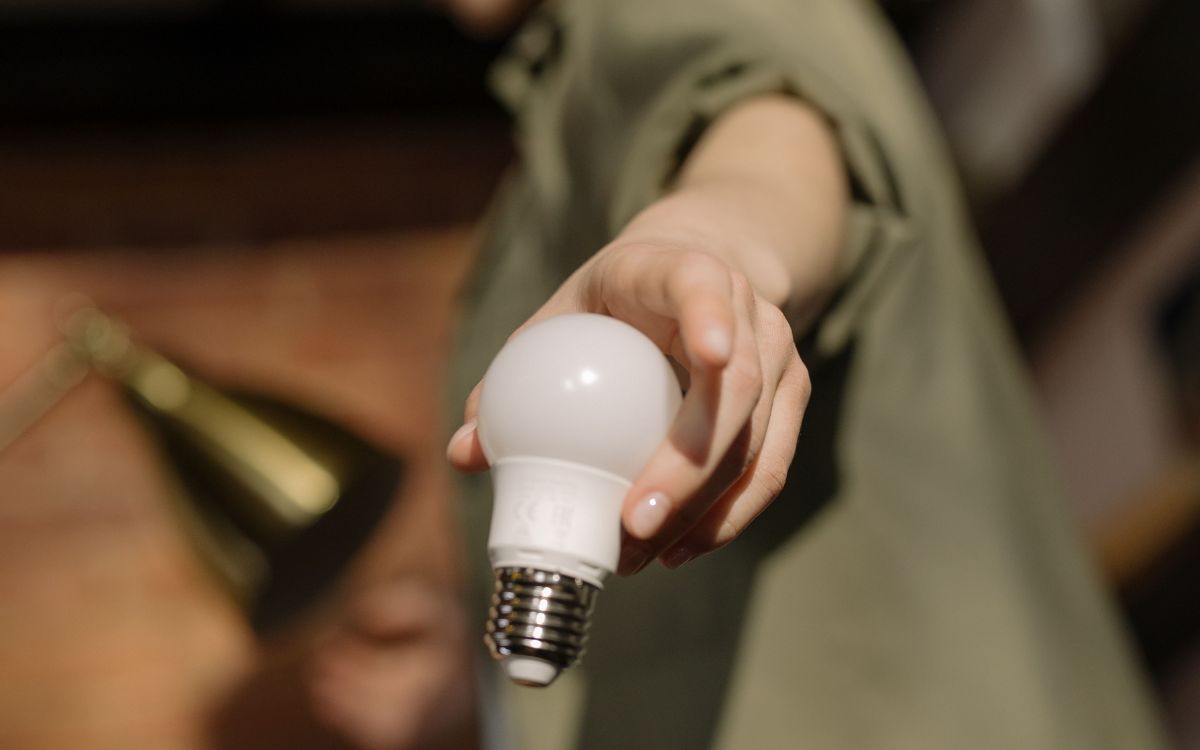
How to replace halogens with LED step by step
Switching from halogen to LED doesn't usually require building work or an electrician, except in a few specific cases.
GU10 spotlight: direct replacement without building work
The GU10 halogen-to-LED replacement is the simplest option when the base matches. Just remove the halogen bulb from the socket and fit the direct-replacement LED GU10 bulb, without touching any wiring. To replace recessed halogen spotlights with LED, simply check the transformer voltage, as 12V spotlights need LEDs of the same voltage.
E27 and E14 halogen bulbs: LED equivalents
For E27 and E14 screw-fit halogen bulbs, there's an LED equivalent in almost any shape: candle, globe or standard. These screw-fit LED lights are fitted in the same way as the halogen bulb they replace, with no adapters needed. You can browse the range of E27 LED bulbs and the rest of the LED bulbs in the catalogue.
Compatibility with existing dimmers
Dimmer compatibility depends on the internal driver of each dimmable LED bulb. An old dimmer designed for halogen can cause flickering with some LEDs, so it's worth checking whether it's marked as dimmable.
LED vs halogen light quality in practice
In practice, LED vs halogen light quality is noticeable in the uniformity of the beam more than in the colour tone. In lighting systems, the result barely changes, and the advantages of LED over halogen show up in less maintenance. Current LED lighting reproduces warm tones similar to halogen.
Frequently asked questions
Is LED light just as warm as halogen?
Yes, as long as you choose a warm-toned LED. The difference is barely noticeable in a living room.
Can I fit an LED spotlight directly where I had a halogen one?
Usually yes, because the GU10 base is the same. You only need to check the voltage if the old spotlight had a 12V transformer.
Why are halogens being withdrawn from the market?
They use far more energy than LED for the same amount of light, and European ecodesign regulations drove their withdrawal from shops. Anything already installed at home can carry on being used.
Does LED give off as much heat as halogen?
No, LED gives off much less heat because it converts energy into light more efficiently. That's why it's safer in recessed spotlights.
Is my halogen dimmer compatible with LED?
It depends on the dimmer model and whether the LED is marked as dimmable. If you notice flickering, the usual solution is to switch to a dimmer designed specifically for LED.
How much would I save a month if I switch 15 halogens to LED?
With fifteen 50W spotlights replaced by around 5W LEDs, the saving depends on daily use. With five hours a day, the calculation gives a monthly saving of close to 16 euros on the electricity bill.
Is LED light quality worse than halogen?
Not in everyday practice, although in laboratory conditions halogen has a slightly higher CRI. A good-quality LED reproduces colours with enough fidelity for everyday use.
Conclusion: when and why to make the switch now
Switching from halogen to LED makes sense if you have more than five or six spotlights switched on for several hours a day. The monthly energy saving, added to the energy savings built up over the years, pays back the investment within a few months. With the gradual withdrawal of halogen, replacement parts are becoming harder to find, so it's worth acting sooner rather than later. The LED vs halogen comparison has a clear winner on consumption and lifespan, and the light at home still looks just the same as ever.
Posted in:
Sample Category
Related posts
60x60 LED panels: everything you need to know before buying
Discover how to choose the ideal 60x60 LED panel for your project. We compare drivers, wattages, installation types...
Read more
A practical guide to choosing the perfect LED lighting for your office
Find out how to choose the perfect LED lighting for your office: it complies with the EN 12464 standard, boosts your...
Read more
Slim recessed LED downlights: guide to models, wattages and prices
Discover the differences between circular and square models, available wattages from 6W to 26W, key features such as...
Read more
LED colour temperature: how to choose between 2700K, 4000K and 6500K for your space
Warm, neutral or cool light: each LED colour temperature has its ideal space. We explain the differences between...
Read more
LED track spotlights for shops: single-phase vs three-phase, models and installation keys
Single phase or three-phase? Choosing the right LED track system makes the difference between a well-lit shop and one...
Read more
Search in blog
Blog categories
Latest posts
Surface-mounted LED downlights: ceiling lights and slim panels for ceilings without building work
Read more

Linear LED lighting for hospitality: ideas and solutions for bars, restaurants and hotels
Read more
Linear LED lighting sets the mood in bars, restaurants and hotels. Discover the types of luminaires, key areas and...
Aluminium profiles for LED strips: types, diffusers and how to choose the right mounting
Read more
Discover the aluminium profiles available for LED strips, which diffuser to choose and what accessories you need for...
LED vs halogen: complete comparison of performance, savings and light quality
Read more
Is it worth switching your bulbs? This LED vs halogen comparison covers energy consumption, lifespan, heat and light...
E27 LED Bulbs: direct replacement guide by shape, wattage and colour temperature
Read more
Practical guide to replacing your old bulbs with E27 LED bulbs without complications. Learn how to choose shape,...
Popular posts
60x60 LED panels: everything you need to know before buying
Discover how to choose the ideal 60x60 LED panel for your project. We compare drivers, wattages, installation types...
Read more
A practical guide to choosing the perfect LED lighting for your office
Find out how to choose the perfect LED lighting for your office: it complies with the EN 12464 standard, boosts your...
Read more
LED colour temperature: how to choose between 2700K, 4000K and 6500K for your space
Warm, neutral or cool light: each LED colour temperature has its ideal space. We explain the differences between...
Read more

LED public lighting: current regulations, technical requirements and key points for compliance
Guide to Spain's LED public lighting regulations: technical requirements, road classes, parameters and mandatory...
Read more
Slim recessed LED downlights: guide to models, wattages and prices
Discover the differences between circular and square models, available wattages from 6W to 26W, key features such as...
Read more
Leave a comment