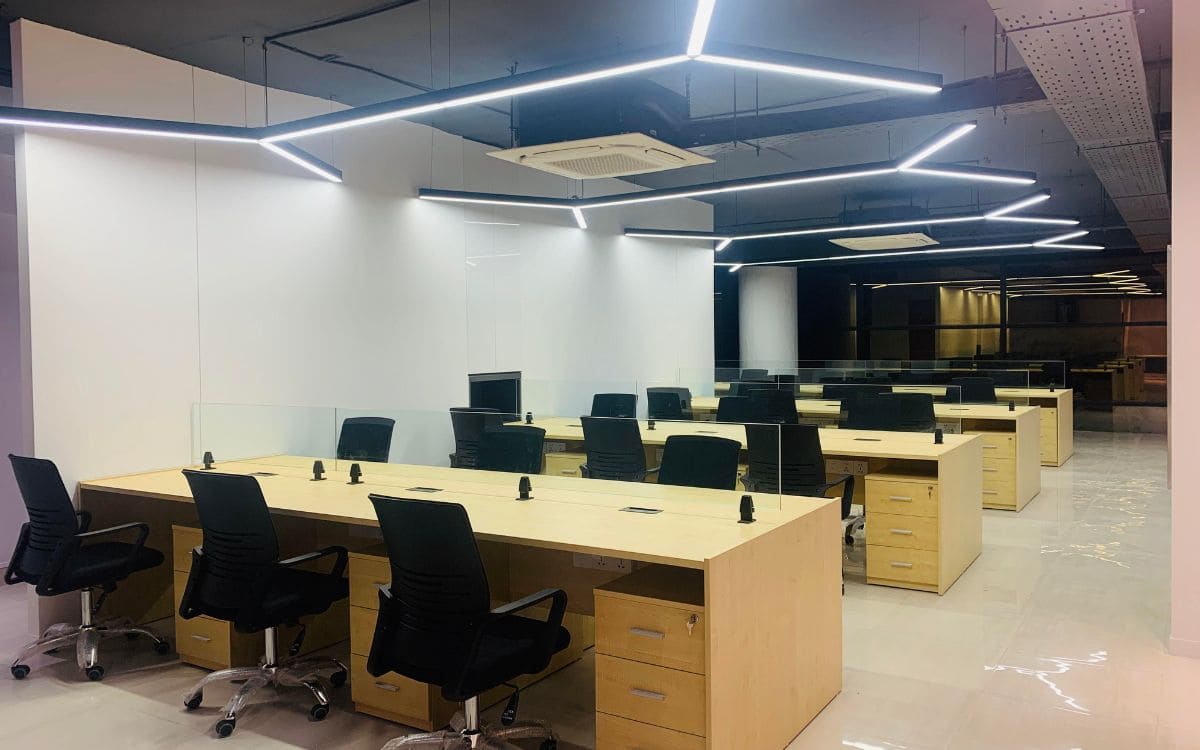
We compare COB vs SMD LED strips to help you choose the right technology for each project. We analyse light...
.svg)

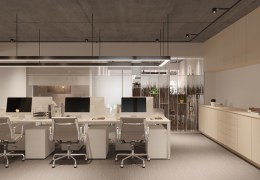
A practical guide to choosing the perfect LED lighting for your office
A company with 50 employees receives an occupational risk prevention inspection and finds that its workstations do not reach the required 500 lux. The maintenance manager has to come up with a quick solution, with no prior knowledge of the regulations or the types of luminaire available.
This guide helps you design office LED lighting correctly, in line with current regulations and with clear criteria on what to buy, where to install it and what light levels you need by zone. Applying these criteria properly will also bring energy consumption down considerably.
Why lighting matters in the workplace
Impact on productivity and wellbeing
Lighting has a direct influence on visual fatigue, concentration and performance. Poor lighting is not just uncomfortable: it leads to errors, raises absenteeism and erodes workers' visual comfort throughout the working day.
Suitable LED office lighting for productivity can improve performance and reduce errors. Productivity in workplace lighting depends largely on having the right light levels.
European standard EN 12464 for offices
The EN 12464 standard regulates illuminance levels in lux in work spaces, glare control (UGR), light uniformity and the colour rendering index. It is not an optional technical recommendation: in regulated work environments it is mandatory.
Non-compliance can lead to adaptation requirements or penalties during occupational risk prevention inspections. That is why a growing number of companies design lighting in line with this standard from the very start of the project, especially during refurbishments.
Recommended lighting levels by area
Individual work area and desks
The minimum is 500 lux, with UGR <19 and uniform distribution without shadows. LED desk lighting should remain constant across the whole work surface; sharp variations in intensity increase visual fatigue.
Meeting rooms and common areas
The recommended range is 300-500 lux, with dimming capability so that the light can be adapted to the type of use. LED lighting for meeting rooms behaves differently from that of a fixed workstation. It sometimes makes sense to lower the intensity for presentations and raise it for reading or collaborative work.
Corridors and rest areas
Here the benchmark is 100-300 lux. The priority is energy efficiency, not productivity. An excess of light in these areas adds nothing and pushes consumption up unnecessarily.
Table of recommended lux levels by area (EN 12464 reference standard):
| Area | Minimum lux | Maximum UGR |
|---|---|---|
| Individual workstations | 500 | 19 |
| Meeting rooms | 300-500 | 19 |
| Corridors and rest areas | 100-300 | 22 |
These values are the minimum, not the target. The common mistake is to install fewer luminaires than needed in order to bring the initial cost down, which ends up causing non-compliance with the regulations. The opposite also happens: too much light produces UGR glare and unnecessary consumption. A prior calculation is essential.
Which LED luminaires are most suitable for offices
60x60 LED panels with UGR19
These are the standard option for offices with a suspended ceiling. They spread the light evenly, replace fluorescents directly and have a low glare level. A UGR19 office LED panel is essential to comply with the regulations at workstations. The light distribution they provide avoids shadow zones and improves visual comfort throughout the working day.
You can check the catalogue of 60x60 UGR19 LED panels available for offices.
Recessed LED downlights
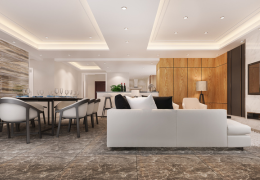
The recessed office LED downlight works well as a complement to general lighting. It is suitable for reception areas, ancillary zones or spaces with a design where a panel does not fit well. It is not intended to cover the entire work area on its own. Its purpose is to reinforce specific points or create more polished settings in passageways or waiting areas.
Track spotlights for showcase areas
Office LED track spotlights are the best solution when lighting has to be adjusted on a regular basis. Showrooms, presentation rooms, customer service areas: in these spaces, flexibility matters. They allow the light to be redirected and the spotlights to be moved without any building work. You can see the options available in the LED track lighting catalogue.
Colour temperature: what to choose for offices
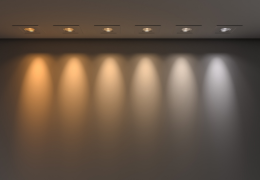
A neutral colour temperature of 4000K is the reference for offices. It offers the most stable balance between visual comfort and cognitive alertness. Neutral white does not produce the tension associated with cool light (5000–6000K), or the drowsiness linked to warm white below 3000K.
The recommended office LED colour temperature is 4000K. Cool white LED office lighting (5000–6000K) may make sense in warehouses or loading areas, but at sustained workstations it is less comfortable. Modern LED office lighting usually combines 4000K in work areas with warmer tones in rest areas.
Dimming and smart control systems
1-10V and DALI dimming
DALI dimming for office LED lighting makes it possible to divide the installation into independent zones and adjust the intensity of each one according to actual use. A properly configured DALI home-automation control system can generate additional energy savings of up to 30% compared with an installation without dimming.
1-10V dimming is simpler and cheaper. It is enough for installations where very granular zone management is not needed. DALI involves a higher initial cost, but it is the option for projects where flexibility and long-term savings are a priority.
Presence and daylight sensors
Presence sensors switch the lights on and off automatically according to actual occupancy of the space. Daylight sensors adjust LED intensity according to the outdoor light coming in through the windows. Both are a standard part of any office LED energy efficiency project because they eliminate unnecessary consumption without requiring manual intervention.
How to calculate the number of luminaires needed
The basic calculation follows three steps: first, define the lux needed in the office work area according to the zone (for example, 500 lux for workstations); second, multiply that figure by the square metres of the space; third, divide the result by the lumens of each luminaire.
Illustrative example: a 40 m² room requiring 500 lux needs 20,000 lumens in total. A 4,000-lumen LED panel would theoretically cover that room with 5 units, although the actual layout may vary depending on the geometry of the ceiling and the installation height.
For professional projects, lighting calculation tools such as DIALux are used. They simulate the actual lighting before installation and ensure compliance with the standard.
Conclusion and recommended solutions
Well-designed modern LED office lighting is not just a question of meeting the office lighting regulations. It is a decision that affects the performance of the people working in that space every day. The reduction in energy consumption compared with fluorescent installations can be between 40% and 70%, depending on the starting point.
For standard offices, the combination that works best is: 60x60 UGR19 LED panels in work areas, LED downlights in ancillary areas and reception zones, track spotlights in showcase spaces, and DALI control with sensors in installations where energy savings are a top priority.
If you have a refurbishment or fit-out project under way, request free technical advice from Ibérica de Iluminación. The service covers a luminaire proposal, lighting calculation and guidance on regulatory compliance, with no commitment. You can also check the full LED office downlight catalogue.
CE lighting certification is another aspect worth checking: every luminaire installed in workplace environments must have it. The Ibérica de Iluminación catalogue options include it by default.
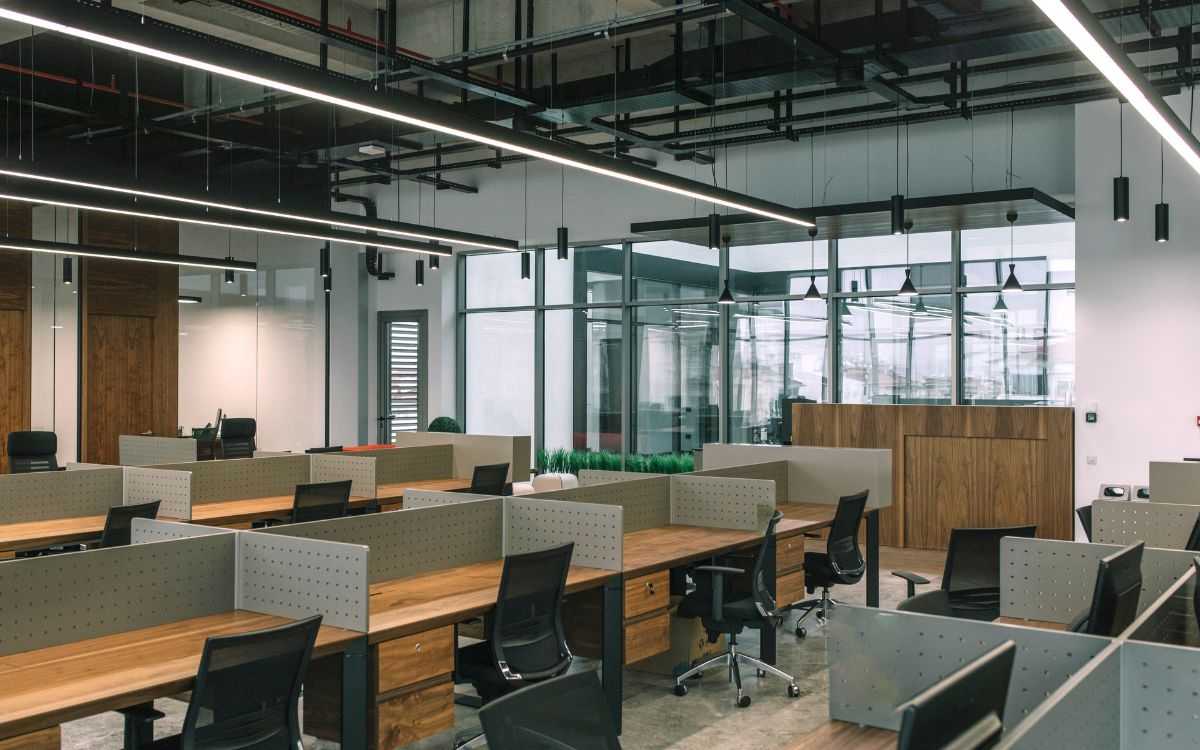
The complete office LED lighting kit luminaires, dimming system and sensors is the most common solution in turnkey projects. Maintenance of office luminaires with LED is minimal compared with fluorescents: service lives of 50,000 hours or more significantly reduce replacement costs. For large open-plan spaces, LED open-space lighting requires a specific calculation by zone to avoid both under-lighting and widespread glare.
Frequently asked questions on How to Choose LED Lighting for your Office
How many lux does an office need according to the regulations?
The EN 12464 standard sets a minimum of 500 lux at workstations. For corridors and rest areas the threshold is lower: 100–300 lux.
What colour temperature is best for working?
4000K (neutral white). It is the most documented balance between visual comfort and alertness. Temperatures above 5000K are more aggressive over long working days.
Is compliance with EN 12464 mandatory in offices?
Yes, in regulated workplace environments. Non-compliance can lead to requirements during occupational risk prevention inspections.
Can I dim LED panels?
Yes, with 1-10V, DALI or Triac systems. The panel driver has to be dimmable; not every panel supports this as standard, so it is worth checking before buying.
What is the difference between UGR13 and UGR19?
UGR measures glare: the lower the value, the less glare. UGR13 is stricter and is used in work that requires high visual precision. For standard offices, UGR19 is the reference value required by the regulations.
How much do I save by switching to LED in an office?
Between 40% and 70% compared with fluorescent installations, depending on how old the existing installation is and on the dimming system being installed.
Which luminaire is best for meeting rooms?
Dimmable LED panels as a base, combined with focal or decorative lighting when the use of the space calls for it. Dimming is key in meeting rooms because the optimum light level varies depending on the activity.
Posted in:
Sample Category
Related posts
60x60 LED panels: everything you need to know before buying
Discover how to choose the ideal 60x60 LED panel for your project. We compare drivers, wattages, installation types...
Read more
Slim recessed LED downlights: guide to models, wattages and prices
Discover the differences between circular and square models, available wattages from 6W to 26W, key features such as...
Read more
LED colour temperature: how to choose between 2700K, 4000K and 6500K for your space
Warm, neutral or cool light: each LED colour temperature has its ideal space. We explain the differences between...
Read more
LED track spotlights for shops: single-phase vs three-phase, models and installation keys
Single phase or three-phase? Choosing the right LED track system makes the difference between a well-lit shop and one...
Read more
LED Lighting for Shops: Light Strategies That Drive Sales
Discover how LED lighting boosts shop sales: lux levels by zone, CRI, colour temperature and common mistakes to avoid...
Read more
Search in blog
Blog categories
Latest posts
COB vs SMD LED Strips: Technical Differences and When to Use Each Technology
Read more
24V DC LED Strips: The Professional Choice for High-Brightness, Long-Run Installations
Read more
24V DC LED strips allow long runs to be installed without voltage drop or colour variation. Discover the available...
LED Lighting for Car Parks and Garages: Regulations, Luminaires and Maximum Energy Savings
Read more
LED lighting for car parks and garages allows lighting consumption to be reduced by up to 80 % using presence...
LED IP65 and IP66 Battens and Weatherproof Diffusers: A Model Guide for Damp and Industrial Areas
Read more
This guide compares IP65 and IP66 weatherproof LED diffusers by power, chip and length, and shows which model is best...
Complete Guide to Replacing Fluorescent Lights with LED: Steps, Equivalents and Real Savings
Read more
This guide explains how to replace fluorescent lights with LED step by step, with power equivalents, ballast bypass...
Popular posts
60x60 LED panels: everything you need to know before buying
Discover how to choose the ideal 60x60 LED panel for your project. We compare drivers, wattages, installation types...
Read more
A practical guide to choosing the perfect LED lighting for your office
Find out how to choose the perfect LED lighting for your office: it complies with the EN 12464 standard, boosts your...
Read more
LED colour temperature: how to choose between 2700K, 4000K and 6500K for your space
Warm, neutral or cool light: each LED colour temperature has its ideal space. We explain the differences between...
Read more

LED public lighting: current regulations, technical requirements and key points for compliance
Guide to Spain's LED public lighting regulations: technical requirements, road classes, parameters and mandatory...
Read more
Slim recessed LED downlights: guide to models, wattages and prices
Discover the differences between circular and square models, available wattages from 6W to 26W, key features such as...
Read more
Leave a comment