We compare COB vs SMD LED strips to help you choose the right technology for each project. We analyse light...
.svg)

Urban LED street lamps for local councils: models, regulations and selection criteria
The infrastructure technician from a municipality of 8,000 inhabitants receives the task of renovating 300 lighting points in the urban centre. He does not know where to start. Urban LED street lights for municipalities are today the standard option for this type of project.
Choosing correctly requires knowing the regulations, technical criteria and available models for each type of road. This guide summarises the regulatory framework, the key selection points and the usual range for public lighting.
Why municipalities are renovating their lighting to LED
Public lighting is one of the largest items in any municipality's budget. LED technology has changed the rules: same light, less consumption and a service life that drastically reduces maintenance visits. This is added to regulatory pressure and access to European funds for energy efficiency projects. The change is no longer a future option, but a short-term budget management decision.
Energy savings and reduction of the municipal bill
The replacement of sodium vapour street lights with LED cuts unit consumption between 50% and 70%.
A 150 W sodium vapour street light consumes around 170 W with the auxiliary equipment. Its LED equivalent offers the same light level with 60-80 W.
In a fleet of 300 luminaires operating 4,200 hours per year, the public LED lighting savings for the municipality can be between 100,000 and 130,000 kWh annually. The LED street light energy efficiency for public roads translates directly into a monthly reduction in the municipality's electricity bill.
Reduction of light pollution
Well-designed LED luminaires direct the flux downwards and limit the emission above the horizon. Light pollution reduction is achieved by combining quality optics, appropriate colour temperature and drivers that reduce the flux during low activity hours. In municipalities with protected skies or close to observatories, this factor weighs as much as economic savings.
What regulations govern public lighting in Spain
Urban road external lighting is regulated by a set of standards that any project must comply with. The selection of luminaire starts by verifying regulatory compliance, not the other way around.
Regulation on Energy Efficiency in External Lighting Installations
Royal Decree 1890/2008 sets the lighting levels, the limits of installed power and the degrees of efficiency required according to the type of road. Each zone (ME for motor traffic, CE for commercial areas, S for pedestrian areas) has its table of luminance or illuminance values. This is added to REBT compliance for the electrical part. And CE RoHS street light marking regulations regarding marking and restriction of substances.
IP IK Requirements and colour temperature for public roads
External street lights must withstand rain, dust and impact. Public LED lighting regulations and municipal specifications usually require IP66 weather protection and IK08 impact resistance certification. As for light colour, 4000K colour temperature for public roads has become the reference. It offers good contrast perception without causing glare or excessive light pollution.
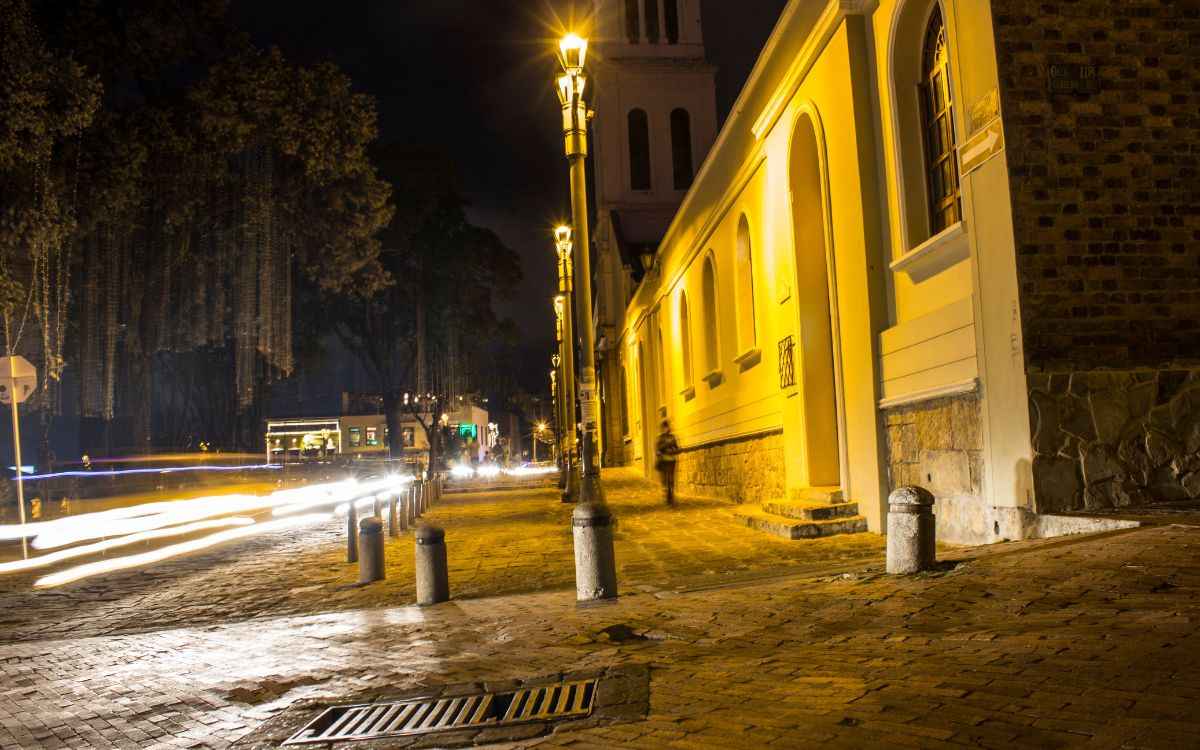
How to choose an LED street light for municipal use
The choice depends on the type of road, the pole height and the hourly regime. Three points summarise the technical decision.
Power according to local road type secondary or main
In a residential street with light traffic and poles of 4-6 m, low powers are sufficient. In an avenue with two lanes per direction, greater flux and better distribution is needed. The table guides the selection for an LED street light for street or road:
The photometric study adjusts these values to the specific case and allows defining the price of the urban LED street light price municipality within the specification.
Programmable driver flux reduction in off-peak hours
A programmable variable power driver allows adjustment of the luminaire's operating curve. The LED street light with programmable driver reduces the flux during low traffic hours. This provides additional savings of 20-30% over what is already achieved by switching to LED.
This night-time flux reduction is programmed at the factory or managed via remote control. It is one of the points that most differentiates a quality programmable adjustable LED street light from basic options. For areas where hourly regulation does not fit, the LED street light with twilight sensor activates the switch-on based on the ambient light level.
Quality chip Philips Lumileds and Bridgelux
The actual performance of a luminaire depends on the LED chip, the driver and the optics. Chips from manufacturers such as Philips Lumileds or Bridgelux are a reference for their chromatic stability, luminous efficacy and low ageing factor. An LED street light with Philips Lumileds chip maintains its flux close to the nominal value throughout the entire useful life of 100,000 hours street light. This avoids early replacements and complaints about low light levels.
Range of urban LED street lights available
The offer covers all the powers and configurations required by a standard municipal specification. The LED street light for public lighting is grouped into two main families according to the road.
Street lights from 40W to 60W for residential streets
Designed for low poles and light traffic roads. They cover residential street specifications and pedestrian areas well. A 4-metre pole LED street light with a 40 W luminaire provides adequate illuminance for that range. The 40w 60w 100w road LED street light within this range usually incorporates a programmable driver and meets IP66 and IK08 as standard.
Street lights from 100W to 150W for avenues and main roads
For heavy motor traffic and high poles. Photometric distribution is designed to comply with the ME classes of the regulation. In large projects, this range represents the bulk of the budget and it is advisable to adjust it with a prior lighting calculation. It is the usual choice for road access points and roundabouts.
Accessories and installation elements
A municipal LED street light project does not end with the luminaire. Accessories make the difference between a long-lasting installation and one that causes problems in the first few months.
Columns and arms for LED street lights
The pole and arm street light installation defines the useful height and projection angle. There are galvanised steel, aluminium or specific urban design columns for historic centres. The arm is chosen according to the geometry of the street and the overlap sought between lighting points.
Surge protection and control modules
Voltage surges from storms or network operations are the most frequent cause of premature failure. A surge protector at each point multiplies reliability. Control modules enable point-to-point remote management, consumption reading and remote management of the IP66 weather resistant LED street light.

How to manage a municipal renovation project
The project is structured in four steps:
- Audit of the current installation
- Photometric calculation by road
- Drafting of the specification with required powers and certificates
- Selection of supplier in tender
Requesting a technical report from the manufacturer beforehand helps set realistic specifications and avoid falling outside the budgetary scope. IDAE grants and European energy efficiency funds usually co-finance this type of renovation.
Request technical catalogue and customised project for your municipality. We send you photometric calculation, technical sheets and economic proposal adapted to the specification.
View the range in the catalogue: urban LED street lights, public and road lighting and LED street light accessories.
Frequently Asked Questions about Urban LED Street Lights
What regulations must LED street lights comply with for municipal use?
Royal Decree 1890/2008 on Energy Efficiency in External Lighting, REBT for the electrical part and CE and RoHS marking. The municipal specification adds requirements for IP66, IK08 and colour temperature, usually 4000K.
How much does a municipality save by switching to LED street lights?
The reduction in public lighting consumption is between 50% and 70%. With programmable driver and night-time reduction, savings can exceed 75%.
What power of LED street light do I need for a residential street?
For a residential street with poles of 4-6 metres, the usual powers are between 40 W and 60 W. The photometric calculation adjusts the exact value.
What is the programmable driver in a street light and what is it for?
It is the electronic controller that regulates the LED current. It allows programming power curves by time slots to reduce the flux when there is low activity and save consumption.
Do LED street lights reduce light pollution?
Yes. Their optics direct the flux downwards and, with the correct colour temperature and night-time regulation, the light emitted to the sky is reduced.
Are there subsidies to renovate public lighting to LED?
Yes. IDAE and European energy efficiency funds finance public lighting renovations. Calls and conditions change, so it is advisable to consult the current one.
What is the difference between IP65 and IP66 in external street lights?
Both protect against dust. IP65 resists low pressure water jets; IP66 withstands powerful jets and is the reference for exposed outdoor areas.
Posted in:
Sample Category
Related posts
60x60 LED panels: everything you need to know before buying
Discover how to choose the ideal 60x60 LED panel for your project. We compare drivers, wattages, installation types...
Read more
A practical guide to choosing the perfect LED lighting for your office
Find out how to choose the perfect LED lighting for your office: it complies with the EN 12464 standard, boosts your...
Read more
Slim recessed LED downlights: guide to models, wattages and prices
Discover the differences between circular and square models, available wattages from 6W to 26W, key features such as...
Read more
LED colour temperature: how to choose between 2700K, 4000K and 6500K for your space
Warm, neutral or cool light: each LED colour temperature has its ideal space. We explain the differences between...
Read more
LED track spotlights for shops: single-phase vs three-phase, models and installation keys
Single phase or three-phase? Choosing the right LED track system makes the difference between a well-lit shop and one...
Read more
Search in blog
Blog categories
Latest posts
COB vs SMD LED Strips: Technical Differences and When to Use Each Technology
Read more
24V DC LED Strips: The Professional Choice for High-Brightness, Long-Run Installations
Read more
24V DC LED strips allow long runs to be installed without voltage drop or colour variation. Discover the available...
LED Lighting for Car Parks and Garages: Regulations, Luminaires and Maximum Energy Savings
Read more
LED lighting for car parks and garages allows lighting consumption to be reduced by up to 80 % using presence...
LED IP65 and IP66 Battens and Weatherproof Diffusers: A Model Guide for Damp and Industrial Areas
Read more
This guide compares IP65 and IP66 weatherproof LED diffusers by power, chip and length, and shows which model is best...
Complete Guide to Replacing Fluorescent Lights with LED: Steps, Equivalents and Real Savings
Read more
This guide explains how to replace fluorescent lights with LED step by step, with power equivalents, ballast bypass...
Popular posts
60x60 LED panels: everything you need to know before buying
Discover how to choose the ideal 60x60 LED panel for your project. We compare drivers, wattages, installation types...
Read more

A practical guide to choosing the perfect LED lighting for your office
Find out how to choose the perfect LED lighting for your office: it complies with the EN 12464 standard, boosts your...
Read more
LED colour temperature: how to choose between 2700K, 4000K and 6500K for your space
Warm, neutral or cool light: each LED colour temperature has its ideal space. We explain the differences between...
Read more
LED public lighting: current regulations, technical requirements and key points for compliance
Guide to Spain's LED public lighting regulations: technical requirements, road classes, parameters and mandatory...
Read more

Slim recessed LED downlights: guide to models, wattages and prices
Discover the differences between circular and square models, available wattages from 6W to 26W, key features such as...
Read more
Leave a comment