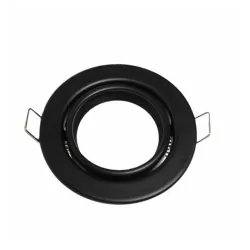
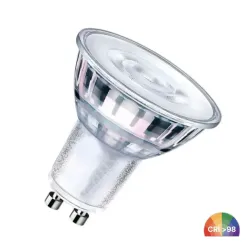
The GU10 LED bulbs in this category replace 50W halogen without touching the installation. GU10 bayonet cap, Osram or Samsung chip depending on the model, and CRI reaching 98 on the premium models. If you are looking for dichroic spotlights for recessed downlights in homes, shops, or hospitality premises, here you will find the full range organised by wattage, angle, and colour temperature.
Why replace your GU10 halogens with LED dichroic spotlights
A 50W GU10 halogen consumes four or five times more than its LED equivalent for the same level of light. The switch pays for itself within a few months and requires no modification to the recessed spotlight.
Energy savings and compared service life
A 6 to 8W LED dichroic produces the same amount of light as a 50W halogen.
With a 25,000-hour flicker-free service life, the saving means fewer replacements, less maintenance, and no flickering to cause eye fatigue during extended use.
How to choose the right beam angle for your application
The beam angle of 24°, 38°, or 60° defines how light is distributed in the space:
- 24° (accent): concentrated beam for pictures, display cases, and shop windows. Avoids light spill onto side walls.
- 38° (general): standard angle for living rooms, kitchens, and offices. Good coverage without creating dark areas.
- 60° (ambient): diffuse, enveloping light, suited to hallways, bathrooms, and transit areas.
Available models by wattage and CRI
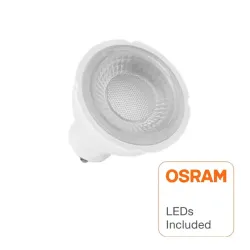
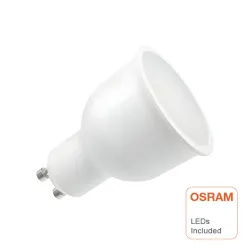
The range covers three wattage levels with different lumen outputs of 600, 800, and 1,200 lm depending on the application. All models are GU10 LED dichroic spotlights for standard recessed downlights. To check the GU10 LED dichroic price per unit or in a multipack, go to the individual product page.
6W standard dichroic for general use
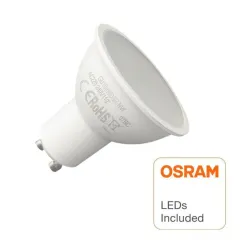
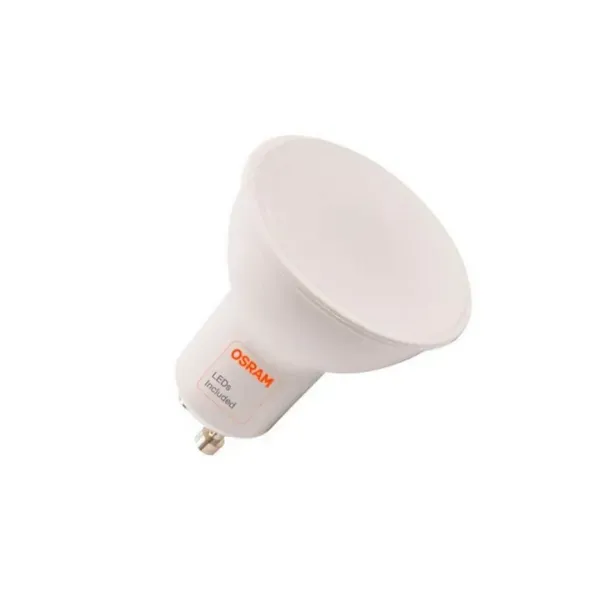
The 6W Osram GU10 LED bulb produces around 600 lm with a minimum CRI of 80. It is the most common option for residential general lighting. Direct 50W halogen replacement is achieved in most downlights without any modification.
8W high-brightness dichroic with glass diffuser
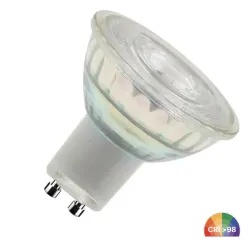
The 8W high-brightness GU10 LED dichroic reaches 800 lm. The glass vs plastic diffuser makes a difference to light distribution. Glass gives a more uniform light and handles the chip temperature better.
This reference is also available as a high-brightness glass GU10 LED dichroic in 24° and 38°. The price is slightly higher than the plastic model, but the light quality improves noticeably.
10W maximum output dichroic with CRI 98
The 10W 1,200 lm GU10 LED bulb is the highest-output model. With CRI 98 maximum colour accuracy, it reproduces colours with a precision that halogen never achieved. It is the right model for retail, jewellery, and hospitality. Also available as a dimmable CRI 98 GU10 LED dichroic.
Available colour temperatures
Models in this category are offered in three colour temperature ranges of 2700K, 3000K, and 4000K:
- 2,700K (warm white): bedrooms, restaurants, and hotels. The 2700K warm white GU10 LED bulb is the best-selling option for residential use.
- 3,000K (warm neutral white): clothing shops, kitchens, and reception areas. Balances colour accuracy with a warm atmosphere.
- 4,000K (cool neutral white): offices, bathrooms, and product window displays where clarity is the priority.
Dimmable and non-dimmable
Not all LED dichroic spotlights support intensity dimming. Dimmable models feature a driver compatible with phase-cut dimmers, also known as TRIAC-compatible dimmable drivers. For them to work correctly, the dimmer must be compatible with LED loads. If you have an old halogen dimmer, check the data sheet before buying or ask us.
Non-dimmable models are more cost-effective and cover most residential and hospitality applications. Use the TRIAC dimmable GU10 LED bulb filter in the category to see the available references.
Osram chip vs Samsung chip: the differences
The chip determines the quality of the light point, colour stability, and durability. Both brands offer proven Osram and Samsung chip quality, but with different profiles:
- Osram chip: maximum CRI up to 98, very high thermal stability. Used in premium retail and hospitality models where colour accuracy is the priority. The high-end 24° glass GU10 LED dichroic typically features it.
- Samsung chip: very high luminous efficiency, CRI up to 95. The most cost-effective option for domestic use and general lighting spaces. The Samsung chip GU10 LED dichroic is the most common choice in residential installations.
Both options exceed 25,000 hours of service life. If you are looking for a flicker-free GU10 LED bulb, every reference in this category meets that requirement. All models feature a driver with power factor correction and operate without flicker.
If you are upgrading several light points at once, you can buy GU10 LED dichroic spotlights in multipacks from 10 units with volume pricing. This is the most common option for hospitality, retail, and residential building installations.
Frequently asked questions about GU10 LED dichroic spotlights
Which LED dichroic replaces a 50W GU10 halogen?
A GU10 LED dichroic equivalent to a 50W halogen sits between 6W and 8W depending on the CRI and diffuser type. For general lighting, the 6W is sufficient. If you need greater colour accuracy or more lumens at a narrow angle, the 8W glass version is the right choice.
What beam angle do I need to illuminate a picture?
To illuminate a picture or a specific object, the right angle is 24°. It concentrates the beam and avoids light spill onto the side walls. If you want a softer background, a 38° GU10 LED bulb with the spotlight positioned slightly further away gives a more balanced result.
Can I use LED dichroic spotlights with my halogen dimmer?
It depends on the type of dimmer. Phase-cut dimmers designed for halogen are sometimes compatible with LED, but not always. Models with a TRIAC-compatible dimmable driver work with most current dimmers. It is recommended to check the data sheet or replace the dimmer with one designed for LED loads.
What is the difference between a glass and a plastic LED dichroic?
The glass vs plastic diffuser affects light distribution and heat management. The glass diffuser gives more uniform light and handles the chip's operating temperatures better, which extends the service life. The plastic diffuser is lighter and more cost-effective, and works well in moderate-use applications.
What CRI do I need for a clothing shop?
For fashion retail, the recommended minimum is CRI 90. If the colour accuracy of the fabric is the priority, models with CRI 98 maximum colour accuracy are the best option. A high CRI means colours are perceived as they really are. This reduces returns due to colour differences between the shop and the customer's home.
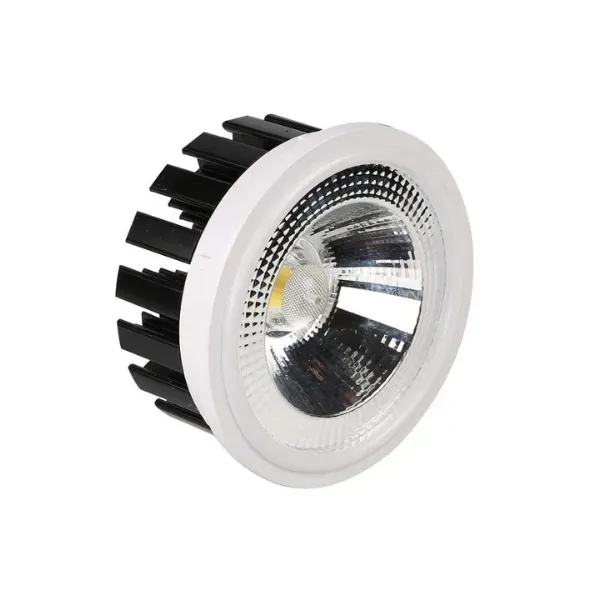
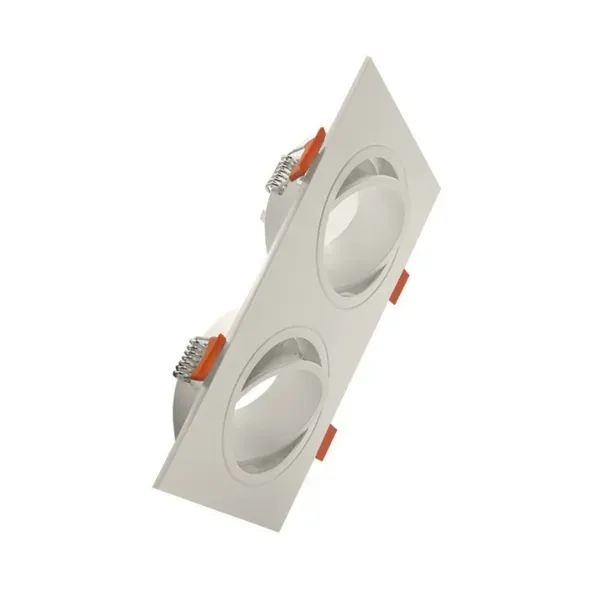
See also: Lamp accessories: AR111 rings and frames, E14 LED bulbs, GU10 LED bulbs for recessed downlights.
.svg)