Surface-mounted LED downlights solve the lack of a false ceiling. Compare ceiling lights, slim panels, finishes and...
.svg)

How to light a facade with LED: techniques, projectors and installation keys
Lighting a facade with LED transforms the nocturnal perception of a building. A well-lit facade communicates identity, reinforces security and multiplies the visual appeal of the property. The result depends on three decisions: the chosen technique, the projector power and the mounting point. This guide explains how to make each one with sound criteria.
Why facade lighting makes the difference
Exterior lighting changes the way a property is perceived from the street and conditions the experience of those who visit it at night.
Visual impact and perception of property value
With well-positioned LED projectors, the building defines its architectural character and creates a first impression that natural daylight rarely manages to match. For hotels, restaurants and commercial premises, that impact is directly reflected in customer footfall. High-quality LED lighting restores the true colours of materials. Lighting solutions with a low colour rendering index flatten and distort them.
Security and deterrence at access points
Illuminated access points reduce the blind spots that favour insecurity. The placement of LED facade spotlights at entrances, corners and walkways produces uniform lighting without blind spots. This deters and improves the vision of security cameras. LED technology keeps the light points on throughout the night with minimal consumption thanks to its energy efficiency and long service life.
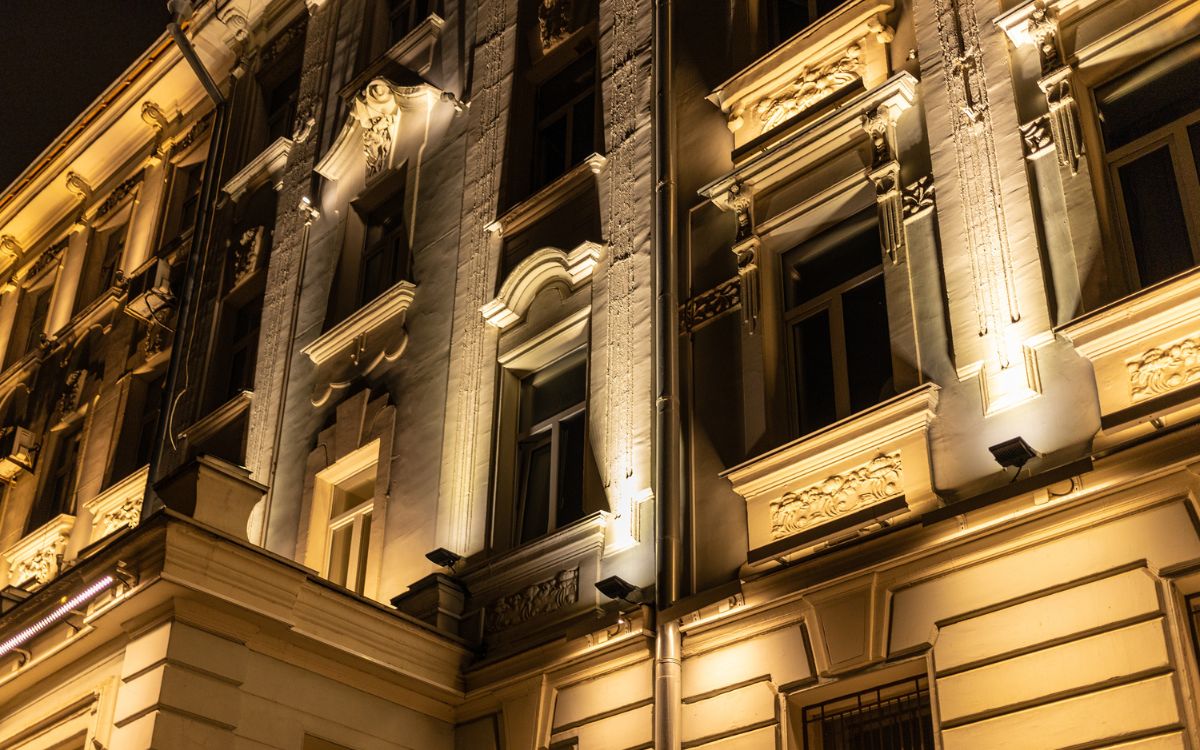
Architectural lighting techniques for facades
Architectural LED facade lighting is organised around three main techniques. The type of lighting you choose determines the final effect on the wall, the material and the installation distance.
Washing: uniform surface lighting
Washing projects light continuously over the entire vertical surface. The result is uniform vertical washing lighting that covers the wall without leaving any areas in shadow. It is the appropriate technique for smooth facades: render, exposed concrete or composite panel. The projector must be placed far enough from the wall for the beam to cover the full height without interruption.
Grazing: highlights texture
The grazing effect places the projector very close to the wall, between 30 and 60 cm, and directs the beam almost parallel to the surface. This proximity generates a light-shadow-relief contrast that makes the most of every irregularity: stone, brick, wood, rough render. A farmhouse or historic building illuminated with LED grazing acquires a depth that no other technique achieves. Iconic lighting of historic buildings almost always uses this technique.
Uplighting: projectors from the ground upwards
Uplighting places the projector at ground level pointing upwards. It is the most common solution when there is no mounting point on the facade or when the aim is to emphasise the verticality of the building. The recessed ground LED facade spotlight disappears into the pavement, creates no obstacles and withstands outdoor conditions thanks to its IP67 protection.
How to calculate projector power and position
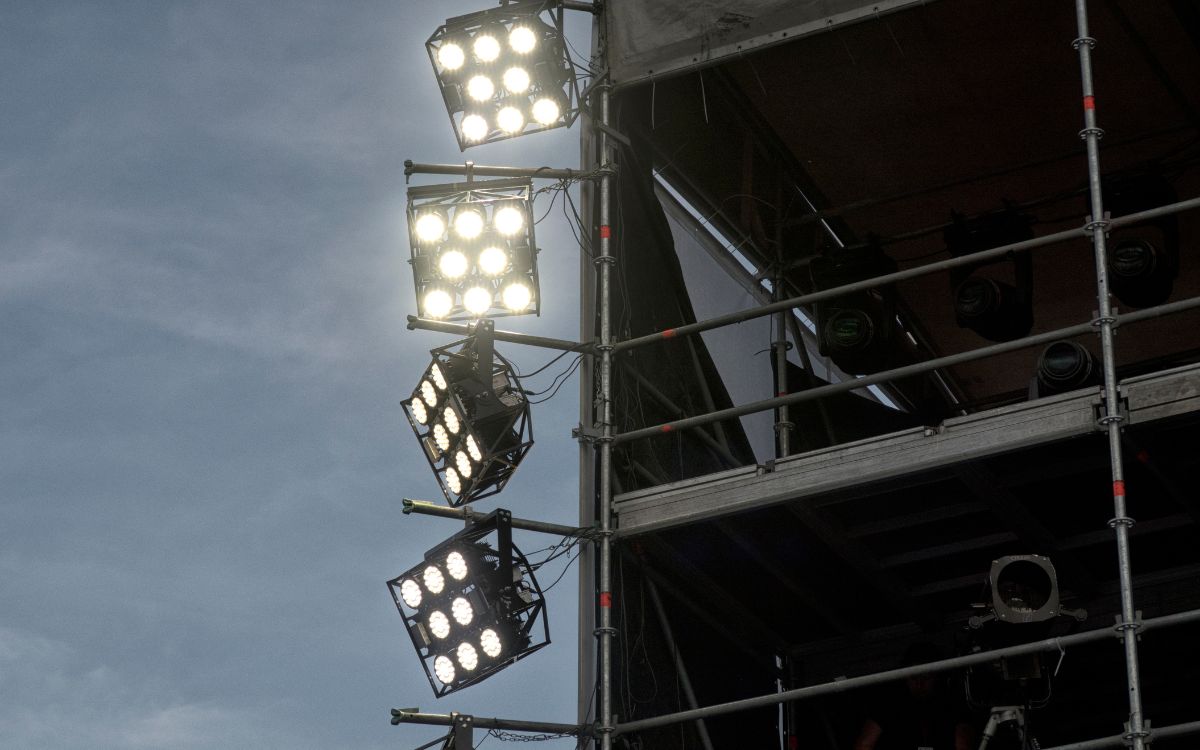
The lighting angle and distance from the wall are the two variables that generate the most errors.
Distance from the wall and angle of incidence
The projector-to-facade distance calculation starts from the height to be illuminated and the angle of the projector's light beam. A spotlight with a narrow beam (10-20°) concentrates light on a strip; one with a wide beam (40-60°) covers more surface with less intensity. The recommended projection distance for washing is approximately 60% of the total wall height.
The optimal angle of incidence on the facade for highlighting textures is between 5° and 20° from the vertical. The optimal projector mounting point angle in uplighting is the one that leaves the beam pointing at the geometric centre of the surface to be illuminated.
Facade height and required power
The power required for a facade surface depends on the height of the wall and the finish. Dark surfaces absorb more light and require more watts; light surfaces reflect better and allow working with less power.
Indicative power table by surface
Indicative values as an illustrative example. Actual power depends on the finish, surface colour and installation angle.
| Facade height | Recommended power | Usual technique |
|---|---|---|
| Up to 4 m | 10-20 W | Washing / Grazing |
| 4-8 m | 20-50 W | Washing / Uplighting |
| 8-12 m | 50-80 W | Uplighting / combined |
| More than 12 m | 80-150 W | Combined multipoint |
What colour temperature to choose for facades
The colour temperature of LED facade lighting determines whether the building conveys warmth, modernity or neutrality. The colour of the light conditions the reading of the material as much as the spotlight power, so it is worth deciding before choosing the projector.
2700K-3000K for stone, wood and brick facades
Warm temperature 2700K-3000K is the reference for traditional materials. It enhances the ochres, reds and beiges of stone and brick without distorting their natural colour.
Warm 3000K LED facade lighting dominates in restaurants, rural hotels and historic buildings. Its soft light accentuates the texture of the material without hardening the atmosphere. LED lighting for stone and brick facades at this temperature produces results consistent with traditional architecture. Warm light reinforces the visual comfort of the exterior space.
4000K for modern facades and corporate buildings
Glass, aluminium, stainless steel and polished concrete facades respond better to 4000K. This cool light provides sharpness, contrast and a more technical reading of the building. It is the option for commercial LED facade projectors and office buildings. LED lighting for hotel and restaurant facades in modern urban environments often incorporates this temperature, sometimes combined with warm white in access areas.
Recommended types of LED projectors for facades
IP67 recessed ground projectors
The IP67 recessed ground housing is the cleanest solution for uplighting. By sitting flush with the pavement it creates no obstacles and does not interrupt the design of the surroundings.
It guarantees total waterproofing against water and dust resistance, making it suitable for electrical installations in walkways, terraces and exposed gardens. Stainless steel models withstand pedestrian traffic without deteriorating. See LED exterior and garden projectors and accessories for exterior spotlights and projectors at Ibérica de Iluminación.
Adjustable wall projectors
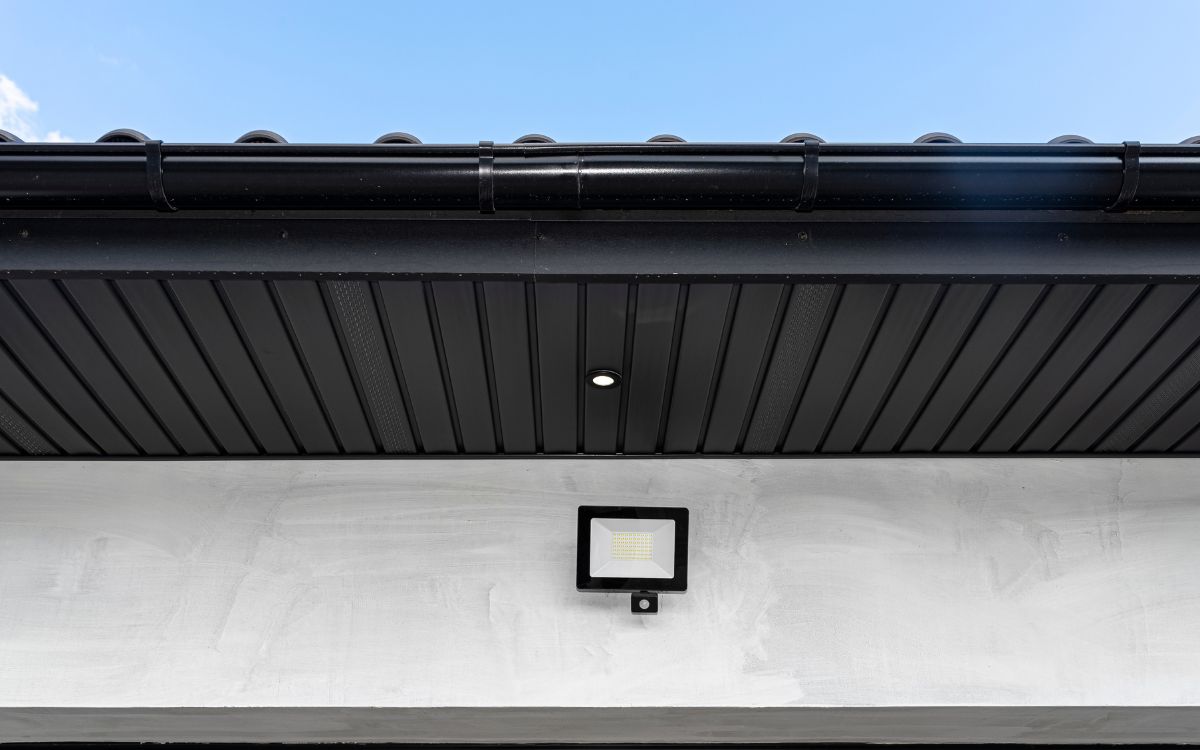
Adjustable wall projectors allow the LED facade lighting angle to be adjusted after installation without reopening the housing. They are the most flexible option for lighting a house facade with LED in renovations where recessing is not possible. Fitting LED facade spotlights on a wall is simpler with these models because no building work is required. They are also the standard solution for LED projectors for building facades with mouldings or irregularities that require the beam to be corrected on the spot.
Steps to plan a facade lighting project
A well-structured facade lighting project budget avoids errors that are difficult to correct.
- Photograph the facade at night to identify dark areas.
- Decide on the technique according to the surface material.
- Measure the height and calculate the required power.
- Choose the colour temperature: warm 3000K LED facade lighting for stone and wood, 4000K for modern facades.
- Position the mounting points and verify the angles before fixing the installation.
- Check with the electrician whether the existing electrical installation can accommodate the new circuits.
Vertical grazing facade lighting requires more precision in positioning than washing. It is worth testing with temporary work spotlights before fixing the final installation.
At Ibérica de Iluminación you will find LED exterior and garden projectors and accessories for exterior spotlights and projectors for any type of facade and budget.
Frequently asked questions
Where are the projectors placed to light a facade?
It depends on the technique. For uplighting, they are placed on the ground pointing upwards, ideally flush with a recessed housing. For washing or grazing, they are anchored to a wall, column or post at the appropriate height according to the desired angle of incidence.
What power do I need to light an 8-metre-high facade?
For an 8-metre facade, the required power ranges between 40 and 70 W per projector. The wall finish and installation distance adjust that value in one direction or the other.
What colour temperature is best for stone facades?
Warm temperature 2700K-3000K is the most suitable. It enhances the warm tones of stone, brick and wood without altering their natural colour. LED lighting for stone and brick facades at 2700K-3000K produces the most natural and welcoming effect.
What is the grazing effect and when is it used?
The grazing effect consists of placing the projector very close to the wall and directing the light almost parallel to the surface. It is used when the facade has texture or relief: exposed stone, brick, wood. The light-shadow-relief contrast it generates brings out the full depth of the material.
Can I recess LED projectors in the ground in front of the facade?
Yes, with an IP67 recessed ground housing. This type of recessed ground LED facade spotlight withstands pedestrian traffic, is waterproof and sits flush with the pavement.
How many projectors do I need to light a 15-metre facade?
For a 15-metre facade with washing, it is recommended to place one LED projector for building facades every 3-4 metres of length. For that length and 6-8 metres of height, between 4 and 6 units are usually needed.
Does facade lighting significantly increase electricity consumption?
Not if LED lighting is used. The energy efficiency of LED technology keeps consumption very low compared to other light sources. An installation of 6 projectors of 30 W amounts to 180 W in total.
Posted in:
Sample Category
Related posts
60x60 LED panels: everything you need to know before buying
Discover how to choose the ideal 60x60 LED panel for your project. We compare drivers, wattages, installation types...
Read more
A practical guide to choosing the perfect LED lighting for your office
Find out how to choose the perfect LED lighting for your office: it complies with the EN 12464 standard, boosts your...
Read more
Slim recessed LED downlights: guide to models, wattages and prices
Discover the differences between circular and square models, available wattages from 6W to 26W, key features such as...
Read more
LED colour temperature: how to choose between 2700K, 4000K and 6500K for your space
Warm, neutral or cool light: each LED colour temperature has its ideal space. We explain the differences between...
Read more
LED track spotlights for shops: single-phase vs three-phase, models and installation keys
Single phase or three-phase? Choosing the right LED track system makes the difference between a well-lit shop and one...
Read more
Search in blog
Blog categories
Latest posts
Surface-mounted LED downlights: ceiling lights and slim panels for ceilings without building work
Read more
Linear LED lighting for hospitality: ideas and solutions for bars, restaurants and hotels
Read more
Linear LED lighting sets the mood in bars, restaurants and hotels. Discover the types of luminaires, key areas and...
Aluminium profiles for LED strips: types, diffusers and how to choose the right mounting
Read more
Discover the aluminium profiles available for LED strips, which diffuser to choose and what accessories you need for...
LED vs halogen: complete comparison of performance, savings and light quality
Read more
Is it worth switching your bulbs? This LED vs halogen comparison covers energy consumption, lifespan, heat and light...
E27 LED Bulbs: direct replacement guide by shape, wattage and colour temperature
Read more
Practical guide to replacing your old bulbs with E27 LED bulbs without complications. Learn how to choose shape,...
Popular posts
60x60 LED panels: everything you need to know before buying
Discover how to choose the ideal 60x60 LED panel for your project. We compare drivers, wattages, installation types...
Read more
A practical guide to choosing the perfect LED lighting for your office
Find out how to choose the perfect LED lighting for your office: it complies with the EN 12464 standard, boosts your...
Read more
LED colour temperature: how to choose between 2700K, 4000K and 6500K for your space
Warm, neutral or cool light: each LED colour temperature has its ideal space. We explain the differences between...
Read more
LED public lighting: current regulations, technical requirements and key points for compliance
Guide to Spain's LED public lighting regulations: technical requirements, road classes, parameters and mandatory...
Read more
Slim recessed LED downlights: guide to models, wattages and prices
Discover the differences between circular and square models, available wattages from 6W to 26W, key features such as...
Read more
Leave a comment