Surface-mounted LED downlights solve the lack of a false ceiling. Compare ceiling lights, slim panels, finishes and...
.svg)

Home Automation and LED Lighting: a practical guide to DALI, 1-10V and Triac to choose the right system
An electrical installer receives the specifications for an office building with dimmable lighting. The first question is not which luminaire to choose, but which control system to specify.
DALI home automation LED lighting coexists with solutions such as 1-10V and Triac, and each responds to different needs. Understanding the differences avoids oversizing the installation or falling short when the project grows. A good choice from the outset reduces energy consumption throughout the entire service life of the installation.
Why regulating LED lighting goes beyond the dimmer
Regulating is not just about lowering light intensity. It means adjusting the luminous flux according to the time of day, space occupancy or available natural light. A building that correctly regulates its LED luminaires improves its energy efficiency and offers a better working environment. Without a well-designed control system, the potential energy savings of LED lights remain unexploited.
Energy savings with intelligent regulation
A well-configured regulation system reduces electrical consumption for lighting significantly. The difference compared to an uncontrolled installation can reach 60%. The key lies in combining zone regulation with automatic response to real conditions: presence, time or external light level.
The dimmable driver standby consumption is a factor that many projects overlook. Drivers with active control maintain a permanent listening circuit, and that residual consumption multiplies across hundreds of units. Choosing drivers with low standby consumption has a real impact on the building's annual energy savings.
Comfort and wellbeing in the workspace
Lighting that adapts to the activity improves concentration and reduces eye strain. Advanced control systems automate those changes without manual intervention. They also facilitate remote control from a central point or from building management applications. Motion sensors connected to the system activate or switch off each zone according to the actual presence of people.
The three most common regulation systems
There are three established technologies for controlling the intensity of LED lights in all types of installations.
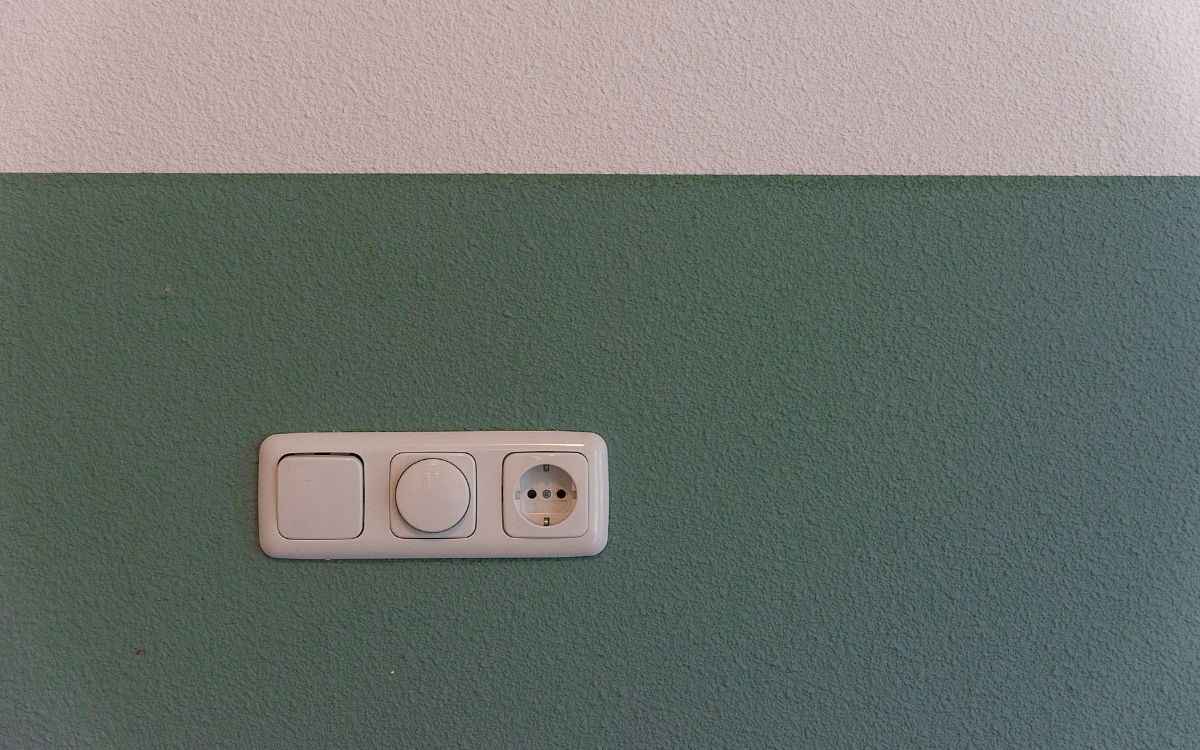
Triac, the simplest for domestic installations
The Triac works by phase regulation for incandescent and LED: it cuts part of the alternating current cycle to reduce the power delivered to the lamp. It is inexpensive and compatible with existing electrical network infrastructure.
The Triac LED 220V regulator allows switching on and off with flux regulation from a single device. Its main limitation is compatibility: not all LED drivers support this control. For low-voltage LED strips, the recessed LED dimmer 12V 24V with PWM control gives better results.
1-10V, the analogue signal for professional installations
The 1-10V system uses a 0-10V analogue control signal separate from the power circuit. The controller sends a voltage between 1 V and 10 V to the driver, which interprets it as a flux level from 10% to 100%.
1-10V regulation for LED office panels is widely used in open-plan workplaces, meeting rooms and car parks. The signal system power supply is independent of the power circuit, which facilitates maintenance. With a remote control or centralised panel, entire zones are managed, but not individual luminaires.
DALI, the digital protocol for advanced control
DALI (Digital Addressable Lighting Interface) is a bidirectional DALI bus data communication protocol. Each device has a unique address, receives individual commands and responds with information about its status. The operating temperature ranges of DALI drivers are a relevant factor in industrial or outdoor installations.
A DALI controller manages up to 64 devices per bus, with up to 16 groups and 16 scenes stored in each device with preset lighting schedules. The system automatically switches off zones with no activity according to the programmed scenes.
Technical comparison: DALI vs 1-10V vs Triac
Compatibility with drivers and luminaires
LED driver dimmer compatibility is the first point to review. For the system to work correctly from commissioning, the driver specification must match the chosen protocol. Changing the driver after the project has been closed has a cost and can delay delivery.
Number of controllable circuits and zones
With Triac and 1-10V, the zone depends on the physical wiring. With DALI, the zone is software-defined. Bus devices are grouped and regrouped from the programming without touching the wiring. This gives real flexibility when the use of the space changes.
Integration with KNX and BACnet building automation systems
Through a protocol conversion gateway, the DALI bus connects to the building management system. KNX LED lighting control allows the lighting to respond to events from other subsystems. A well-integrated commercial building automation system manages lighting, climate control and security from a single platform via KNX BACnet integration.
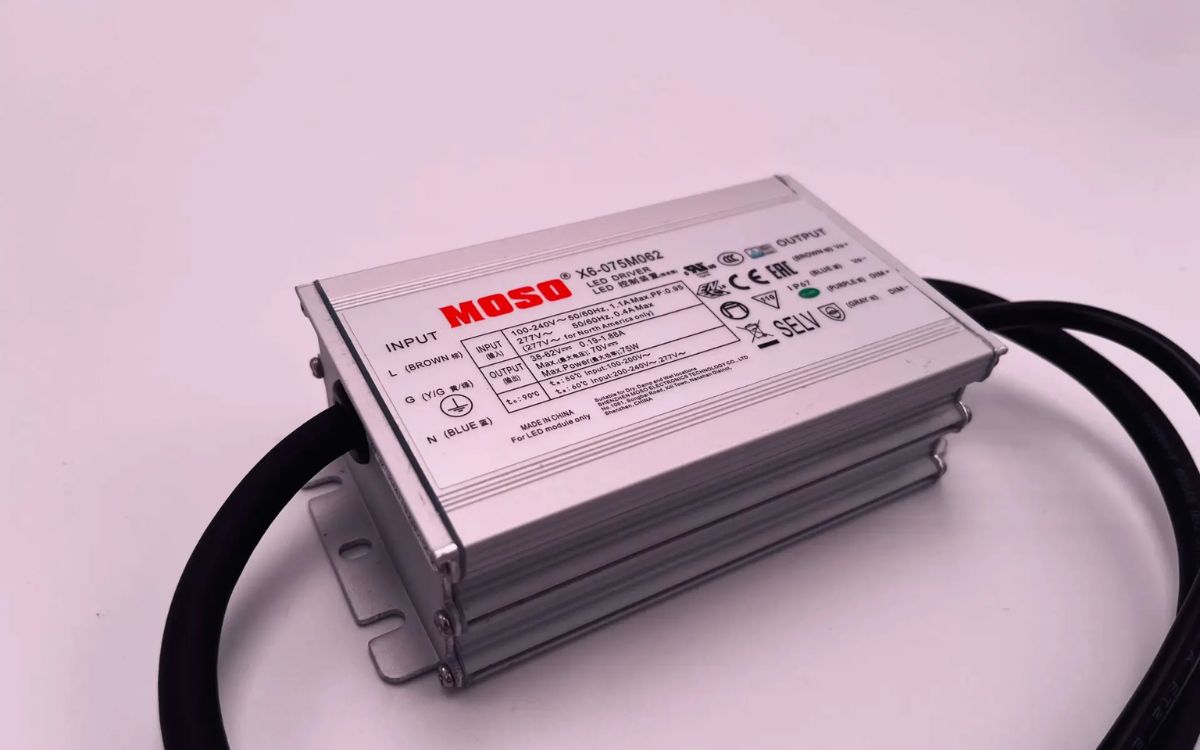
Which drivers are compatible with each system
Lifud DALI driver for LED panels
The Lifud DALI driver for LED panels is one of the most widely used references in office and commercial space projects. A well-specified DALI dimmable driver for LED panels ensures that the logarithmic or linear regulation curve is correct for the human eye. This avoids abrupt intensity jumps in the first regulation steps.
1-10V dimmable driver for highbays and floodlights
For industrial highbays and high-power floodlights, the 1-10V dimmable driver is the standard solution when individual addressing is not required. A building LED lighting control system that only needs to switch zones on and off with some level of regulation is well served by 1-10V. The integrated power supply in these drivers is designed to operate under continuous load conditions.
How to convert a 1-10V signal to DALI
Some installations start with a 1-10V signal and, as they grow, require DALI functions without replacing all the drivers. The 1-10V to DALI signal converter receives the analogue signal from the existing controller and converts it into DALI commands. Before specifying it, it is necessary to confirm which protocol functions remain available after conversion. Not all protocol conversion gateways translate the same functions.
Real use cases by project type
Office with sensors and programmed scenes
Understanding the differences between DALI and 1-10V LED regulation is what allows an installer to specify the correct lighting solution for each zone. Open-plan work areas use DALI with natural light sensing and automatic regulation.
Motion sensors activate LED luminaires upon detecting presence. The system automatically switches off empty zones. DALI programmed lighting scenes manage the transition between the start of the working day, peak activity and closing time, reducing electricity consumption without user intervention.
Hotel with zone and schedule regulation
In hotels, intelligent LED lighting with centralised control manages the reception, restaurant and common areas from a single system. Triac LED dimmer regulation works well in rooms without BMS integration. For common areas, DALI allows different atmospheres to be created for the same space with remote control from reception: breakfast, lunch, dinner or event.
Industrial warehouse with night-time flux reduction
In warehouses with intermittent activity, the most common scheme combines two elements. The PWM regulator for 24V LED strips maintains night-time flux reduced to 20-30% at access points. Motion sensors activate full switching on upon detecting presence. Energy savings during low-activity hours offset the installation cost within a few months.
How to start planning your control system
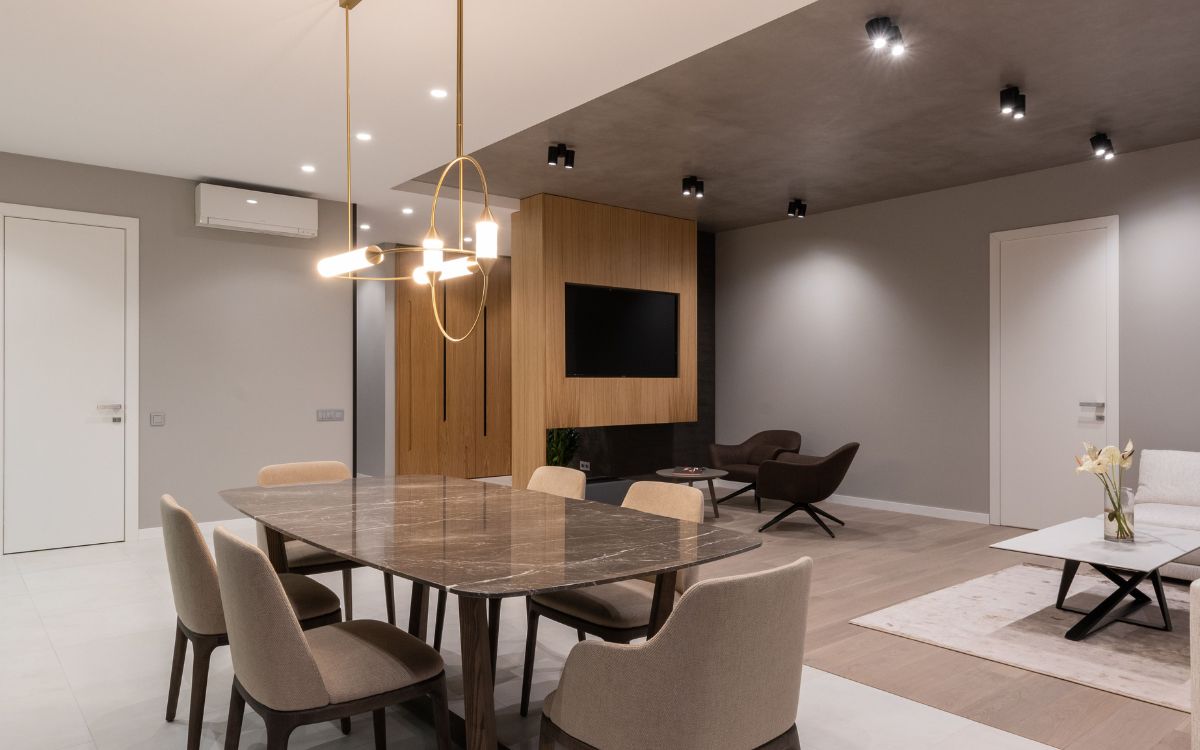
The first step is to define what level of control each zone requires. A table with zones, number of light points, scene requirements and budget allows you to choose the right system without oversizing.
The second step is to verify DALI and 1-10V LED home automation compatibility with the luminaires already specified. The third step is to think about future integration. Preparing the DALI bus infrastructure from day one avoids subsequent works and protects the return on investment.
If you have any doubts about which system to specify for your project, contact our technical team. We review the documentation and recommend the drivers and regulators from our catalogue that best suit each zone.
Frequently asked questions about home automation and DALI LED lighting
What is the difference between DALI and 1-10V regulation?
DALI is a bidirectional digital protocol that allows each luminaire to be addressed individually and returns status information. 1-10V is a unidirectional 0-10V analogue control signal that regulates groups of drivers without information feedback. DALI provides more control and flexibility; 1-10V is simpler and more cost-effective for installations with basic requirements.
Can I use a halogen dimmer with my LED lights?
In most cases, no. Triac phase regulation for incandescent and LED can cause flickering or damage to LED drivers that are not designed for that control. It is necessary to verify driver compatibility before reusing an existing dimmer.
Are all LED drivers dimmable?
No. A standard LED driver delivers fixed power and does not support regulation. For LED lights to work correctly with dimming, the driver must be compatible with the chosen control system. The technical datasheet indicates the compatible regulation modes.
What regulation system do I need for an office with 50 luminaires?
With 50 luminaires and a need for different scenes and zones, DALI is the most suitable option. It allows all luminaires to be managed from a single bus and scenes with preset lighting schedules to be programmed without rewiring. If the budget is tight and scenes are not required, 1-10V with circuit grouping may be sufficient.
Can I integrate LED lighting with my KNX system?
Yes. Through a protocol conversion gateway, the DALI bus communicates with the KNX system. For buildings with a BACnet-based BMS, integration is achieved via KNX BACnet integration. KNX LED lighting control allows the lighting to form part of the building management system.
Does the 1-10V to DALI converter work with any driver?
No. The 1-10V to DALI signal converter translates the analogue signal into DALI commands, but the target driver must be compatible with the DALI protocol. If the driver only accepts 1-10V, the converter cannot be used with that device.
Does DALI regulation consume more energy than 1-10V?
The difference in dimmable driver standby consumption between the two protocols is minimal and has no relevant impact on the project's energy balance. The savings that DALI provides over 1-10V come from more precise lighting management, not from the protocol itself.
Posted in:
Sample Category
Related posts
60x60 LED panels: everything you need to know before buying
Discover how to choose the ideal 60x60 LED panel for your project. We compare drivers, wattages, installation types...
Read more
A practical guide to choosing the perfect LED lighting for your office
Find out how to choose the perfect LED lighting for your office: it complies with the EN 12464 standard, boosts your...
Read more
Slim recessed LED downlights: guide to models, wattages and prices
Discover the differences between circular and square models, available wattages from 6W to 26W, key features such as...
Read more
LED colour temperature: how to choose between 2700K, 4000K and 6500K for your space
Warm, neutral or cool light: each LED colour temperature has its ideal space. We explain the differences between...
Read more
LED track spotlights for shops: single-phase vs three-phase, models and installation keys
Single phase or three-phase? Choosing the right LED track system makes the difference between a well-lit shop and one...
Read more
Search in blog
Blog categories
Latest posts
Surface-mounted LED downlights: ceiling lights and slim panels for ceilings without building work
Read more
Linear LED lighting for hospitality: ideas and solutions for bars, restaurants and hotels
Read more
Linear LED lighting sets the mood in bars, restaurants and hotels. Discover the types of luminaires, key areas and...
Aluminium profiles for LED strips: types, diffusers and how to choose the right mounting
Read more
Discover the aluminium profiles available for LED strips, which diffuser to choose and what accessories you need for...
LED vs halogen: complete comparison of performance, savings and light quality
Read more
Is it worth switching your bulbs? This LED vs halogen comparison covers energy consumption, lifespan, heat and light...
E27 LED Bulbs: direct replacement guide by shape, wattage and colour temperature
Read more
Practical guide to replacing your old bulbs with E27 LED bulbs without complications. Learn how to choose shape,...
Popular posts
60x60 LED panels: everything you need to know before buying
Discover how to choose the ideal 60x60 LED panel for your project. We compare drivers, wattages, installation types...
Read more
A practical guide to choosing the perfect LED lighting for your office
Find out how to choose the perfect LED lighting for your office: it complies with the EN 12464 standard, boosts your...
Read more
LED colour temperature: how to choose between 2700K, 4000K and 6500K for your space
Warm, neutral or cool light: each LED colour temperature has its ideal space. We explain the differences between...
Read more

LED public lighting: current regulations, technical requirements and key points for compliance
Guide to Spain's LED public lighting regulations: technical requirements, road classes, parameters and mandatory...
Read more
Slim recessed LED downlights: guide to models, wattages and prices
Discover the differences between circular and square models, available wattages from 6W to 26W, key features such as...
Read more
Leave a comment