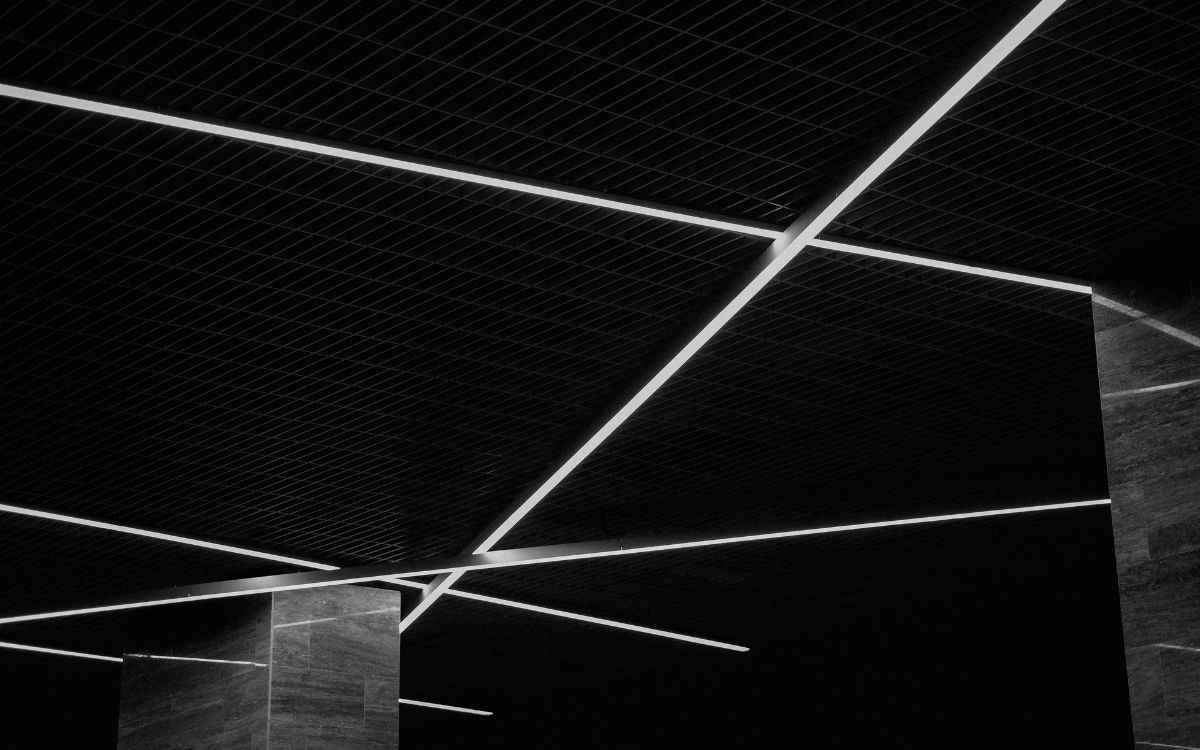
We compare COB vs SMD LED strips to help you choose the right technology for each project. We analyse light...
.svg)

COB vs SMD LED Strips: Technical Differences and When to Use Each Technology
Choosing between COB vs SMD LED strips determines whether a lighting project looks professional or retains visible points of light. The difference lies in how the chip is mounted. SMD distributes individual diodes. COB chip on board LED technology encapsulates several chips on a continuous surface.
Both are solid-state light sources, but they are not equally suited to every project or every lighting application. An interior designer receives SMD for a jewellery display case and perceives the jewellery with unflattering points of light. The COB LED strip's continuous light without dots solves the problem. That's why we compare LED mounting technologies.
What is an SMD LED strip and how does it work
Each SMD diode is soldered individually onto the printed circuit board, which allows strips to be manufactured with different LED density per linear metre depending on the project.
Types of SMD chip 2835 4014 and others
The 2835 stands out for its performance and small size. The 4014 offers more emission surface. This explains the SMD LED strip 2835 4014 differences that an installer notices. Comparing SMD2835 vs COB LED strip helps choose the right chip.
Advantages and disadvantages of SMD
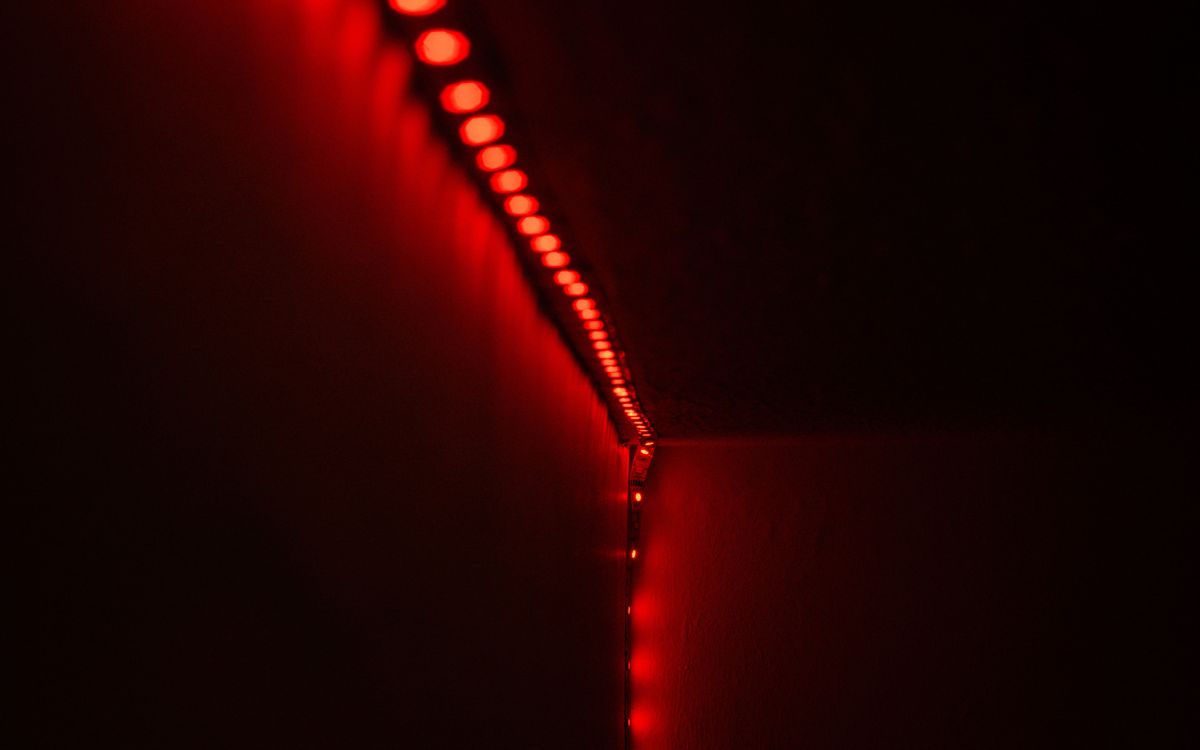
The high-density SMD LED strip stands out for its competitive price and its lm/W LED chip efficiency. Without a diffuser, the individual dots can be seen. That's why heat dissipation should be monitored.
What is a COB LED strip and what makes it different
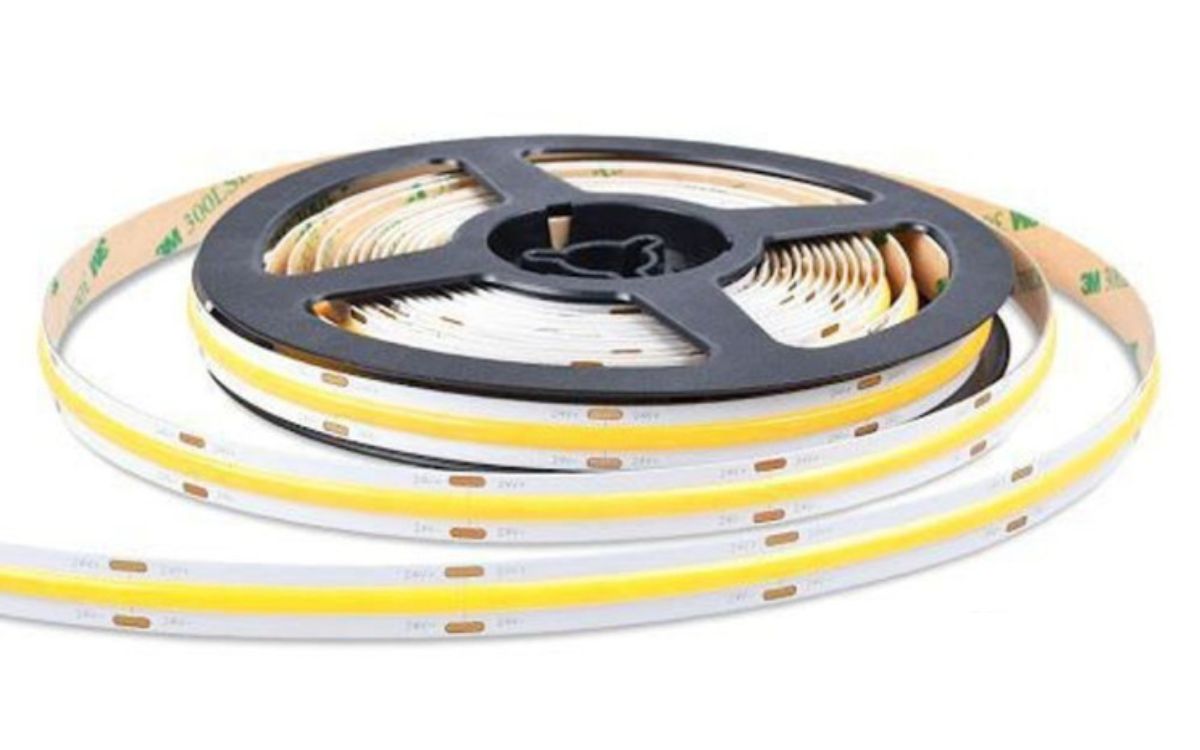
COB chip on board groups several chips on a single base. It coats them with a phosphor layer. The result is a solid strip of light, with no visible segments.
Chip On Board technology with no visible dots
COB technology eliminates the visible hot spot that gives away low-end SMD. It distributes the emission evenly. The result is linear light uniformity regardless of viewing distance.
Flip chip COB, greater thermal efficiency
Flip chip mounts the chip inverted with direct thermal contact. This reduces the LED chip junction temperature. COB can achieve greater brightness without shortening its lifespan. To achieve this, the aluminium profile thermal dissipation must be resolved, which improves heat dissipation.
Direct comparison: COB vs SMD LED strips
The table summarises the COB vs SMD LED strip differences that matter most when buying.
| Characteristic | COB LED strip | SMD LED strip |
|---|---|---|
| Visual appearance | Continuous line | Visible dots |
| lm/W efficiency | Somewhat lower | Higher |
| Flexibility | Larger radius | Tight curves |
| Price | Higher | More affordable |
| IP protection | IP20 and IP65 | IP20, IP65 and IP67 |
IP20 IP65 COB LED strip covers dry interiors and areas with moderate humidity.
Light uniformity and the hot spot effect
In display cases or mouldings where the strip is exposed, COB proves superior to SMD. The continuous COB strip with no hot spots is the option when visual effect matters more than cost.
lm/W efficiency compared
Recent SMD tends to surpass COB, because the phosphor layer absorbs part of the light. The difference depends on the manufacturer. It's worth checking the datasheet.
Flexibility and minimum bend radius
Flexibility and minimum bend radius separate the two technologies. SMD tolerates tighter curves. COB needs a larger radius due to its encapsulated surface.
Price and availability
The price-quality of COB LED strips has improved. COB continues to cost more than SMD. There is a 24V flip chip COB LED strip for low voltage. There is also a 220V COB LED strip price for long runs.
When to choose COB LED strip
Aluminium profiles with continuous line effect
COB is the right choice when visual effect matters more than price. Installed in a suitable profile, the COB LED strip for aluminium profile produces a continuous line with no interruptions. It is available in aluminium profiles with opal or satin diffuser.
Grazing lighting and the grazing effect
The grazing lighting application involves installing the strip close to a textured wall to highlight the relief. COB's 180-degree emission angle distributes light evenly.
Display cases, shop windows and jewellery
In the interior designer's display case, the COB LED strip for shop windows avoids shadows and uneven bright spots on the pieces. It solves in one step what previously required a different lighting solution for each area.
When to choose SMD LED strip
General lighting under cabinets or ceilings
SMD remains the sensible choice when the budget is limited or the strip stays hidden. Under a kitchen cabinet or in a continuous ceiling, COB or SMD kitchen strip usually leans towards SMD. This allows a zoned lighting system with independent sections.
Projects with a tight budget
For renovations with a tight budget, SMD offers the best ratio between lumens and cost, thanks to its high availability and standardised manufacturing.
Long installations with dimming
On long runs, dimmable SMD vs COB LED strip is always decided in favour of SMD. Colour temperature dimming adjusts brightness and tone, from warm white to cool.
COB and SMD models available in the catalogue
Ibérica de Iluminación distributes high-quality light strips, COB and SMD, in 12V, 24V and 220V. Check the catalogue of COB LED strips with integrated flip chip. Or choose the high-density SMD series if you prioritise energy efficiency.
All references include a datasheet with lm/W LED chip efficiency and IP protection. This way you can compare when to use COB or SMD strip without depending on price. Both families cover different lighting applications.
Frequently asked questions
What is the difference between a COB LED strip and an SMD one?
The COB vs SMD LED strip difference lies in how the chip is mounted. SMD solders individual diodes. COB groups several chips under a phosphor layer.
Does a COB LED strip produce visible points of light?
No, and that is its main advantage. The phosphor layer distributes light evenly. It avoids the dot effect of SMD without a diffuser.
Is COB strip more efficient than SMD?
Not always, because recent SMD tends to have better lm/W efficiency, since COB loses light in the phosphor, although it manages heat better.
Can I use a COB LED strip with any aluminium profile?
No, because COB needs a profile with thermal contact and a wide bend radius, so it's worth checking the datasheet.
Is COB strip more expensive than SMD?
Yes, since the manufacturing process is more complex and demand is lower, which keeps the price higher.
Can a COB LED strip be dimmed?
Yes, it supports dimming and colour temperature control just like SMD, if the driver is compatible with the voltage.
Which LED strip is best for lighting a jewellery display case?
COB is the recommended choice. Its continuous line with no dots avoids uneven reflections on the pieces. It achieves a more refined finish than SMD.
Posted in:
Sample Category
Related posts
60x60 LED panels: everything you need to know before buying
Discover how to choose the ideal 60x60 LED panel for your project. We compare drivers, wattages, installation types...
Read more
A practical guide to choosing the perfect LED lighting for your office
Find out how to choose the perfect LED lighting for your office: it complies with the EN 12464 standard, boosts your...
Read more
Slim recessed LED downlights: guide to models, wattages and prices
Discover the differences between circular and square models, available wattages from 6W to 26W, key features such as...
Read more
LED colour temperature: how to choose between 2700K, 4000K and 6500K for your space
Warm, neutral or cool light: each LED colour temperature has its ideal space. We explain the differences between...
Read more
LED track spotlights for shops: single-phase vs three-phase, models and installation keys
Single phase or three-phase? Choosing the right LED track system makes the difference between a well-lit shop and one...
Read more
Search in blog
Blog categories
Latest posts

COB vs SMD LED Strips: Technical Differences and When to Use Each Technology
Read more
24V DC LED Strips: The Professional Choice for High-Brightness, Long-Run Installations
Read more
24V DC LED strips allow long runs to be installed without voltage drop or colour variation. Discover the available...

LED Lighting for Car Parks and Garages: Regulations, Luminaires and Maximum Energy Savings
Read more
LED lighting for car parks and garages allows lighting consumption to be reduced by up to 80 % using presence...

LED IP65 and IP66 Battens and Weatherproof Diffusers: A Model Guide for Damp and Industrial Areas
Read more
This guide compares IP65 and IP66 weatherproof LED diffusers by power, chip and length, and shows which model is best...
Complete Guide to Replacing Fluorescent Lights with LED: Steps, Equivalents and Real Savings
Read more
This guide explains how to replace fluorescent lights with LED step by step, with power equivalents, ballast bypass...
Popular posts
60x60 LED panels: everything you need to know before buying
Discover how to choose the ideal 60x60 LED panel for your project. We compare drivers, wattages, installation types...
Read more

A practical guide to choosing the perfect LED lighting for your office
Find out how to choose the perfect LED lighting for your office: it complies with the EN 12464 standard, boosts your...
Read more
LED colour temperature: how to choose between 2700K, 4000K and 6500K for your space
Warm, neutral or cool light: each LED colour temperature has its ideal space. We explain the differences between...
Read more

LED public lighting: current regulations, technical requirements and key points for compliance
Guide to Spain's LED public lighting regulations: technical requirements, road classes, parameters and mandatory...
Read more

Slim recessed LED downlights: guide to models, wattages and prices
Discover the differences between circular and square models, available wattages from 6W to 26W, key features such as...
Read more
Leave a comment