LED lighting for car parks and garages allows lighting consumption to be reduced by up to 80 % using presence...
.svg)

LED Lighting for Car Parks and Garages: Regulations, Luminaires and Maximum Energy Savings
LED lighting for car parks and garages has a direct impact on the community's electricity bill. A garage lit 24 hours a day with fluorescent tubes can account for up to 60% of the building's energy consumption. Knowing what the regulations require, which type of lighting is suitable for each area and how sensors reduce that consumption is the starting point.
Technical lighting requirements for car parks and garages
The UNE car park lighting standard and the CTE set the minimum required values. Failing to comply with them can invalidate the operating licence.
Minimum lux regulations by area
Car park and garage lighting regulations set levels per area according to UNE-EN 12464-2.
| Area | Minimum lux |
|---|---|
| Parking space | 75 lux |
| Traffic lane | 50 lux |
| Pedestrian access and stairs | 100 lux |
| Control booth | 300 lux |
| Loading and unloading area | 150 lux |
The minimum lux for the parking area are mandatory at all times. The lux levels required by car park regulations are compliance thresholds that must be maintained throughout the lifetime of the installation. The amount of light in each area does not depend on the time of day or on traffic.
Mandatory emergency lighting in garages
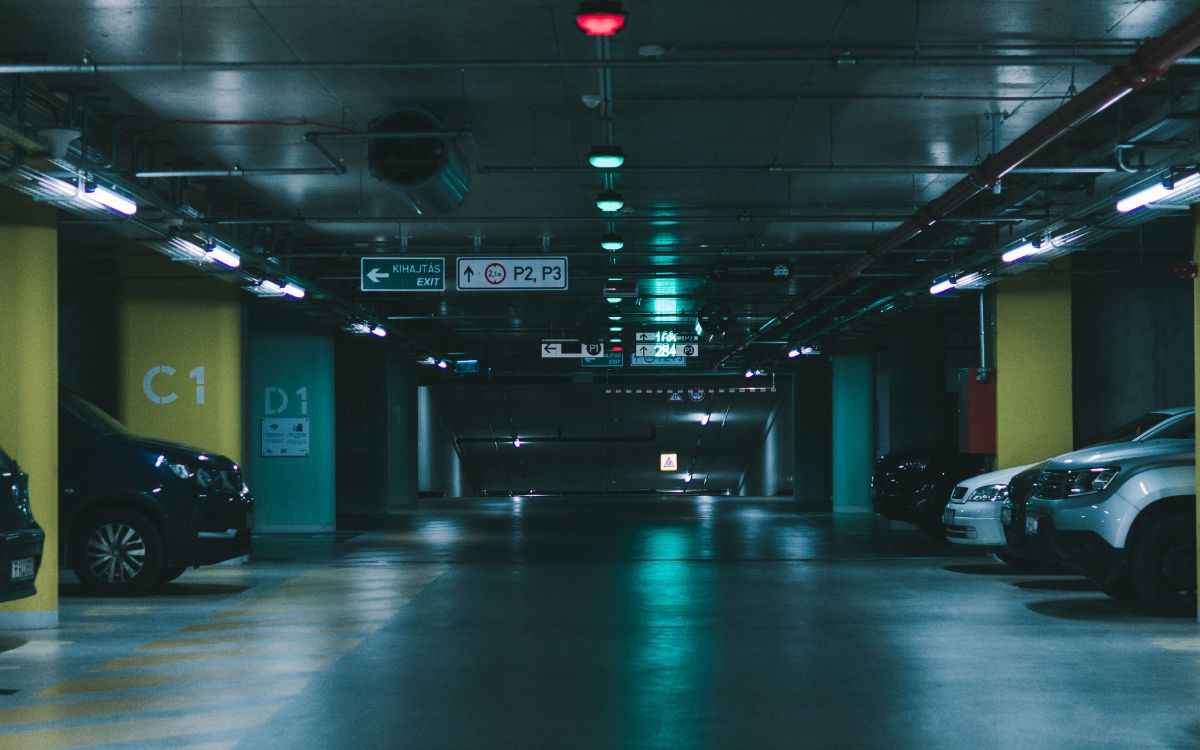
Emergency lighting in garages is mandatory under CTE DB SI. The anti-panic LED emergency luminaire combines normal lighting and a self-contained function in the same housing. LED emergency garage lighting complies with IEC 60598-2-22 with an integrated battery and guarantees evacuation for at least one hour.
Which luminaires are most suitable for car parks
LED luminaires cover damp areas, high ceilings and pedestrian accesses. Choosing a communal garage LED luminaire requires assessing robustness and service life.
IP65 waterproof battens and diffusers for damp areas
The IP65 waterproof LED garage batten replaces the fluorescent tube with 40-60% lower consumption. The waterproof LED garage diffuser for damp conditions has a sealed housing for underground garages and ramps. IP65 protection is the minimum required for garages; for pressure washing, IP66. Check out our wide range of waterproof battens and diffusers.
A 4000K colour temperature for garages, cool white, improves visual perception and is closer to natural light. The colour of the light affects safety.
UFO LED high bay luminaires for high-ceilinged garages
With ceilings above 5 metres, the LED UFO high bay for car parks concentrates the beam downwards and reaches the required lux levels. They are light sources that perform where other formats fall short.
Downlights and ceiling fittings for accesses and passageways
In stairways and pedestrian accesses, downlights and ceiling fittings combine well with PIR sensors. Providing uniform lighting is as important as the minimum lux level.
Presence and motion sensors in garages
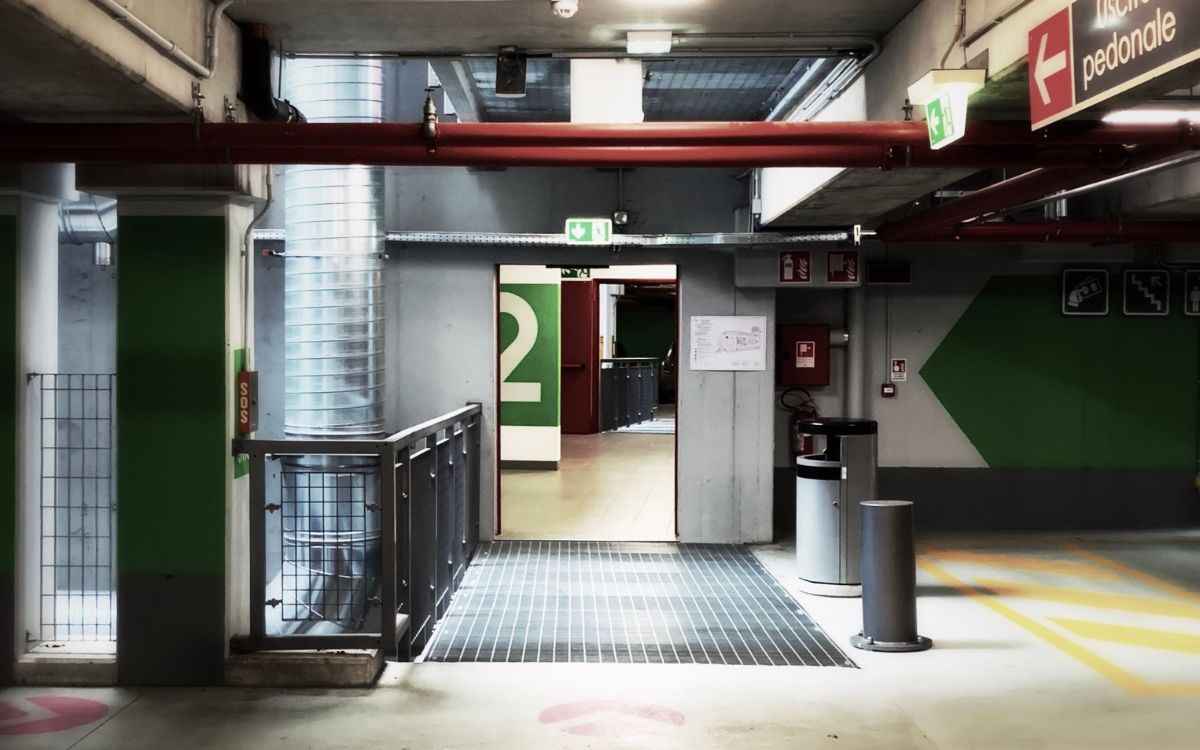
Installing LED car park lighting with presence sensors can reduce consumption by 60-80% in areas with intermittent traffic. LED lights do not consume power when no one is present.
Radar detectors for areas with moving vehicles
The microwave radar garage detector detects movement through columns and parked vehicles. Radar-type LED car park motion detectors are more reliable than infrared in large areas.
PIR sensors for pedestrian areas and stairs
PIR-based automatic LED car park lighting is the most widespread solution in communal garages with pedestrian traffic.
How to schedule night-time flux reduction
Night-time flux reduction lowers output to 10-30% during low-activity hours and restores it when presence is detected. For a 24-hour LED car park luminaire to work this way, the driver must be dimmable and compatible with the sensor.
Calculating savings with sensors in a car park
A 40-space garage with 36 W fluorescent tubes consumes around 12,614 kWh a year. With 18 W LED battens and 20% night-time presence sensor savings for the car park, consumption drops to 3,500-4,000 kWh. Energy savings for the community of owners exceed 70%, with an impact on the electricity bill.
A 50,000-hour garage luminaire service life reduces costs: LED lights extend service life well beyond a fluorescent tube. By saving energy, the payback period arrives before three years.
Emergency lighting in garages
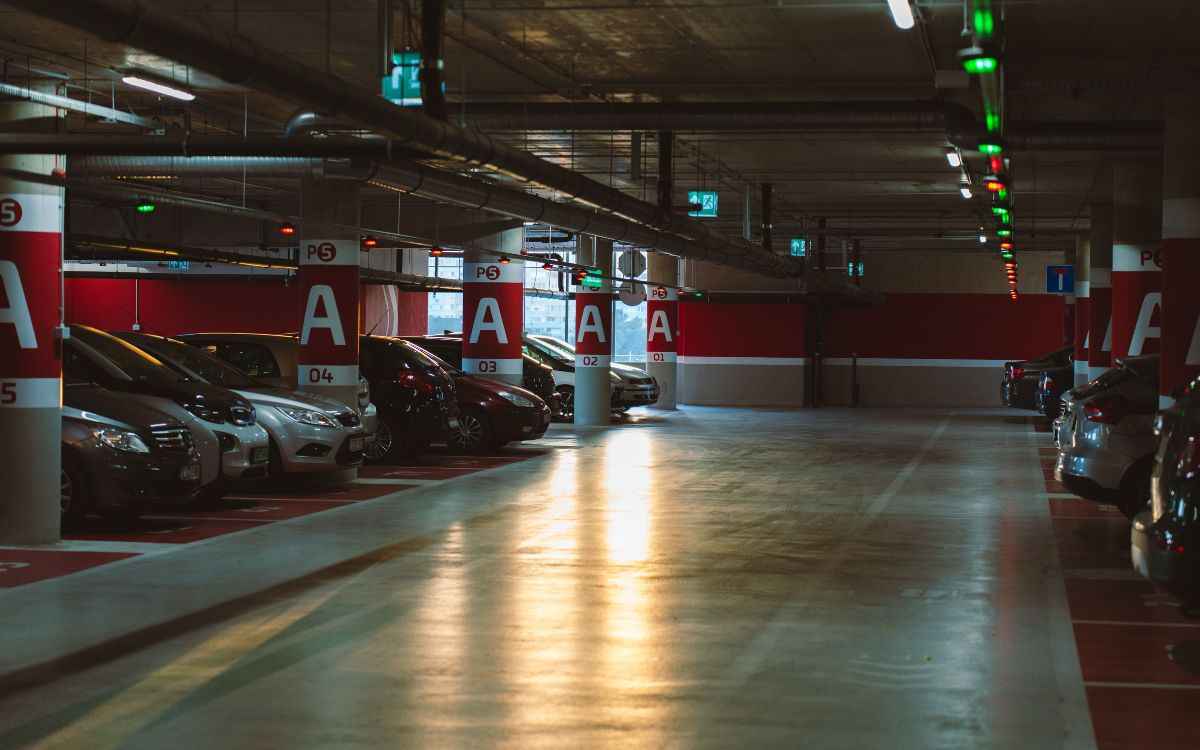
LED emergency garage lighting affects the building's certification and insurance policy. The units have an autonomy of one to three hours and include automatic testing.
How to plan a car park lighting project
An LED car park lighting project begins with a photometric calculation. LED lighting for underground garages requires special attention to uniformity. The UNE standard sets a maximum ratio of 5:1 between the most illuminated point and the least illuminated point.
LED technology allows you to choose the angle, dim the flux and integrate sensors. A conventional LED bulb cannot do all of that. Request your personalised project with no obligation.
Frequently asked questions about LED lighting in car parks and garages
How many lux are mandatory in a car park according to regulations?
Car park and garage lighting regulations require 75 lux in parking spaces, 50 lux in traffic lanes and 100 lux in pedestrian accesses.
Which presence sensor is best for a garage with cars?
The microwave radar garage detector is the most reliable with vehicles; PIR sensors are best for corridors and stairs.
What IP rating does a luminaire need for a damp garage?
IP65 protection is the minimum; for pressure washing, IP66. The waterproof LED garage diffuser for damp conditions from our wide range meets both standards.
Is emergency lighting mandatory in communal garages?
Yes. LED emergency garage lighting is mandatory under CTE DB SI: automatic activation and illumination for at least one hour.
How much can you save by installing presence sensors in a car park?
With presence sensor savings for car parks and night-time flux reduction, savings range between 60% and 80%.
How much power do I need to light a parking space?
A 12-15 m² space needs between 18 W and 24 W with LED. A photometric calculation reduces the overall price of LED car park lighting.
Can I replace the fluorescent tubes in my garage directly with LED battens?
Yes. The IP65 waterproof LED garage batten is fitted in the same positions with a ballast bypass. In older installations, it is advisable to check the wiring before proceeding. The result is real LED garage lighting energy savings from the first month.
Posted in:
Sample Category
Related posts
60x60 LED panels: everything you need to know before buying
Discover how to choose the ideal 60x60 LED panel for your project. We compare drivers, wattages, installation types...
Read more
A practical guide to choosing the perfect LED lighting for your office
Find out how to choose the perfect LED lighting for your office: it complies with the EN 12464 standard, boosts your...
Read more
Slim recessed LED downlights: guide to models, wattages and prices
Discover the differences between circular and square models, available wattages from 6W to 26W, key features such as...
Read more
LED colour temperature: how to choose between 2700K, 4000K and 6500K for your space
Warm, neutral or cool light: each LED colour temperature has its ideal space. We explain the differences between...
Read more
LED track spotlights for shops: single-phase vs three-phase, models and installation keys
Single phase or three-phase? Choosing the right LED track system makes the difference between a well-lit shop and one...
Read more
Search in blog
Blog categories
Latest posts
LED Lighting for Car Parks and Garages: Regulations, Luminaires and Maximum Energy Savings
Read more
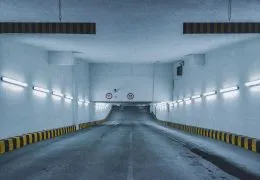
LED IP65 and IP66 Battens and Weatherproof Diffusers: A Model Guide for Damp and Industrial Areas
Read more
This guide compares IP65 and IP66 weatherproof LED diffusers by power, chip and length, and shows which model is best...
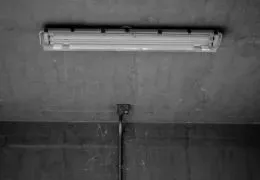
Complete Guide to Replacing Fluorescent Lights with LED: Steps, Equivalents and Real Savings
Read more
This guide explains how to replace fluorescent lights with LED step by step, with power equivalents, ballast bypass...
T8 glass LED tubes: the simplest solution to replace fluorescents
Read more
T8 glass LED tubes allow you to replace fluorescents with no building work or electrician. Discover the available...

UGR in lighting: what it is, how it is measured and why it changes your visual experience
Read more
Technical guide on UGR lighting: what the unified glare rating is, what values the EN 12464 standard requires by type...
Popular posts
60x60 LED panels: everything you need to know before buying
Discover how to choose the ideal 60x60 LED panel for your project. We compare drivers, wattages, installation types...
Read more
A practical guide to choosing the perfect LED lighting for your office
Find out how to choose the perfect LED lighting for your office: it complies with the EN 12464 standard, boosts your...
Read more
LED colour temperature: how to choose between 2700K, 4000K and 6500K for your space
Warm, neutral or cool light: each LED colour temperature has its ideal space. We explain the differences between...
Read more
Slim recessed LED downlights: guide to models, wattages and prices
Discover the differences between circular and square models, available wattages from 6W to 26W, key features such as...
Read more
LED track spotlights for shops: single-phase vs three-phase, models and installation keys
Single phase or three-phase? Choosing the right LED track system makes the difference between a well-lit shop and one...
Read more
Leave a comment