The differences between single-phase and three-phase LED track lie in the number of circuits, the load each one...


Single-phase vs three-phase LED track: key differences, maximum load and when to use each system
To understand the differences between single-phase and three-phase LED track, one idea is enough: single-phase has one circuit and three-phase has three. That determines the load each system admits, the spotlights you can mount and the accessories you need.
Imagine an 80 m² shop buying 20 spotlights of 40W. That is 800W in total. On single-phase they all hang from the same circuit, and on three-phase they are split across three. That difference decides the order.
What an LED track system is and how it works
An LED track system is an aluminium profile that carries current along its whole length. Spotlights clip on at any point with an adapter, so you can move and aim them without building work.
Basic concept of the track as a conductor for spotlights
The internal conductors of the track receive current from the mains and each adapter takes what its spotlight needs. On the 230V supply voltage of the track: it arrives from the mains through a feeder, which sits at one end or at an intermediate point. Our Reinforced Single-Phase Track of 2 metres is made of aluminium, measures 2000 x 40 x 20 mm and carries CE and RoHS certifications.
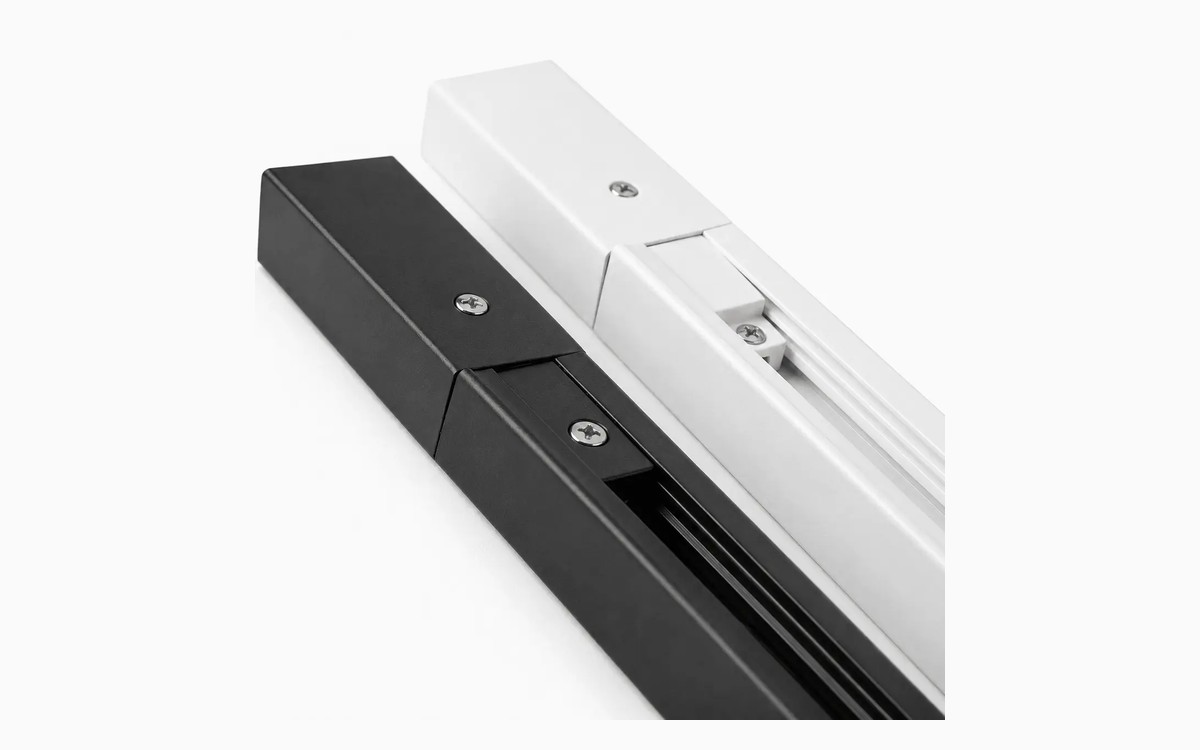
Difference between a single-phase and a three-phase circuit
A circuit is an electrical line with its own switch. Single-phase has one, and all the spotlights switch on and off together. In one sentence: three independent circuits in three-phase, that is, three lines that switch on separately inside the same profile. This is the difference between single-phase and three-phase LED track that weighs most when deciding.
Single-phase track: features and limitations
Single-phase is the simple, economical option. On the price of a 2-metre single-phase LED track: the reinforced model starts at €9.42 before tax, and the 1-metre one at €5.71.
A single electrical circuit for all the spotlights
All connected spotlights switch on at the same time and cannot be controlled separately. If you need light by zones, move to three-phase.
Recommended maximum load in watts per track
The maximum load of a single-phase LED track depends on the current the profile admits, and that limit is shared by all the spotlights. To work out the maximum load in watts per track, add up the watts of each spotlight and compare the total with the datasheet. With 40W spotlights, 10 spotlights are 400W and 20 spotlights are 800W on the same circuit.
How many spotlights a single-phase track takes is settled by a design reference. On 2 metres there is room for 4 or 5 spotlights of 40W, which add up to between 160 and 200W.
Ideal for homes and small shops
For a hallway, a living room or a kitchen, single-phase LED track for the home is enough and inexpensive. In a small shop with a single area it works just as well.
Three-phase track: advantages and use cases
Three-phase costs more, but it spreads the load and lets you control the light by zones. On the price difference of three-phase LED track compared with single-phase: the 2-metre one starts at €21.47 in black. The white one costs €26.08, both before tax.
Three independent circuits and greater flexibility
Each spotlight is assigned to one of the three circuits by turning its adapter. This way you switch on the shop window without the room using the same track.
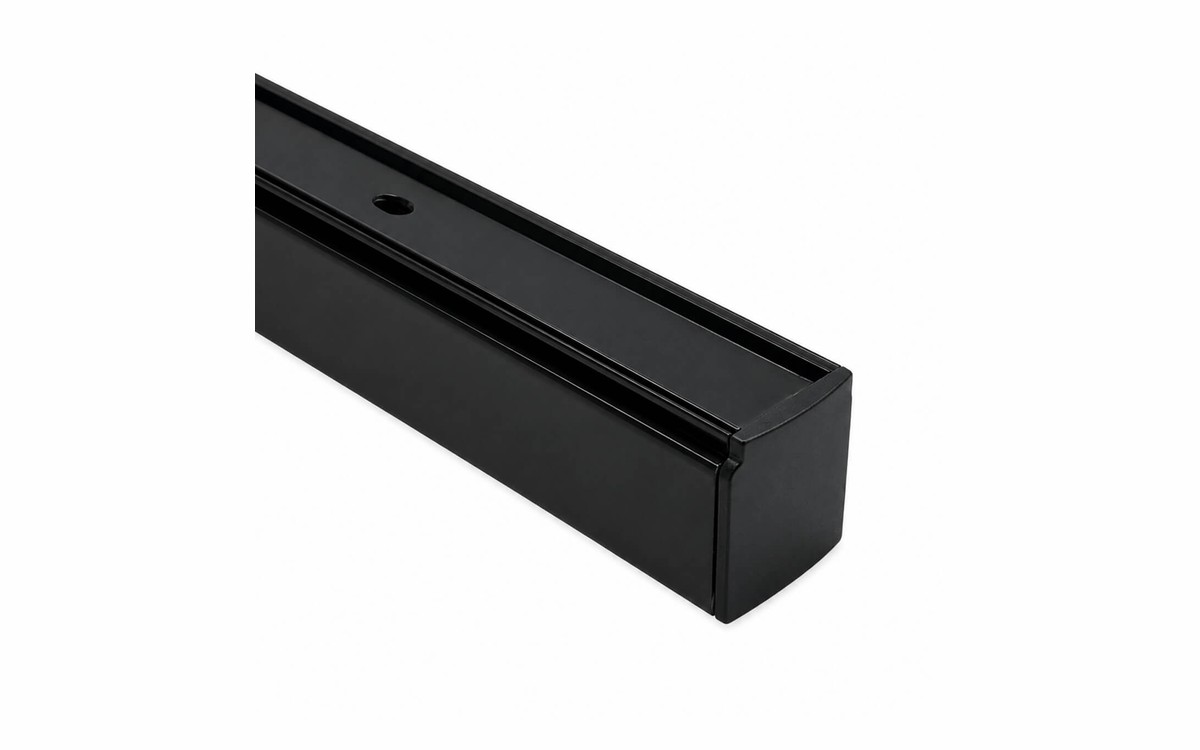
Higher total load without overloading the circuit
With three-phase, each circuit has its own limit. The 20 spotlights of 40W from before add up to 800W, but split into three groups of 6 or 7 spotlights they come to about 270W per circuit.
Ideal for shops over 50m² and galleries
A three-phase track for a large shop lets you light each section with its own switch: fashion, footwear, till and window. When weighing single-phase against three-phase for a shop, the practical criterion is the floor area and the number of zones.
Accessories are not interchangeable between systems
This is the key message of the article. Each system requires its own specific accessories, and what works in one does not fit the other.
Specific connectors for each system
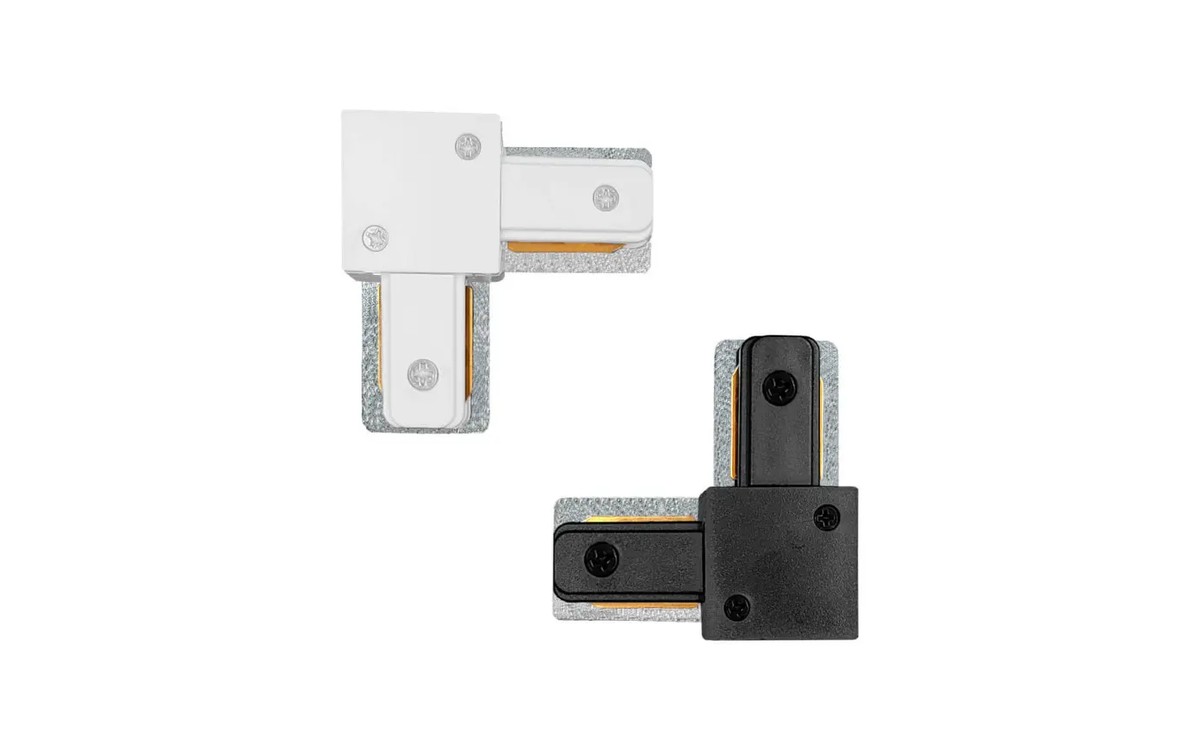
Single-phase and three-phase connectors do not couple with each other. In the reinforced single-phase range you have linear I, L and T connectors. In the three-phase range, a straight I connector and a flexible connector. Accessories compatible with three-phase track are always those of its own range.
Spotlights with a single-phase or three-phase adapter
The spotlight adapter belongs to one system or the other, and a single-phase or three-phase spotlight adapter does not work for both. Compatibility of spotlights between systems is nil unless the spotlight carries the right adapter. To have spotlights compatible with three-phase track, choose models such as the Uppsala and the Graz. For compatibility of spotlights with single-phase track, look for adjustable GU10 spotlights in white or black.
Electrical installation: differences between systems
The difference in installation between single-phase and three-phase lies in how many conductors reach the track and how they are connected at the panel.
Powering the single-phase track
Single-phase is powered at 230V with live and neutral from a single point. On side or end feed: the end feed enters at one end and the side feed at an intermediate point, useful on long runs. On the maximum track length without loss: on long runs the voltage drop dims the spotlights at the far end, so feed from the centre or split the run into sections.
Powering the three-phase track with neutral
Three-phase carries four conductors: one line per circuit and a common neutral. To install three-phase LED track, a professional three-phase installation is advisable, connecting each line at the panel.
Summary table: single-phase vs three-phase
| Feature | Single-phase | Three-phase |
|---|---|---|
| Circuits | One | Three independent |
| Switching | All spotlights at once | By zones |
| Load | A single limit | One limit per circuit |
| 2-metre track before tax | From €9.42 | From €21.47 |
| Spotlights | Single-phase adapter | Three-phase adapter |
| Ideal use | Home and small shop | Shops over 50m² and galleries |
How to decide which system to install in your project
When planning the complete track system, follow these four steps:
- Add up the watts of all the spotlights.
- Decide whether you need to switch the light on by zones.
- Choose the system and work out the 1-metre and 2-metre sections.
- Order track, connectors and spotlights of the same system.
When to use three-phase track: when the sum of watts exceeds the limit of one circuit, when you want scenes by zones or when the premises go beyond 50 m². A complete track system for a shop includes track, connectors and spotlights of the same system.
If you have chosen single-phase, find the track and its connectors in single-phase LED track accessories. If you have chosen three-phase, you have the track and connectors in three-phase LED track accessories. The spotlights for both are in LED track lighting. If you are fitting out a shop, also read our guide to three-phase track spotlights for shops and art galleries.
Frequently asked questions about single-phase and three-phase LED track
Can I connect single-phase track spotlights to a three-phase track?
No. The single-phase spotlight adapter does not fit the three-phase track, and the other way round. You need a spotlight with an adapter of the same system as the track.
How many 40W spotlights can I put on a 2-metre single-phase track?
As a design reference, between 4 and 5 spotlights, which add up to 160 to 200W. The real limit is set by the current of the track, so check the datasheet.
What is the difference in electrical installation between single-phase and three-phase track?
Single-phase receives live and neutral in a single circuit. Three-phase receives three lines and a common neutral, and each line is connected separately at the panel.
Are single-phase track connectors compatible with three-phase?
No. Each system has its own connectors. Always use those of the same range as the track.
When is it worth installing three-phase track instead of single-phase?
When the sum of watts exceeds the limit of one circuit, you want light by zones or the premises go beyond 50 m².
Can I extend an existing single-phase track with more metres?
Yes, with a linear I connector of the same range, as long as the total load stays within the limit of the track.
Does three-phase track need a more specialised electrician?
The connection to the mains must be made by a professional, and three-phase requires connecting three lines and a neutral. Mounting the sections and spotlights is just as simple.
Posted in:
Sample Category
Related posts
60x60 LED panels: everything you need to know before buying
Discover how to choose the ideal 60x60 LED panel for your project. We compare drivers, wattages, installation types...
Read more
A practical guide to choosing the perfect LED lighting for your office
Find out how to choose the perfect LED lighting for your office: it complies with the EN 12464 standard, boosts your...
Read more
Slim recessed LED downlights: guide to models, wattages and prices
Discover the differences between circular and square models, available wattages from 6W to 26W, key features such as...
Read more
LED colour temperature: how to choose between 2700K, 4000K and 6500K for your space
Warm, neutral or cool light: each LED colour temperature has its ideal space. We explain the differences between...
Read more
LED track spotlights for shops: single-phase vs three-phase, models and installation keys
Single phase or three-phase? Choosing the right LED track system makes the difference between a well-lit shop and one...
Read more
Search in blog
Blog categories
Latest posts
Single-phase vs three-phase LED track: key differences, maximum load and when to use each system
Read more
Three-phase track spotlights for shops and art galleries: Uppsala CRI 98 and Graz 3CCT for maximum visual impact
Read more
Learn how to choose a three-phase track spotlight for a shop or art gallery with the Uppsala CRI 98 and the Graz...
How to calculate the LED power needed per room: formula, lux tables and practical examples
Read more
Learn how to calculate LED power from lumens per square metre with a simple formula, a lux table by type of space and...
LED drivers and 24V power supplies: which one you need for each luminaire and how to choose without mistakes
Read more
Choosing well between an LED driver and a 24V power supply prevents flicker and failures. We review the differences,...
LED Lighting for Hotels: Common Areas and Rooms
Read more
Which fitting each hotel area needs: reception, corridors, rooms, spa and restaurant. We cover colour temperatures,...
Popular posts
60x60 LED panels: everything you need to know before buying
Discover how to choose the ideal 60x60 LED panel for your project. We compare drivers, wattages, installation types...
Read more
LED colour temperature: how to choose between 2700K, 4000K and 6500K for your space
Warm, neutral or cool light: each LED colour temperature has its ideal space. We explain the differences between...
Read more
LED strips 220V AC: how to install them without a transformer and get the most out of them
220V AC LED strips plug straight into the mains without needing a transformer. In this guide we explain what models...
Read more

LED public lighting: current regulations, technical requirements and key points for compliance
Guide to Spain's LED public lighting regulations: technical requirements, road classes, parameters and mandatory...
Read more
A practical guide to choosing the perfect LED lighting for your office
Find out how to choose the perfect LED lighting for your office: it complies with the EN 12464 standard, boosts your...
Read more
Leave a comment