An LED module for retrofit streetlights lets you upgrade public lighting without changing the housing or the pole....


Solar LED streetlight vs grid-connected streetlight: real comparison of installation costs, ROI and autonomy to choose well
Choosing between a solar streetlight and one connected to the grid is not a matter of taste. This solar vs grid streetlight comparison brings together the data a municipal technician, a project manager or a developer needs to justify the decision: installation cost, autonomy, maintenance and five-year return. It compares solar LED streetlights vs grid power with numbers and not with opinions.
The key question: when a solar streetlight makes sense and when it does not
Picture a councillor for infrastructure with two quotes on the table. The first has conventional streetlights and includes 80,000 euros of civil works. The second proposes solar streetlights with no works. They need technical arguments to defend one.
The solar one wins when the grid is far away and the route is long. It loses when a line is already nearby. To decide when to choose a solar LED streetlight you have to look at the distance to the grid, the irradiation of the area and the power needed. And it helps to know when not to use a solar LED streetlight: with permanent shade over the panel or with a very high lighting requirement.
Installation cost comparison
The comparison of solar and conventional streetlights is settled with the full installation cost of solar vs grid, that is, with everything that has to be paid for the light to work on day one.
Civil works and electrical connection cost for a conventional streetlight
A conventional line needs a trench, duct, manholes, cabling, a panel board and a connection point. The cost of civil works and electrical connection changes a lot depending on the terrain, but in the councillor's case it reaches 80,000 euros for the works alone. On top of that comes the wait for the connection, which does not depend on whoever carries out the works.
Installation cost of a solar streetlight with no trenches
The solar streetlight is fixed on a single foundation. It has no trench, no buried cable, no panel board and no supply contract. The spending is concentrated in the luminaire with panel and battery, plus the base and the assembly. On long projects, solar LED streetlight installation savings and lead time move together, because every metre of trench that is not opened is a metre that is not paid for.
At what distances from the grid solar starts to win
There is no single figure, because it depends on the terrain and the power. With the grid next to the point, the conventional one almost always works out cheaper. As the distance grows, every stretch of trench adds works and the advantage flips. For a solar vs grid streetlight on a rural path, solar is usually the cheapest option when the line is far away.
Autonomy and performance on days without sun
The autonomy of a solar streetlight on cloudy days depends on the battery, the power and how it is regulated. With night-time hourly power programming, the streetlight lowers the intensity in the hours of little traffic and extends the nights it lasts without recharging.
The monthly AEMET reports place the lowest irradiation in the peninsula in the Cantabrian region and on the western coast of Galicia. In March 2026, the rest registered between 4 and 5 kWh/m2 a day. In April, between 5.5 and 6.
How many days of reserve the lithium battery has
A well-sized lithium battery covers several nights in a row without sun. The exact figure is set by the data sheet of each model. Ask in writing for the lithium battery cycles and service life and the guaranteed days of autonomy.
Winter performance and low irradiation areas
Solar panel winter performance drops because the days are short and the sun is low, and then the difference between the south and the north multiplies. The climate factor of the area's irradiation decides whether a standard panel is enough or whether the panel and battery must be oversized.
What happens when the battery runs out
If several cloudy days in a row leave the battery with no charge, the luminaire switches off until the sun returns. It is avoided with a larger reserve, less programmed power or a model with stepped regulation. It is the weak point of solar, and presenting it as a universal solution without mentioning it does not give real data.
Maintenance compared
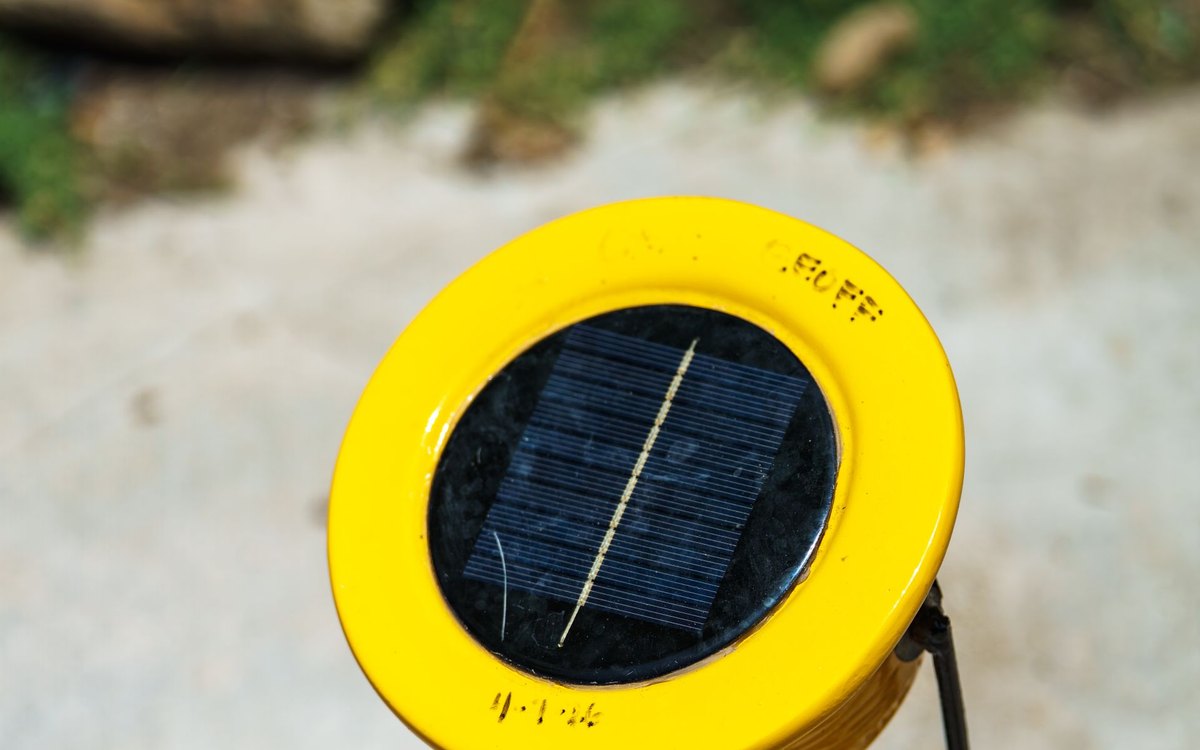
Maintenance of solar vs conventional streetlights is split differently. The solar one concentrates the work on panel and battery. The conventional one, on line, panel board and luminaire.
How often to maintain the battery
On solar battery maintenance frequency, the usual guideline is a periodic check and cleaning the panel so that dust does not reduce capture. The battery is replaced at the end of its life. With one cycle a day, 2,000 cycles are a little over five years, and between 3,000 and 5,000 cycles, between eight and thirteen.
Grid maintenance and faults
A fault in the line can leave several points in the dark at once, while in the solar one each point is independent. In return, the line does not depend on the weather.
Five-year ROI, real comparison
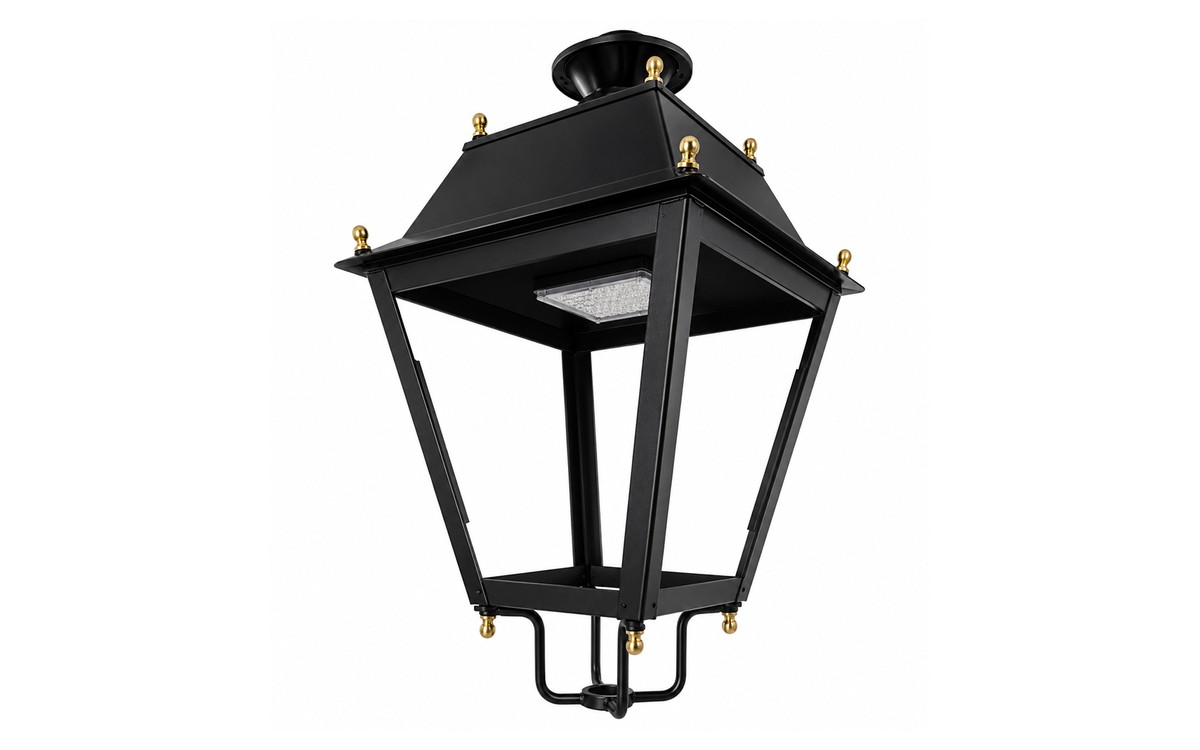
The investment return and payback of lighting results from subtracting what is saved from what is paid extra. In the five-year ROI of a solar LED streetlight, four items are added for each option: installation, energy, maintenance and battery replacement. The total cost of solar vs grid streetlights is easier to see in a table.
| Item | Solar streetlight | Grid streetlight |
|---|---|---|
| Trench and civil works | Not needed | Needed along the whole route |
| Connection and contract | Not needed | Needed |
| Electricity consumption | None | Monthly and variable |
| Checks | Panel and battery | Line, panel board and luminaire |
| Replacement | Battery at the end of its cycle | Luminaire and cabling |
Savings in energy and in installation
The cost per kWh of public lighting on the tariff is around 0.15 euros per kWh. A 60 W luminaire switched on 4,000 hours a year consumes 240 kWh, about 36 euros a year. Over five years that is 180 euros per point, and 18,000 with one hundred points.
To that is added the saving on the works. If what is avoided in trench and connection already exceeds the extra cost of the solar streetlights, the return on a solar LED streetlight is immediate. If not, the difference is divided by the annual energy saving to know how many years it takes to recover.
Battery replacement cost over the life cycle
It is the item most often forgotten. Manufacturers of lithium iron phosphate batteries indicate between 2,000 and 6,000 cycles. Divide the battery price by the years it lasts and add it to the solar balance. In the service life of solar vs grid, the LED luminaire and the line last longer than the battery.
When to choose a solar streetlight
The advantages of a solar streetlight for a municipality and a developer show in these cases:
- Paths, accesses and roads far from the electrical line.
- Development areas with no grid yet.
- Works where opening a trench is expensive or slow.
- Projects that look for a zero electricity bill.
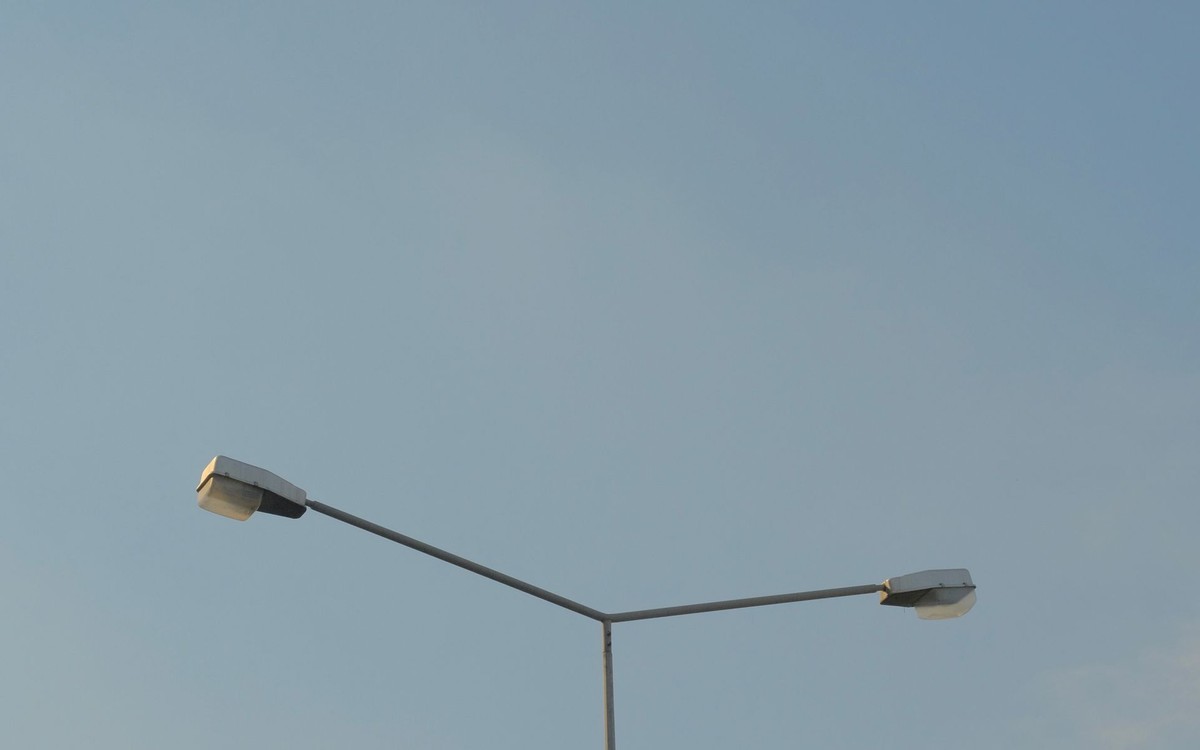
Those differences between a solar streetlight and a grid one tip the balance. If that is your case, look at the solar LED streetlights in the catalogue. To go deeper, read the article on solar LED streetlights and their autonomy.
When to choose a grid-connected streetlight
The conventional one remains the best option in these cases:
- Roads with a lighting line already installed and nearby.
- Streets with high photometric requirements or power that a panel cannot sustain.
- Points with permanent shade over the place where the panel would go.
Before buying, ask in any case for the CE certification and regulations of the solar streetlight: declaration of conformity and photometric data sheet. Royal Decree 1890/2008 approves the energy efficiency regulation for outdoor lighting installations. If your project fits here, see the urban LED streetlights.
Summary table, solar vs grid by type of installation
The table summarises which option usually fits best. Solar vs grid streetlights for an industrial estate is the most nuanced case, because it depends on whether the line is already built.
| Installation | Recommended option | Reason |
|---|---|---|
| Rural path | Solar | The line is far away and the trench raises the cost of the works |
| Housing development without connection | Solar | Avoids connection and supply contract |
| Industrial estate with line installed | Grid | The trench is already dug and consumption pays off |
| Industrial estate under development | Solar | Allows lighting before urbanisation |
| Urban street with lighting | Grid | Line available and high photometric requirement |
| Isolated access to a facility | Solar | An independent point with no cabling |
Frequently asked questions about solar and grid streetlights
How much does it cost to bring electricity to a rural area to install streetlights?
It depends on the distance and the terrain. In the councillor's case, the civil works of the conventional project reach 80,000 euros. Always ask for a line quote before comparing.
How many years does it take for a solar streetlight to pay for itself compared with a conventional one?
If the saving on works exceeds the extra cost of the solar one, it is immediate. If not, the difference is divided by the annual saving in energy and maintenance.
Do solar streetlights work well in the north of Spain with fewer hours of sun?
Yes, with a model sized for that climate: more panel and battery, and moderate power on the long nights.
What happens if the battery of a solar streetlight runs out in winter?
The luminaire switches off until it charges again. It is avoided with more reserve or less programmed power.
How often does the battery of a solar LED streetlight have to be replaced?
It depends on the manufacturer's cycles. With one cycle a day, 2,000 cycles are a little over five years and between 3,000 and 5,000 cycles range from eight to thirteen years.
Does a solar streetlight need more frequent maintenance than a conventional one?
Not necessarily. It needs the panel cleaned and the battery checked, but not the line, manholes or panel board. The type of work changes more than the frequency.
Is a solar or a conventional streetlight better for an industrial estate?
If the line already exists, the conventional one. If the estate is under development and has no grid, solar allows lighting before urbanisation.
Posted in:
Sample Category
Related posts
60x60 LED panels: everything you need to know before buying
Discover how to choose the ideal 60x60 LED panel for your project. We compare drivers, wattages, installation types...
Read more
A practical guide to choosing the perfect LED lighting for your office
Find out how to choose the perfect LED lighting for your office: it complies with the EN 12464 standard, boosts your...
Read more
Slim recessed LED downlights: guide to models, wattages and prices
Discover the differences between circular and square models, available wattages from 6W to 26W, key features such as...
Read more
LED colour temperature: how to choose between 2700K, 4000K and 6500K for your space
Warm, neutral or cool light: each LED colour temperature has its ideal space. We explain the differences between...
Read more
LED track spotlights for shops: single-phase vs three-phase, models and installation keys
Single phase or three-phase? Choosing the right LED track system makes the difference between a well-lit shop and one...
Read more
Search in blog
Blog categories
Latest posts

LED modules for streetlights: smart retrofit to upgrade your lighting without changing the housing
Read more
Solar LED streetlight vs grid-connected streetlight: real comparison of installation costs, ROI and autonomy to choose well
Read more
This solar vs grid streetlight comparison brings together installation costs, autonomy on days without sun,...
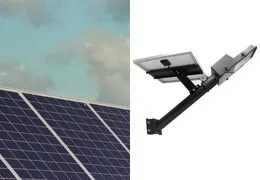
Solar LED streetlights: total autonomy without mains power for paths, housing developments and industrial estates
Read more
A standalone solar LED streetlight lights rural paths, housing developments and industrial estates without mains...

LED lighting for supermarkets and large retail spaces: a zone-by-zone guide with CRI, colour temperature and the best luminaire
Read more
LED lighting for supermarkets and large retail spaces is decided zone by zone: gondolas, fresh food, freezers,...
Linear LED luminaires: Nápoles DALI battens and Artistic Osram for supermarkets, offices and logistics
Read more
A continuous DALI linear LED luminaire gives light with no joins in supermarkets, offices and warehouses. Compare the...
Popular posts
60x60 LED panels: everything you need to know before buying
Discover how to choose the ideal 60x60 LED panel for your project. We compare drivers, wattages, installation types...
Read more

LED colour temperature: how to choose between 2700K, 4000K and 6500K for your space
Warm, neutral or cool light: each LED colour temperature has its ideal space. We explain the differences between...
Read more
LED strips 220V AC: how to install them without a transformer and get the most out of them
220V AC LED strips plug straight into the mains without needing a transformer. In this guide we explain what models...
Read more

LED public lighting: current regulations, technical requirements and key points for compliance
Guide to Spain's LED public lighting regulations: technical requirements, road classes, parameters and mandatory...
Read more

A practical guide to choosing the perfect LED lighting for your office
Find out how to choose the perfect LED lighting for your office: it complies with the EN 12464 standard, boosts your...
Read more
Leave a comment