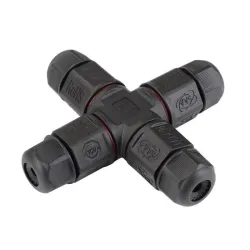
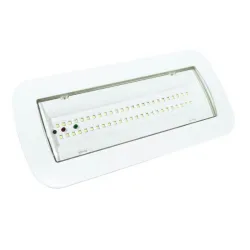
Detrás de cada instalación LED que funciona bien hay componentes electrónicos LED que nadie ve pero que lo hacen todo posible. Reguladores, detectores, convertidores de señal y kits antiparpadeo son las piezas que transforman un simple circuito de luminarias en un sistema inteligente, eficiente y sin fallos.
Aquí puedes comprar componentes LED profesionales para una obra nueva o una reforma.
Qué son los componentes electrónicos para LED y para qué sirven
Los componentes control iluminación LED engloban todos los dispositivos intermedios entre la red eléctrica y la luminaria. Su función principal es regular, proteger o automatizar el comportamiento de la luz. Sin ellos, una instalación LED se limita a encender y apagar. Con ellos, puedes regular intensidad, detectar presencia, programar escenas y eliminar problemas como el parpadeo residual.
Cada componente cumple un papel específico. Elegir el incorrecto genera incompatibilidades que acaban en flickeo, sobrecalentamiento del driver o directamente en una luminaria que no regula. Por eso conviene entender qué hace cada uno antes de añadirlo al carrito.
Reguladores y dimmers para iluminación LED
Los reguladores LED dimmer permiten ajustar la intensidad luminosa según la necesidad del momento. En una oficina, por ejemplo, no se requiere la misma luz a mediodía con sol entrando por las ventanas que a última hora de la tarde.
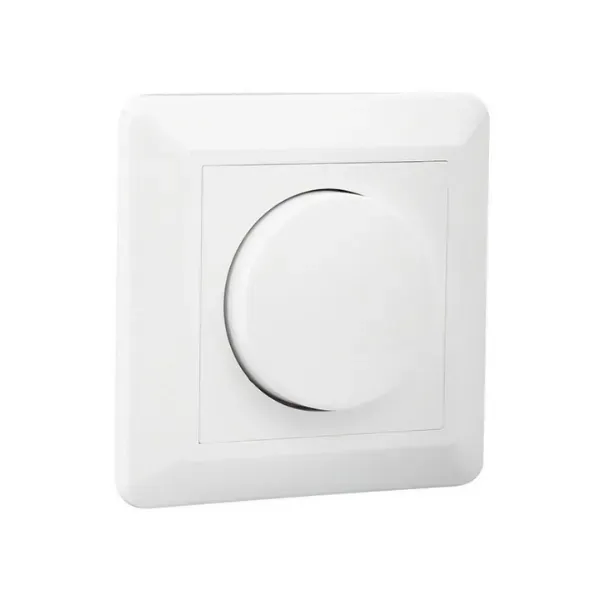
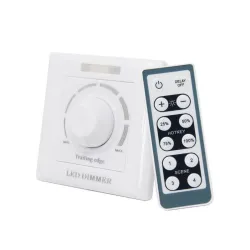
Un buen dimmer resuelve eso sin cambiar de luminaria. Los modelos más habituales incluyen el dimmer LED empotrar para mecanismos de pared y el regulador LED mando IR. Ofrece mando IR control remoto LED sin necesidad de cableado adicional.
Detectores de presencia y movimiento para LED
Un detector movimiento LED enciende la luz solo cuando alguien entra en la zona y la apaga transcurrido un tiempo configurable. Es la forma más directa de ahorrar energía en pasillos, escaleras, aseos y almacenes. Los modelos con sensor crepuscular fotocélula añaden una segunda capa de inteligencia y solo activan la luminaria si el nivel de luz natural es insuficiente.
Tipos de reguladores LED
Elegir el regulador adecuado depende del protocolo de comunicación del driver y del tipo de carga. No todos los dimmers sirven para todas las luminarias. Confundir esto es el error más frecuente en instalaciones que luego presentan parpadeo o rango de regulación limitado.
Dimmer triac para regulación en fase
El regulador triac LED trabaja mediante regulación triac fase corte, recortando la onda de corriente alterna para reducir la potencia entregada. Es el sistema más extendido en instalaciones domésticas y pequeños comercios. Funciona bien con bombillas LED regulables y algunos downlights, siempre que el driver sea compatible. Un dimmer LED 220V de tipo triac suele cubrir cargas de entre 5W y 200W.
Regulador 1-10V para control analógico
El protocolo 1-10V utiliza un cable de señal independiente que envía una tensión variable entre 1 y 10 voltios al driver. A mayor tensión, mayor luminosidad. Es un sistema robusto, sencillo y muy utilizado en oficinas y naves industriales donde se necesita regulación sin complicaciones. La compatibilidad driver regulador en 1-10V es amplia, lo que facilita la elección.
Convertidor de señal 1-10V a DALI
Cuando una instalación existente usa reguladores 1-10V pero se quiere migrar a un sistema DALI sin recablear. El convertidor señal DALI actúa como traductor entre ambos protocolos. El dispositivo recibe la señal analógica y la transforma en comandos digitales DALI. Este convertidor protocolo DALI 1-10V o también convertidor 1-10V DALI es la solución más práctica para actualizaciones parciales de un componente control domótica LED sin obra.
Detectores de presencia y movimiento
La automatización del encendido es una de las medidas de ahorro energético con retorno más rápido. Un detector bien colocado puede reducir el consumo lumínico de zonas de paso hasta un 70%. Existen dos formatos principales según el tipo de instalación empotrada superficie componente que requiera el proyecto.
Detector de superficie para zonas de paso
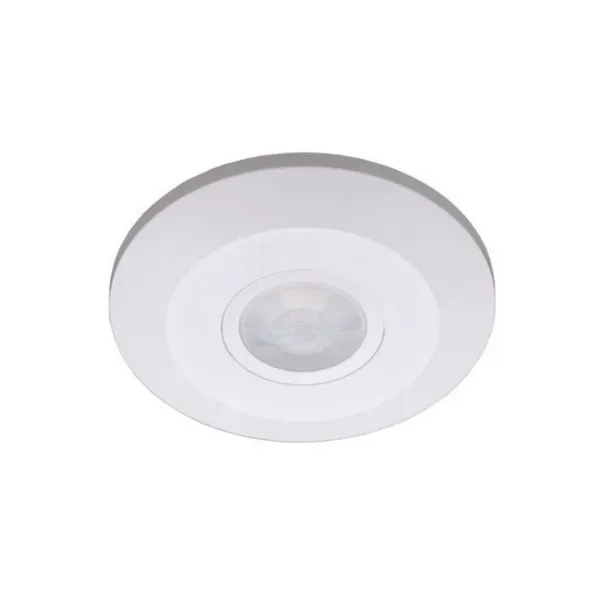
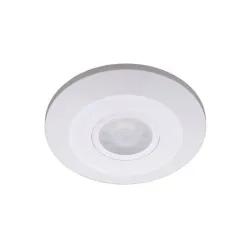
El sensor movimiento superficie se fija directamente al techo o a la pared. Su detector presencia techo LED cubre ángulos de detección de hasta 360° y distancias de 6-8 metros, suficiente para pasillos, rellanos y aseos. Es el más fácil de instalar porque no necesita mecanizar el techo.
Detector radar de alta potencia hasta 300W
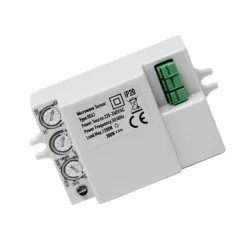
El detector presencia radar LED utiliza tecnología de detector radar microondas presencia para atravesar materiales ligeros como falsos techos o mamparas. Detecta movimiento incluso sin línea de visión directa, lo que lo hace ideal para almacenes y naves. Soporta cargas de hasta 300W, suficiente para controlar grupos amplios de luminarias.
Componentes para eliminar el parpadeo
El parpadeo o flicker en luminarias LED es un problema más habitual de lo que parece, y casi siempre tiene solución con el componente adecuado.
Kit antiparpadeo para bombillas y luminarias LED
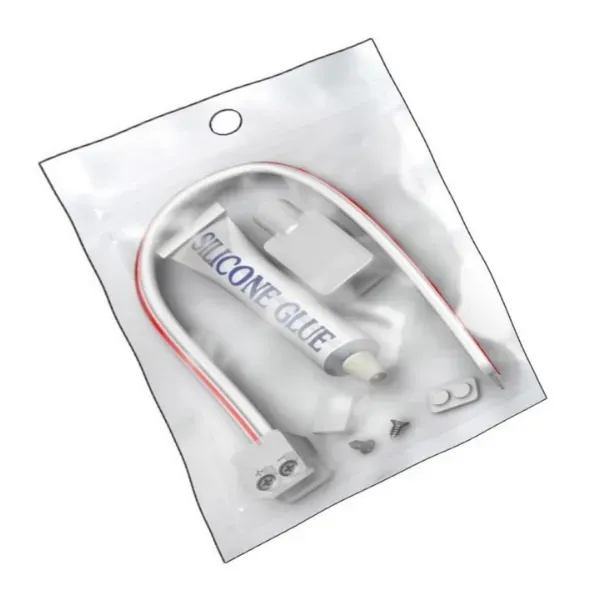
El antiparpadeo LED kit es un pequeño módulo que se conecta en paralelo a la luminaria. Su función es absorber el rizado corriente flicker componentes residual que algunos drivers baratos no filtran bien. Este antiflicker eliminador parpadeo resuelve el problema en el 90% de los casos sin necesidad de cambiar la luminaria ni el driver.
Causas del flicker y cómo solucionarlo
Las causas más comunes del parpadeo son:
- Dimmer incompatible con el driver de la luminaria.
- Driver de baja calidad sin filtrado de rizado suficiente.
- Carga demasiado baja para el rango mínimo del regulador.
- Interferencias en la línea eléctrica.
Si el flicker persiste tras instalar el kit, conviene revisar la compatibilidad del regulador con el driver.
Compatibilidad entre componentes y luminarias
Aquí es donde muchos proyectos fallan. Un dimmer triac conectado a un driver DALI no va a funcionar, por mucho que ambos sean de buena marca. La compatibilidad se verifica cruzando tres datos del driver: tipo de regulación aceptada, rango de potencia y protocolo de señal.
Cómo elegir el dimmer correcto para tu instalación
Sigue este orden para evitar errores:
- Comprueba qué protocolo acepta el driver de tu luminaria (triac, 1-10V o DALI).
- Verifica el rango de potencia total del circuito y asegúrate de que el dimmer lo cubre.
- Decide el formato: empotrado en caja de mecanismo, carril DIN o con mando a distancia.
- Si mezclas luminarias de distintos fabricantes, confirma la compatibilidad con cada driver.
Protocolos de control y compatibilidad domótica
Los tres protocolos dominantes son triac, 1-10V y DALI. Para integraciones con sistemas domóticos tipo KNX o Zigbee, DALI es la opción más flexible. Los conectores para tiras LED con señal PWM también entran en juego cuando el proyecto incluye iluminación decorativa controlada digitalmente.
Catálogo componentes electrónicos LED
Explora nuestra selección completa de reguladores, detectores, convertidores y kits antiparpadeo. Todos los productos incluyen ficha técnica con protocolos compatibles y rangos de potencia para que elijas con total seguridad. Filtra por tipo de componente, protocolo de regulación o formato de instalación y monta tu proyecto con garantía profesional.
Preguntas frecuentes sobre componentes electrónicos LED
¿Qué dimmer necesito para regular bombillas LED?
Depende del driver interno de la bombilla. La mayoría de bombillas LED domésticas regulables funcionan con un regulador triac LED de corte de fase. Consulta la ficha técnica de la bombilla para confirmar compatibilidad antes de comprar.
¿Cómo elimino el parpadeo de mis luminarias LED?
El primer paso es instalar un antiparpadeo LED kit en paralelo a la luminaria. Si el problema persiste, revisa que el dimmer sea compatible con el driver y que la carga total esté dentro del rango mínimo del regulador.
¿Qué diferencia hay entre un detector de movimiento y un detector de presencia?
El detector de movimiento reacciona a desplazamientos amplios. El de presencia detecta movimientos mínimos como teclear o escribir gracias a una mayor sensibilidad. Para oficinas y despachos, el de presencia es más adecuado.
¿Puedo usar un convertidor 1-10V a DALI con cualquier driver?
Sí, siempre que el driver acepte señal DALI estándar según IEC 62386. El convertidor traduce la señal analógica a digital, pero no modifica el protocolo del driver receptor.
¿Son compatibles los reguladores triac con todas las bombillas LED?
No. Solo con las que llevan un driver diseñado para regulación por corte de fase. Las bombillas etiquetadas como no regulables o con driver DALI exclusivo no responderán correctamente a un triac.
.svg)