LED strips are the most versatile resource available for lighting, decorating and solving lighting problems in any corner. From a kitchen worktop to the façade of a commercial premises, a good LED strip fits where no conventional luminaire can reach. Here you can buy LED strips with a professional guarantee, whether for an interior design project, a refurbishment or a technical installation.
Differences between SMD and COB LED strips
Before looking at metres, colours or IP ratings, the first technical decision involves the chip type. The two dominant technologies are SMD and COB, and each offers a different solution for every situation.
SMD technology: characteristics and uses
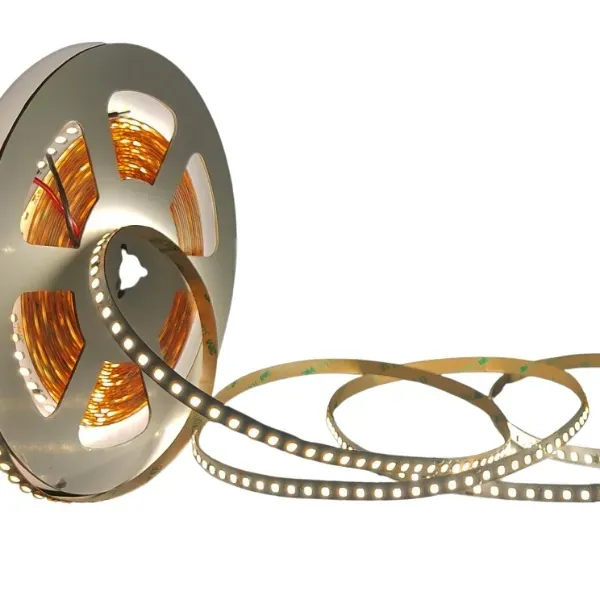
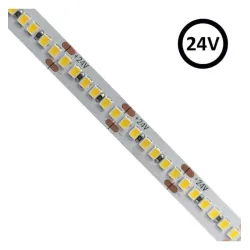
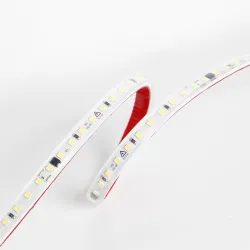
SMD strips mount individual diodes spaced apart from each other. The LED density per metre varies according to the model: from 30 LED/m for soft accents to 120 LED/m in applications that demand more power.
They work well as a decorative LED strip on shelves, furniture and ceilings. Also as a main light source when opting for high-density LED strip versions. They are manufactured in single-colour CCT LED strip format: warm white, neutral light or cool white, and in RGB for colour effects.
COB flip chip technology: greater uniformity
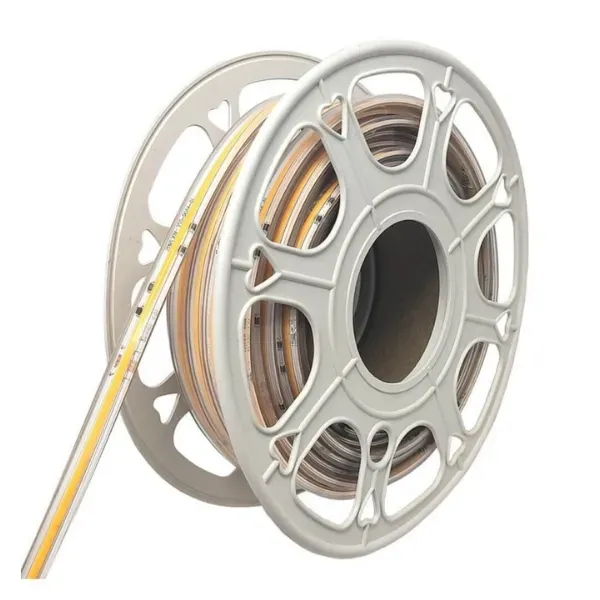
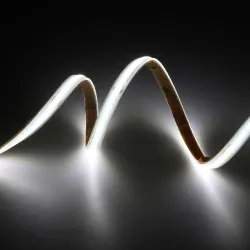
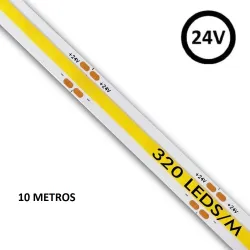
COB flip chip technology represents a significant leap in quality compared to SMD. Instead of individual diodes, the chip is mounted inversely onto the substrate, generating a continuous line of light with no visible dots. The result is homogeneous lighting that is perfect for LED strips with aluminium profiles in furniture, shelving and areas where aesthetics take priority. COB LED strips offer a visual finish reminiscent of neon but with the energy efficiency and cutting flexibility inherent to LED.
IP protection levels for LED strips
The IP rating determines where you can install each strip. Getting this wrong means moisture gets inside the silicone, causing corrosion and a dead strip within weeks. These are the three key levels according to the IP20, IP65, IP67 protection classification:
IP20 for dry interiors
Ideal for living rooms, bedrooms and climate-controlled commercial spaces. It is the most economical option and the easiest to cut and solder.
IP65 for areas with moisture
Silicone coating on the upper face. It withstands splashes and steam, making it perfect as a kitchen LED strip or for bathrooms. It is also used in shop windows prone to condensation.
IP67 for outdoors and demanding installations
Fully encapsulated in a silicone sleeve. The IP67 LED strip withstands direct rain and water washing, so it works without issue as an outdoor IP67 LED strip on façades, gardens and terraces.
How to choose the right LED strip
With so many references in the catalogue, it is worth filtering by three technical parameters that will define the final result of your installation.
Lumens per metre and LED density
Lighting a wardrobe is not the same as lighting a jewellery display case. The lumens per metre for strips range from 300 lm/m for ambient decoration to 2,000 lm/m for general lighting applications. The higher the LED density, the greater the uniformity, but also the higher the consumption and the greater the need for heat dissipation. Always fit an aluminium diffuser profile when exceeding 14W/m to avoid hot spots.
Colour temperature and CRI for each setting
The warm or cool colour temperature is chosen according to the use:
- 2,700-3,000K – Warm settings: hospitality, fashion shops, homes.
- 4,000K – Neutral: offices, kitchens, work areas.
- 6,000K – Cool: industry, warehouses, technical lighting.
For projects where CRI colour fidelity for strips is critical, such as jewellers, clothing shops and galleries, the CRI98 LED strip range reproduces product colours with near-perfect accuracy.
Voltage: 12 V, 24 V or 220 V direct
24V LED strips are the professional standard. They allow longer runs without voltage drop and offer a wider variety of power ratings. 12V strips are reserved for short runs or simple domestic projects.
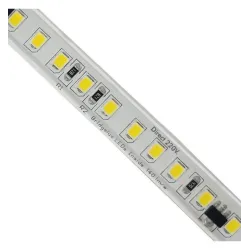
And 220V LED strips connect directly to the mains with a rectifier, which simplifies the installation over long runs by eliminating the need for power supplies every few metres.
A dimmable LED strip requires a 24V power supply driver compatible with the chosen dimming protocol (DALI, 0-10V or PWM).
Flexible LED neon and its applications
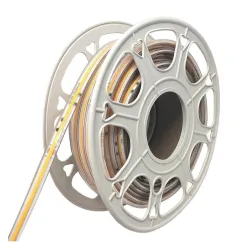
Flexible LED neon has the aesthetic of classic gas neon but with the advantages of LED: low consumption, long lifespan and none of the fragility of glass. It is supplied in rolls with a silicone or PVC sleeve and can be cut every few centimetres.
Shop window and signage decoration
For flexible LED neon decoration in shop windows, flexible neon is unbeatable. It allows you to create shapes, letters and logos with a continuous, eye-catching natural line of light. Installation is secured with clips or a mounting profile on any surface.
Architectural lighting and contours
On façades, cornices and window frames, flexible neon is a lighting solution that creates clean contours visible from a distance. Its flexibility allows tight curves that a rigid strip cannot achieve.
LED strip accessories
An LED strip without the right accessories only performs at half capacity. These are the accessories that complete the installation:
Aluminium profiles and diffusers
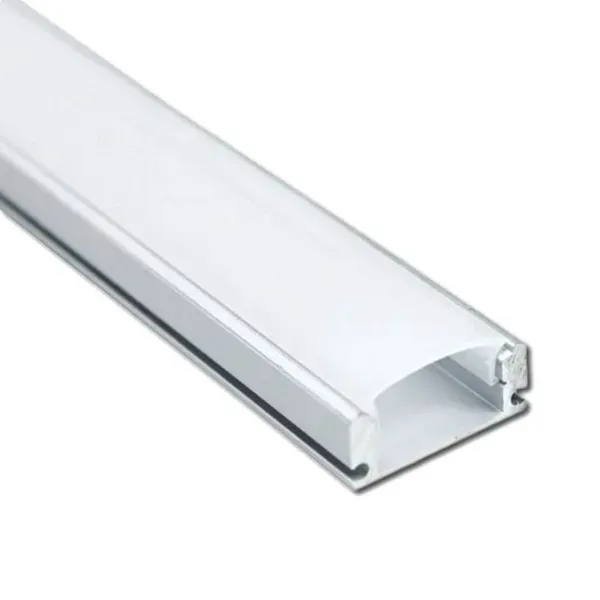
The aluminium diffuser profile fulfils three functions simultaneously: it dissipates heat, protects the strip and diffuses the light points. Available in recessed, surface-mounted and corner formats. Installation is carried out using double-sided adhesive tape or mechanical fixing clips.
Connectors, power supplies and dimmers
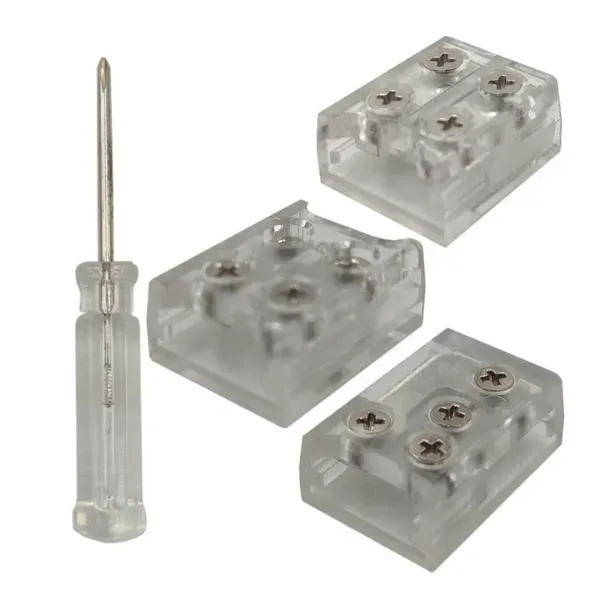
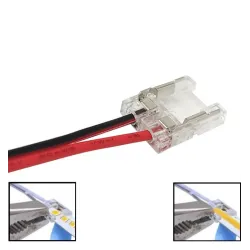
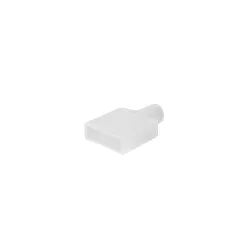
- Quick connectors without soldering for joints and corners.
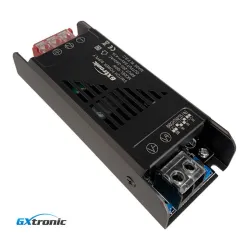
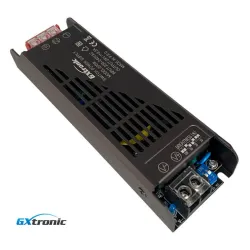
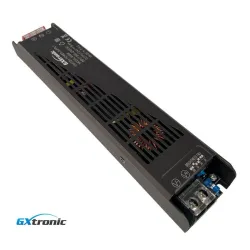
- Power supplies in 12V and 24V with different wattages.
- Dimmers and regulators compatible with dimmable LED strips.
For a 5-metre LED strip at 14.4W/m on 24V, you will need a 72W power supply plus a 20% safety margin.
LED strip and flexible neon catalogue
Explore our wide range of high-quality LED light strips and flexible LED neon for indoor and outdoor use. Filter by application, wattage or format and find exactly what your project needs. You can contact our team of experts if you need assistance.
Frequently asked questions about LED strips and flexible neon
What is the difference between a COB and an SMD LED strip?
The COB strip generates a continuous line of light with no visible dots, whilst the SMD shows each diode separately. The COB is a lighting system that offers greater visual uniformity, and the SMD allows a wider variety of densities and configurations.
Can I install IP65 LED strips directly outdoors?
It is not the most advisable option. IP65 protects against splashes but not against direct rain or submersion. For outdoor use, the safe choice is to opt for IP67.
What power supply do I need for 5 metres of 24V LED strip?
Multiply the watts per metre of your strip by the 5 metres and add a 20% margin. For example, a 14.4W/m strip requires a power supply of at least 86W.
Can LED strips be cut to size?
Yes. All strips include cutting marks every few centimetres. A pair of scissors and following the indicated lines is all that is needed to avoid damaging the circuit.
How many lumens per metre do I need to light a wardrobe?
Between 200 and 400 lm/m is sufficient for accent lighting in wardrobes and shelving. If the wardrobe is a walk-in and you want functional light, increase to 600-800 lm/m.
.svg)