LED bulbs have become the best option for lighting any space. They offer superior performance, minimal consumption and a long lifespan that makes halogen bulbs obsolete. Here is everything you need to buy LED bulbs with confidence.
Why choose LED bulbs over halogen
The halogen to LED replacement isn't a trend. It's a matter of numbers. LED technology consumes up to 80% less energy than conventional halogen and multiplies the lifespan by ten.
Savings on your electricity bill
A low-consumption LED bulb rated at 9W delivers the same brightness as a 60W halogen.
In a home with 20 light points switched on for around 5 hours a day, the energy savings on lighting can exceed 150 euros per year.
Low-consumption LED bulbs also generate less residual heat, which reduces the load on the air conditioning system in summer.
Longer lifespan and fewer replacements
The LED lifespan in hours ranges from 25,000 to 50,000 hours in quality products. Compared to 2,000 hours for a halogen, the difference is enormous. Fewer replacements, less waste and less time spent on maintenance. For commercial installations with dozens of luminaires, this translates into very significant savings.
Types of LED bulbs by cap
Before buying, check which E27 E14 cap or connector your luminaire uses. Each type serves a specific purpose.
E27 universal standard
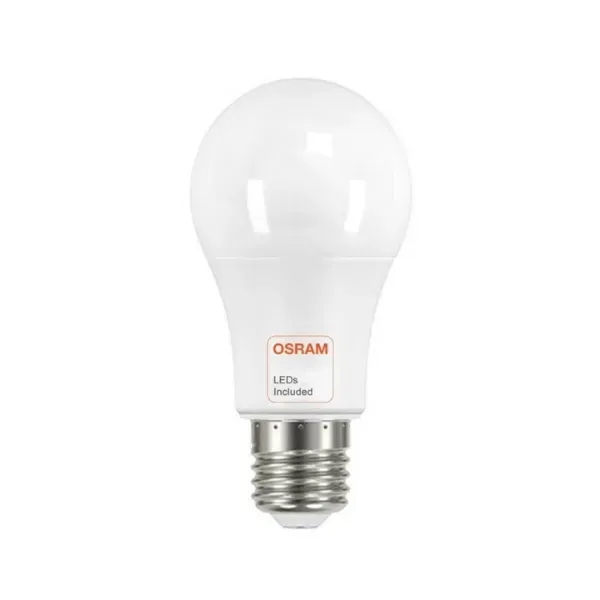
E27 LED bulbs are the most common. They fit ceiling lights, table lamps and ceiling fixtures. Their 27 mm screw thread makes them the ultimate all-round format.
E14 for small lamps
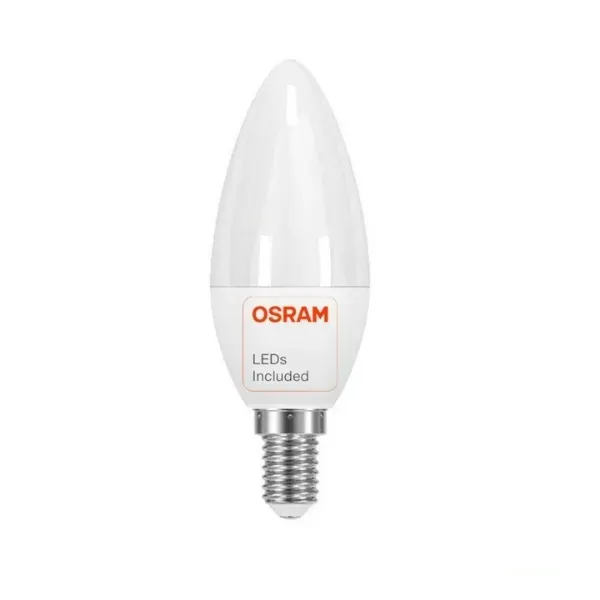
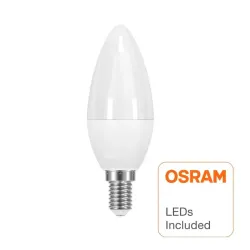
E14 LED bulbs have a 14 mm narrow screw thread. They are used in decorative wall lights, bedside lamps and ceiling fans. Also available in candle format, which is highly popular in hospitality and retail.
GU10 for dichroic spotlights
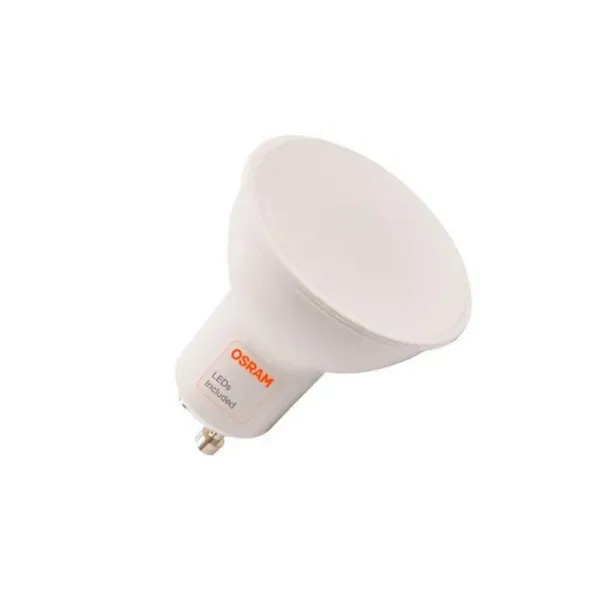
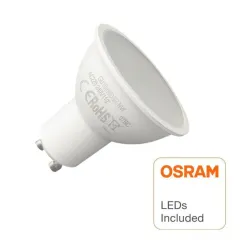
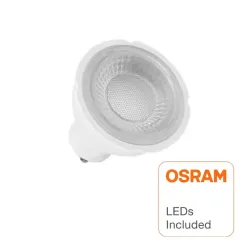
GU10 LED bulbs replace the classic halogen dichroics. Perfect for recessing into false ceilings in kitchens, bathrooms and retail spaces. Their two-pin connection makes installation easy.
G9 and AR111 specific uses
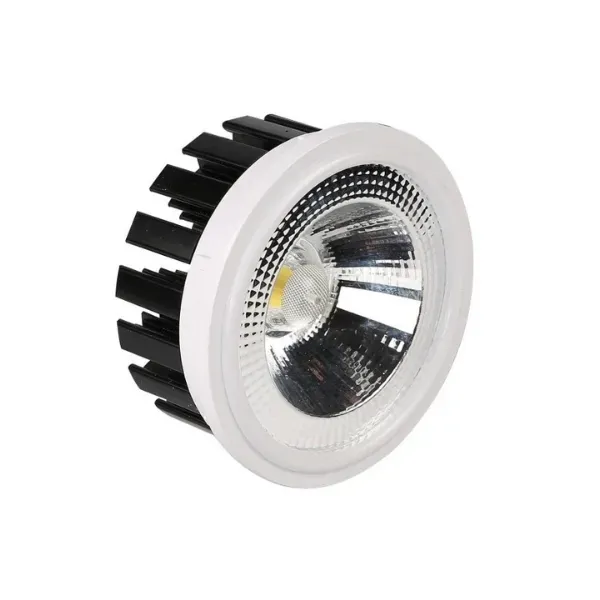
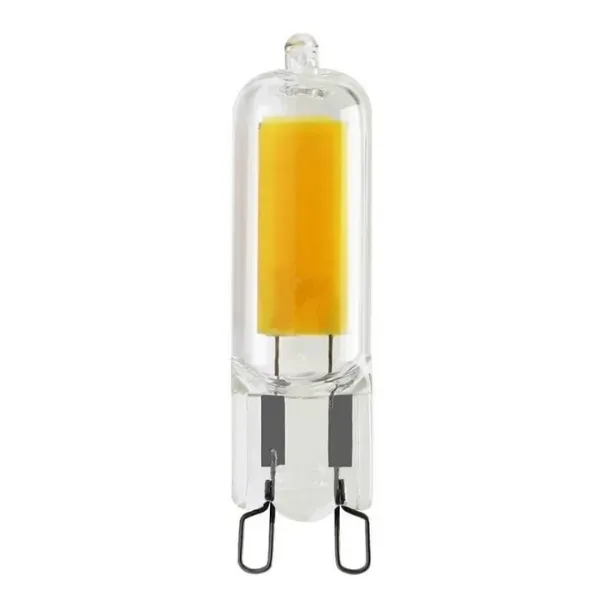
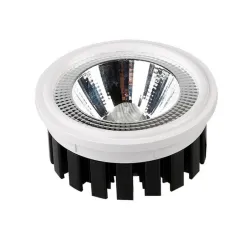
G9 LED bulbs are compact and integrate into designer luminaires. AR111 LED bulbs stand out in commercial lighting projects where a wide and controlled beam is needed. Both cover niches that other references cannot reach.
How to choose the right LED bulb
It's not just about price. These three technical parameters determine whether a bulb will meet your needs or not.
Lumens vs watts
Forget about watts as a brightness reference. What matters is the lumens per watt. An efficient bulb delivers 100 lm/W or more. For guidance, here is a quick equivalence table:
- 25W halogen: 4W LED (250 lm)
- 40W halogen: 6W LED (470 lm)
- 60W halogen: 9W LED (806 lm) the popular LED bulbs equivalent to 60W
- 100W halogen: 14W LED (1,521 lm)
Colour temperature
The colour temperature in kelvin defines the atmosphere of the space:
- 2700-3000K: warm light LED bulbs, ideal for living rooms and bedrooms.
- 4000-4500K: neutral light, recommended for kitchens, bathrooms and offices.
- 5500-6500K: cool light LED bulbs, aimed at workshops, warehouses and industrial environments.
Choosing the right temperature makes the difference between a pleasant space and an uncomfortable one.
CRI in commercial environments
The colour rendering index CRI measures how faithfully a bulb displays true colours. A CRI above 80 is fine for the home. For retail spaces, shop windows or medical practices, look for a CRI of 90 or higher. The difference is that products and materials come to life under a light with good CRI.
LED bulbs for businesses
Efficient lighting for home and business doesn't follow the same rules in both cases. A business demands higher performance, more hours of operation and specific regulations.
Office and retail requirements
LED bulbs for offices must comply with the UNE-EN 12464-1 standard on interior workplace lighting. This means minimum levels of 500 lux at office workstations and glare control. LED bulbs for the home do not need to meet these standards, but they should still offer adequate visual comfort.
Osram chip advantages for high usage
Not all LEDs are the same inside. The Osram LED chip is a real differentiator in our catalogue. It guarantees minimal lumen depreciation over thousands of hours, chromatic stability and efficiency that is maintained over time.
For businesses with 12 to 16 hours of daily operation, this is the technology that truly lasts.
LED bulbs catalogue
Our catalogue brings together the best energy-efficient LED bulbs on the market, organised so you can find exactly what you're looking for.
Standard, candle, globe and filament
- Standard (A60, A70): the classic format for all types of lamps.
- Candle (C37): elegant, perfect for chandeliers and wall lights.
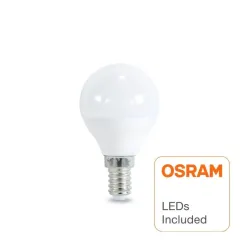
- Globe (G80, G95, G125): decorative, with a very uniform diffuser finish.
- Filament LED bulbs: replicate the look of incandescent bulbs with all the efficiency of LED. A hit in hospitality and homes with a vintage style.
Dimmable LED bulbs are available in most of these formats. Always check compatibility with your dimmer before buying.
CE, RoHS and TÜV certification
All references carry CE and RoHS certification, ensuring European compliance and the absence of hazardous substances. Professional range models also feature the TÜV seal, a quality standard that provides an extra layer of confidence.
Frequently asked questions about LED bulbs
Which LED bulb is equivalent to 60W?
A 9W LED bulb with around 806 lumens is equivalent to a 60W incandescent or halogen.
Always check the lumen figure on the product datasheet, as it may vary slightly between manufacturers.
Can I use dimmable LED bulbs with any dimmer?
Not always. Dimmable LED bulbs require dimmers compatible with LED technology. Old dimmers designed for incandescent bulbs can cause flickering or a very limited dimming range. Check compatibility before installing.
How long does an LED bulb last?
Between 25,000 and 50,000 hours depending on the quality of the chip and driver. With domestic use of 4-5 hours per day, that's over 15 years without needing a replacement.
Which colour temperature is best for a business?
It depends on the sector. For offices, 4000K (neutral light) aids concentration. For fashion or food retail, a warm light of around 3000K enhances products. Workshops and industry work better with 5000-6500K.
Do LED bulbs have certification?
Yes. All LED bulbs sold in Europe must carry the CE mark. The RoHS directive guarantees the absence of toxic materials. And the TÜV seal, present in our professional ranges, adds an independent verification of safety and performance.
.svg)