High-Efficiency LED Bulbs for Home and Business
In the past, light bulbs had to be replaced every few months because they would burn out. With the advent of high-efficiency LED bulbs, that is no longer the case.
For example, a restaurant that replaces halogen bulbs with our LED bulbs featuring Osram chips can reduce its electricity consumption by up to 80%. This means the bulbs won’t need changing for years.
These types of low-energy bulbs mean: less maintenance and savings on electricity bills. They are therefore the most efficient lighting option for both homes and businesses.
Why choose LED bulbs over halogen
LED bulbs offer a combination of energy savings in lighting, durability and better light quality, which is why they have become the standard for efficient lighting, unlike halogen or incandescent bulbs.
Savings on your electricity bill
One of the reasons why switching to LED bulbs is the best option is the energy savings. Because they are more efficient, they are able to produce more light using less energy, meaning electricity consumption is significantly lower.
Whilst a halogen bulb may consume 60W to generate a certain amount of light, an equivalent 60W LED bulb requires between 8 and 10W to provide the same level of illumination. This means you can save energy, potentially reducing consumption by over 80%.
Efficiency is measured in lumens per watt; this is a metric where LED technology outperforms others.
Longer lifespan and fewer replacements
Another advantage is their durability; LED bulbs can last between 25.000 and 50.000 hours, whilst halogen bulbs only last for approximately 2.000 hours. This means you’ll need to replace them less often as they require less maintenance, allowing you to save money in the long term. In commercial spaces or businesses, the durability of the bulbs is particularly important as it reduces operating costs and downtime.
Types of LED bulbs by base
One of the things to consider when buying LED bulbs is the type of base. There are several types of base:
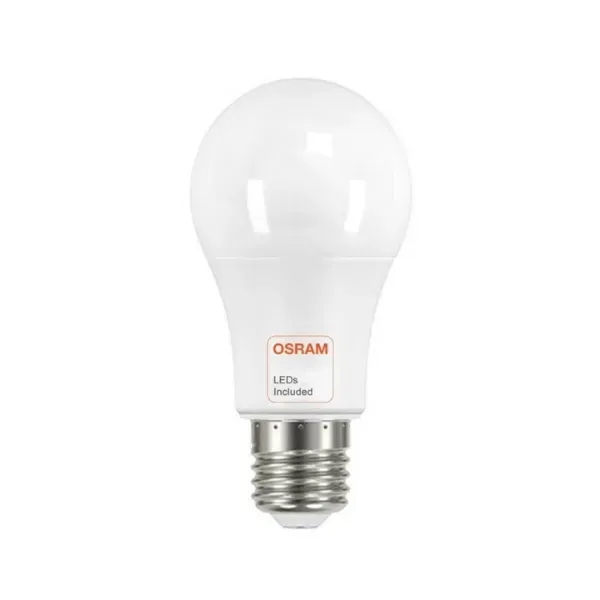
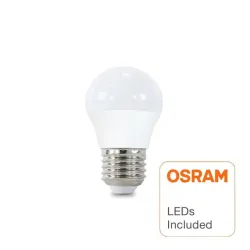
Standard universal E27
E27 LED bulbs are the most common type and are mostly used in ceiling lights, floor lamps or general domestic lighting. There are also filament LED bulb versions, which retain a classic look whilst offering the same efficiency as standard LEDs.
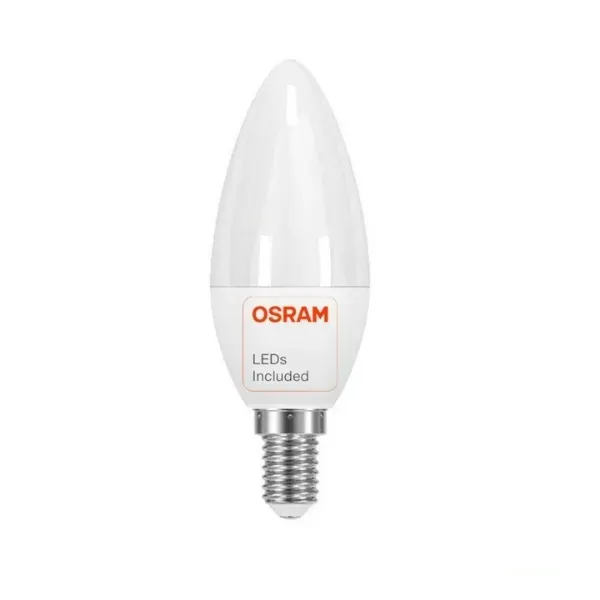
E14 for small lamps
E14 LED bulbs have a narrower base; they are typically used in decorative lamps such as wall lights, table lamps or smaller light fittings. They offer the same energy efficiency as E27 bulbs, but in a more compact format.
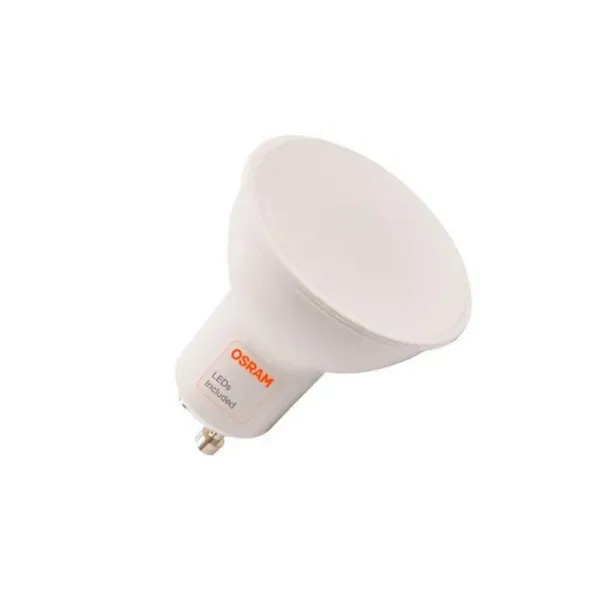
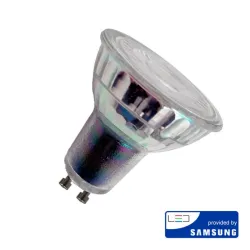
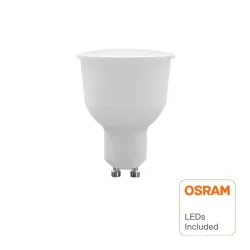
GU10 for dichroic spotlights
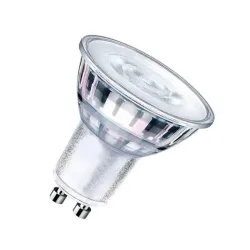
GU10 LED bulbs are designed for recessed spotlights and directional lighting systems. They are very common in spaces such as kitchens, bathrooms, hallways and shops, as they allow light to be directed towards specific areas and are available in versions with different colour temperatures: warm, neutral or cool light.
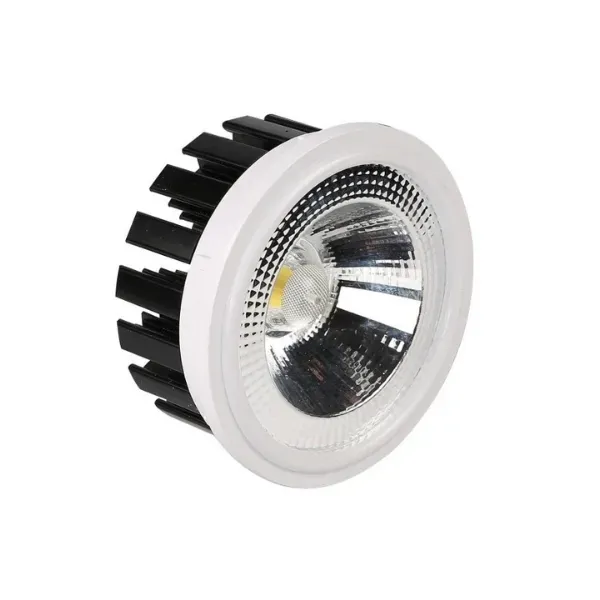
G9 and AR111 for specific uses
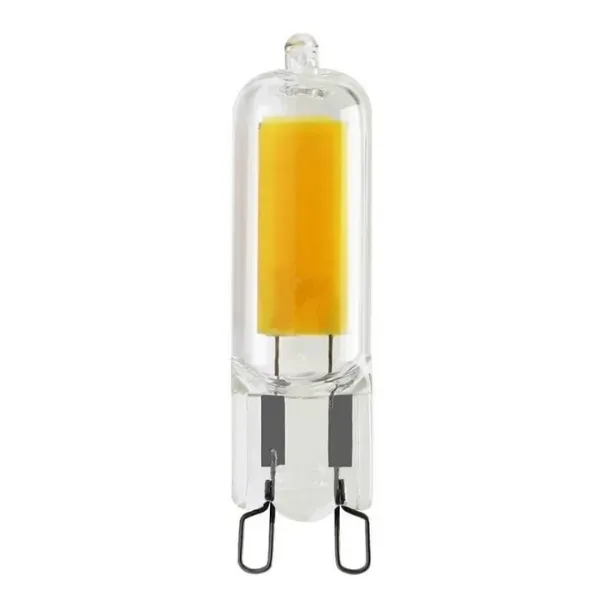
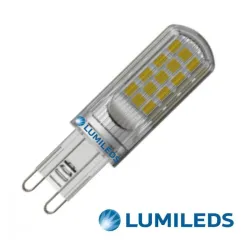
This type of socket is designed for more specific applications where focused or decorative lighting is required; G9 LED bulbs are used in compact lamps and decorative light fittings, whilst AR111 LED bulbs are very common in professional lighting and can be found in shop windows and retail outlets.
How to choose the right LED bulb
To choose the right bulb, you need to consider several technical factors that affect the quality of the lighting.
Lumens vs watts
In LED lighting, watts no longer indicate the amount of light, but rather energy consumption, and light output is measured in lumens, which indicate how much light a bulb produces.
Here is an example of the approximate equivalents between halogen and LED bulbs:
| 40W halogen |
400 – 450 LED lumens |
| 60W halogen |
800 lumen LED |
| 100W halogen |
1500 lumen LED |
That is why it is important to check the lumens when looking for LED bulbs equivalent to 60W.
Colour temperature
Colour temperature is measured in Kelvins (K), which determines the tone of the light. The most commonly used are 2700K (for warm-light LED bulbs for cosy environments, typically used in domestic spaces), 4000K (for neutral-light LED bulbs typically found in offices or work areas) and 6000K (for cool-light LED bulbs typically used in commercial or industrial spaces).
Choosing the correct colour temperature improves visual comfort and the functionality of the area.
CRI in commercial environments
The colour rendering index (CRI) measures how faithfully the light reproduces true colours; in spaces such as shops, restaurants or retail outlets, it is advisable to use LED bulbs with a high CRI to enhance the perception of products and create more attractive environments for customers.
LED bulbs for businesses
Good lighting in professional environments requires a balance between energy efficiency, light quality and durability.
Requirements for offices and retail premises
In offices and retail premises, it is recommended to use lighting that offers low energy consumption, high lumen-per-watt efficiency, a neutral or cool colour temperature, and good colour rendering. This helps office LED bulbs improve visibility, reduce energy costs and create more comfortable working environments.
Advantages of the Osram chip for heavy-duty use
Our high-quality LED bulbs feature a key differentiator that offers greater energy efficiency, improved light stability, reliable performance under heavy use and a longer lifespan: the Osram LED chip. It is a recommended option for businesses requiring heavy-duty lighting that remains on for many hours a day.
LED bulb catalogue
There is currently a wide variety of LED bulbs for home and business use, tailored to different lighting needs.
Standard, globe and filament bulbs
This is a very comprehensive solution, as it combines energy efficiency with design, adapting to any style of light fitting; the most popular are standard bulbs, energy-saving candle bulbs, globe bulbs and decorative filament LED bulbs.
CE, RoHS and TÜV Certification
The most important certifications for high-quality LED bulbs, ensuring their safety and efficiency, are: CE: compliance with European regulations; RoHS: the restriction of hazardous substances; and TÜV: certification of quality and safety. These certifications ensure that the bulbs meet technical and environmental standards.
FAQs about LED bulbs
Which LED bulb is equivalent to a 60W bulb?
An LED bulb of around 8–10W and approximately 800 lumens is equivalent to a 60W halogen bulb.
Can I use dimmable LED bulbs with any dimmer?
They cannot always be used, as dimmable LED bulbs require compatible dimmers to function correctly.
How long does an LED bulb last?
The lifespan usually varies between 25.000 and 50.000 hours, depending on the quality of the chip and how it is used.
What colour temperature is best for a business?
It is generally recommended to use 4000K or 6000K, as these offer the highest visual quality and the best lighting for commercial spaces.
Are LED bulbs certified?
Yes. The bulbs include the necessary certifications such as CE, RoHS or TÜV, which guarantee safety, energy efficiency and regulatory compliance.
.svg)