Last week a customer rang up frustrated because his LED bulbs flickered every time he touched the dimmer in the living room. The electrician sorted it in ten minutes — the problem was that the dimmer wasn't compatible. All it took was fitting an LED anti-flicker kit and switching to a suitable LED triac dimmer.
It's something that happens all the time. That's why it's worth knowing the right LED electronic components for each recessed or surface-mounted installation and saving yourself the hassle.
What are electronic components for LED and what are they for
They are the devices that control, regulate and manage an LED lighting installation. We're not talking about the luminaires themselves, but about LED dimmer regulators, detectors, signal converters, LED strip connectors and anti-flicker modules.
Thanks to these LED lighting control components, the installation does far more than just switch on and off. It adjusts intensity, detects presence, adapts communication protocols and eliminates electrical issues such as flicker.
For the installer, they are everyday tools. For the end customer, they are the guarantee that everything works properly.
Regulators and dimmers for LED lighting
LED dimmer regulators adjust the light intensity of compatible bulbs and luminaires. They are essential when you need to create ambiences, save energy or adapt the light to different uses of the space.
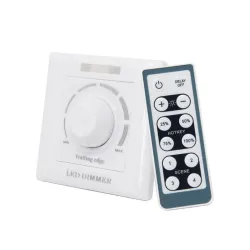
There are recessed LED dimmer models with IR remote control for LED and models in DIN rail format. Each one suits a different type of installation.
Presence and motion detectors for LED
Detectors automate switching on and off according to the activity in the area. A motion detector for LED reacts to physical movement. A radar presence detector for LED picks up minimal movements even through false ceilings or partitions.
They are ideal for energy savings in corridors, warehouses and offices.
Types of LED regulators
Choosing the correct regulator depends on the luminaire driver, the control protocol and the total circuit load. Driver-regulator compatibility is the first thing to check.
Triac dimmer for phase dimming
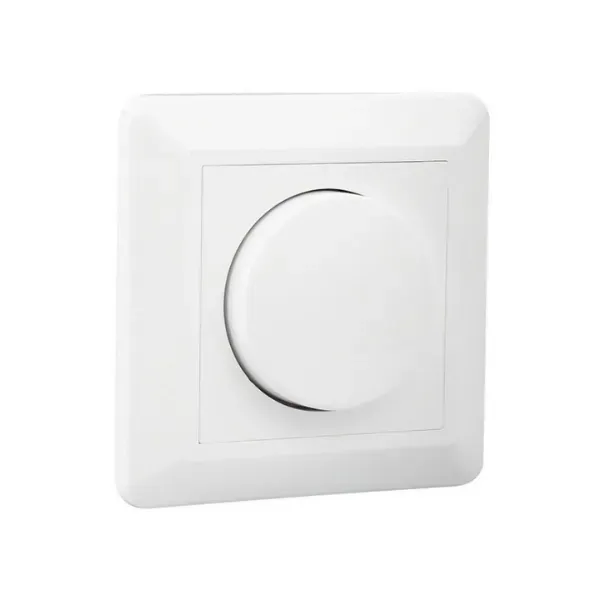
The LED triac dimmer is the most common in homes and small businesses. It works by triac phase-cut dimming and is compatible with most dimmable LED bulbs connected to 220V.
A 220V LED dimmer of the triac type is the most straightforward option for small loads. It installs easily in a recessed mechanism or surface box. That said, you should always check the minimum and maximum load of the dimmer and ensure that the bulb is certified as dimmable.
1-10V regulator for analogue control
The 1-10V protocol is a standard in professional lighting. The regulator sends an analogue signal to the driver to adjust the intensity from 10% to 100%.
It is widely used in offices, industrial units and commercial spaces where precise control is needed without the complexity of a digital system. Its main advantage is the simplicity of the wiring — only two additional signal wires are required.
1-10V to DALI signal converter
When an existing installation runs on 1-10V dimming but luminaires with the DALI protocol are needed, the 1-10V to DALI converter acts as a bridge between both systems.
This DALI signal converter translates the analogue signal to digital with the DALI 1-10V protocol converter. This way, equipment from different generations can coexist without having to rewire the entire installation. It is especially useful in refurbishments where replacing the whole control system is not viable.
Presence and motion detectors
To reduce consumption effectively, you need to choose the right detector according to the environment, mounting height and the sensitivity required.
Surface-mounted detector for corridors
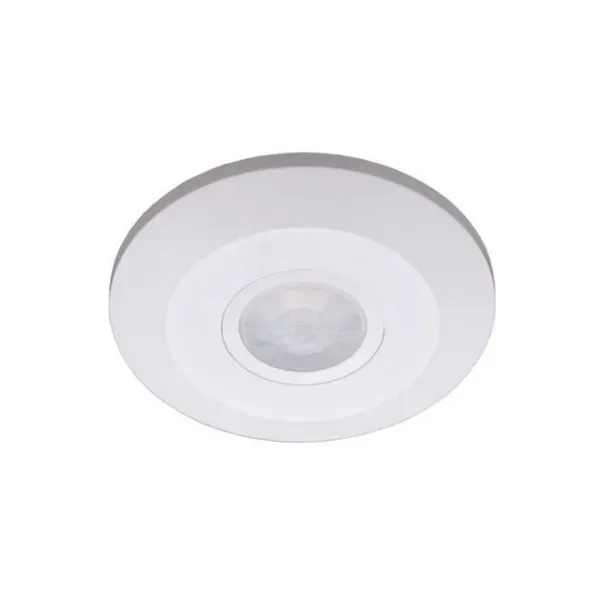
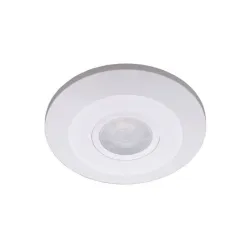
The surface-mounted motion sensor is installed on the ceiling or wall without the need for recessing. It is the quickest option for hallways, staircases, garages and communal areas.
The most commonly used models cover from 180° to 360° and allow you to adjust the switch-on time.
They also adjust the brightness threshold. This is done with an integrated photocell twilight sensor. A surface-mounted ceiling LED presence detector is perfect when carrying out building work for recessing is not worthwhile.
High-power radar detector up to 300W
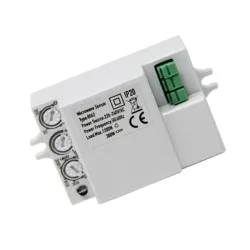
Microwave radar presence detectors offer more precise detection and can penetrate light materials such as glass, wood or plasterboard. They are perfect when the detector needs to remain hidden.
With the capacity to control up to 300W LED, they cover everything from small rooms to warehouses and car parks. Their adjustable sensitivity distinguishes between real movements and environmental disturbances.
Components to eliminate flicker
Flicker is one of the most common problems in LED lighting. It is annoying and can cause visual fatigue with prolonged exposure.
Anti-flicker kit for LED bulbs and luminaires
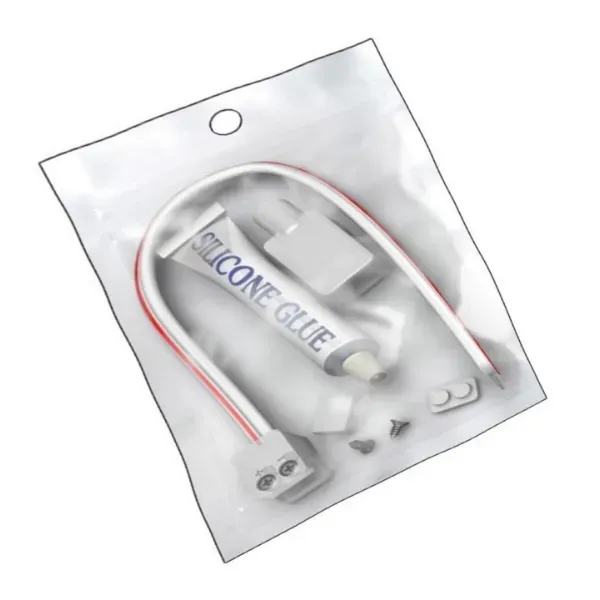
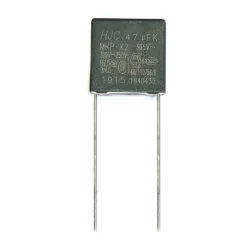
The LED anti-flicker kit is a small module connected in parallel with the LED load. Its function as an anti-flicker eliminator is to stabilise the residual current that many dimmers and switches allow through. This prevents the bulb from flickering or remaining faintly lit when it should be off.
It is installed in the mechanism box or next to the lampholder. It is quick, cheap and does not require replacing anything.
Causes of flicker and how to fix it
Flicker usually has three origins:
- Incompatible dimmer: a regulator designed for incandescent bulbs does not handle low LED power well.
- Low-quality driver: power supplies with excessive current ripple and flicker components that do not filter the signal properly.
- Residual current: very common with backlit switches or circuit derivations.
The solution is to check driver-regulator compatibility, replace the dimmer with one specifically designed for LED. If it persists, add an anti-flicker kit to absorb the residual current.
Compatibility between components and luminaires
Compatibility is the most critical aspect of LED electronic components. A good component connected to an incompatible luminaire creates more problems than solutions.
How to choose the correct dimmer for your installation
Three factors need to be considered:
- Type of load: 220V direct LED bulbs work with triac dimmers. Luminaires with an external driver may require a 1-10V or DALI signal.
- Total power: add up the power of all the luminaires and check that it falls within the dimmer's range. An IR remote LED regulator for a small room does not need the same specifications as a DIN rail dimmer.
- Installation format: recessed, surface-mounted or DIN rail. Each project has its own requirements.
Control protocols and home automation compatibility
In advanced installations, components need to speak the same language:
- DALI: bidirectional digital standard for up to 64 devices. Ideal for offices and large premises.
- 1-10V: analogue, simple and reliable. Widely used due to its ease of installation.
- RF / IR: wireless control, practical in refurbishments without new wiring.
Integration with LED home automation control systems is increasingly in demand. Checking compatibility with the project's gateways avoids problems during commissioning.
LED electronic components catalogue
In our catalogue you can buy professional LED components for any installation. From a triac dimmer for a home to DALI converters for an office building.
All products are selected to guarantee compatibility, reliability and immediate availability. Browse the categories and find what you need to complete your project.
Frequently asked questions about LED Electronic Components
What dimmer do I need to dim LED bulbs?
It depends on the type of bulb. If it connects directly to 220V, you need a phase-cut triac dimmer compatible with LED loads. Check that the total power is within the regulator's range. For luminaires with an external driver, you will need a 1-10V or DALI regulator depending on the driver's protocol.
How do I eliminate flicker from my LED luminaires?
First, identify the cause. If it flickers when dimming, the dimmer is probably not compatible — replace it with a triac regulator for LED. If it flickers with the light off, install an anti-flicker kit in parallel. If it persists, check the driver, as excessive current ripple also causes flicker.
What is the difference between a motion detector and a presence detector?
The motion detector is activated when someone enters its detection field and switches off after a period without movement. The presence detector is more sensitive and picks up minimal movements, such as a person sitting down. That is why presence detectors are better suited to offices and private rooms, whilst motion detectors work well in corridors.
Can I use a 1-10V to DALI converter with any driver?
It is not a universal adapter. The converter translates the analogue signal to the DALI protocol, but the luminaire driver must incorporate factory-fitted DALI electronics to respond correctly. Always check the driver specifications before adding the converter.
Are triac dimmers compatible with all LED bulbs?
No. The bulb must be certified as dimmable and the dimmer's power range must be suitable for the connected LED load. Many triac dimmers designed for incandescent bulbs have a minimum load that is too high for LED. Using incompatible combinations is the main cause of flicker.
.svg)